Read this guide in
Hengliyuan application and selection
Stevia Aftertaste in Fruit Drinks: Sweetness Testing Guide for Beverage Makers
Compare stevia sweetness, bitterness and finish in the real fruit-drink base. See published peach-study data and download a free sensory record.
To reduce stevia aftertaste in a fruit drink, first identify whether the problem is bitterness, lingering sweetness or another sensation. Then compare the actual ingredient, dose and drink base against a control. Lowering an excessive addition, changing the glycoside profile or adjusting the complete flavor system are testable directions; none guarantees an aftertaste-free drink.
In fruit-flavoured beverages, steviol glycosides should not be assessed only by whether the beverage is sweet enough. Acidity, aroma, soluble solids, serving temperature and other sweeteners in the juice or flavour base can change sweetness onset, peak sweetness, bitterness and aftertaste.
A buyer does not need to select a particular steviol glycoside before requesting samples. Provide the beverage type, target market, requirements and desired sensory result, and Hengliyuan can propose samples for evaluation in the actual beverage.
Why stevia can taste bitter or linger after a sip
Steviol glycosides provide sweetness, but their structures can also produce bitter sensations. A 2012 study combining human sensory work with cell-based receptor assays identified hTAS2R4 and hTAS2R14 as receptors involved in steviol-glycoside bitterness. That helps explain why sweetness and a bitter off-note can coexist; it does not predict the exact finish of a finished beverage. “Aftertaste” is broader than bitterness. A drink may remain sweet after swallowing without a strong bitter note, or show a herbal, metallic or drying impression. Those observations need different follow-up trials. Lack of sugar bulk is a separate formulation issue, not by itself a receptor-level explanation for bitterness.
Name the defect before choosing a fix
Compare the unsweetened base, the current sweetened control and the candidate where practical. If an off-note is already present in the base, changing stevia may not remove its source. Ask tasters to describe the sensation before giving them a list of expected defects.
| Observed problem | First comparison | Useful next question |
|---|---|---|
| Bitter finish | Base alone, control and candidate at stated additions | Is the base bitter already, or does the candidate strengthen the note? |
| Long sweet finish | Sweetness during the sip and at defined later checkpoints | Is sweetness acceptable initially but too persistent afterward? |
| Drying or puckering | Acid system and fruit/tea ingredients kept identifiable | Is astringency being recorded as bitterness? |
| Cooling sensation | Exact blend composition, including any polyols | Is cooling from another component being called a stevia aftertaste? |
| Grit, sediment or uneven sweetness | Preparation, addition order, mixing and hold time | Was the same amount actually dispersed in each sample? |
| Thin or weak fruit impression | Sugar reduction, solids, aroma and acidity | Did sugar removal change body or balance despite adequate sweetness? |
Choose what the sugar reduction must preserve
Start with the current drink and the change you want to make. Full sugar replacement, partial replacement and a small sweetness adjustment create different formulation tasks. Agree which other sweeteners, ingredient-list directions and production routes are acceptable for the intended market before selecting the next sample.
| Project direction | Comparison question |
|---|---|
| Partial sugar replacement | How much of the original sweetness, fruit character, solids and mouthfeel does the proposed formula retain? |
| Full sugar replacement | What replaces the lost sweetness and relevant bulk or body, and how does the sweet–sour balance change? |
| A steviol glycoside preparation alone | Does the actual grade and addition meet the sweetness, bitterness, astringency and finish target? |
| A sweetener blend | What does each component contribute, and does the complete composition fit the product and market? |

Keep the actual fruit-drink base with the result
Record the fruit, juice, concentrate, pulp or flavor; juice content and dilution; soluble solids; and the acid system, including pH and titratable acidity where available. Retain other sugars or sweeteners, tea, fiber, protein, milk ingredients and minerals that form part of the product. Include carbonation, intended drinking temperature, actual heat or filling process, packaging and storage conditions. Our starting point is the complete drink. A useful orange-drink result is not automatically the peach, berry or lemon-drink result. If the fruit base, acid system or another relevant component changes, identify the new condition and compare again; increasing stevia is not the only possible response to a weak or unbalanced sweetness.
Identify the grade and route before comparing taste
Record the supplier product code, total glycosides and named glycosides separately, assay basis, declared production route and other supplied ingredients. Do not infer the route from the Reb M name or treat glucosyl steviol glycosides as the same identity as a named glycoside produced by enzymatic conversion.
- Read the original 2020 aqueous Reb A, D and M study
- Review stevia ingredient identities and available sample directions
| Sample direction | Identity and route to confirm | What the beverage trial must answer |
|---|---|---|
| A mixed leaf-derived preparation | The declared leaf-extraction route, full specification and glycoside composition | Does this exact preparation meet the intended sweetness, bitterness and finish target? |
| A high Reb A grade | Reb A assay, total glycosides, reporting basis and the offered grade's route | Does the actual addition give the required fruit balance and finish, rather than merely a higher assay number? |
| A Reb D or Reb M direction | The specific material, named glycoside composition and declared route; the name alone is insufficient | Which observations change in the actual drink at the agreed comparison basis? Public study results do not establish this grade's performance. |
| Glucosyl steviol glycosides (GSG) | The glucosylated material identity, GSG assay definition, other components and corresponding documents | Does the exact GSG preparation address the target issue? GSG90, SG90 and Reb M are not interchangeable offers. |
A 2020 aqueous consumer study compared 0.10% (w/v) Reb A, D and M with 14% sucrose. Its three glycoside additions were equal in concentration, not demonstrated equal in perceived sweetness. Reb D and M had lower bitterness than Reb A under those conditions, while lingering sweetness remained relevant. This was not a fruit-drink result or a test of Hengliyuan's grades.
Compare bitterness peak and duration separately
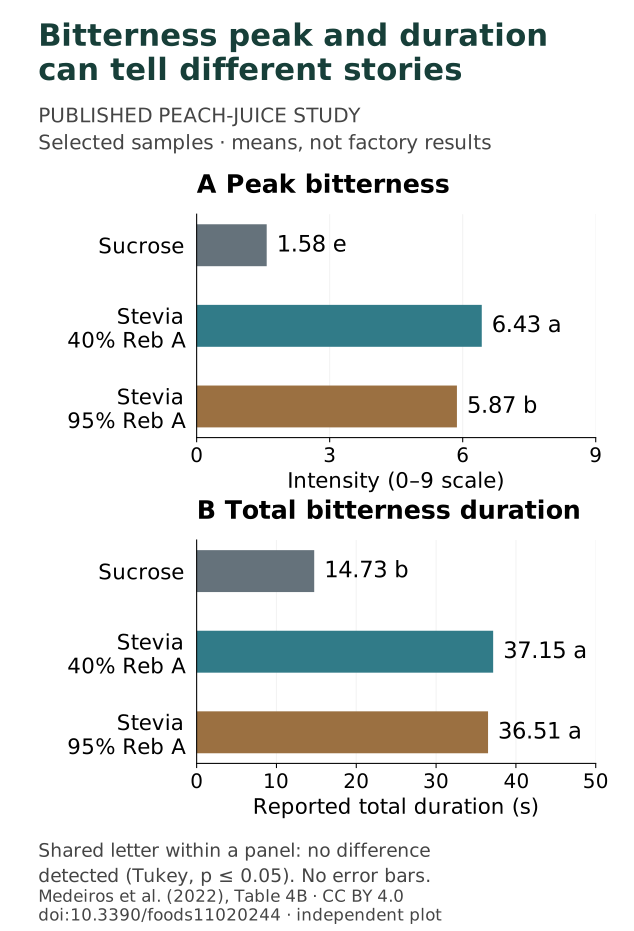
A lower bitter peak need not settle the finish question. The published peach-study comparison below separates the maximum bitterness intensity from the reported total duration; it does not reconstruct a continuous curve from those two parameters. The study used 13 trained time–intensity assessors with three repetitions, serving 50 mL at 10 ± 2 °C. The figure selects the sucrose control and both stevia extracts from six studied sweeteners. Shared Tukey letters within one metric mean no difference was detected at the stated threshold, not proof that two samples are equivalent; the displayed source table supplies no numerical error values for these bars.
What the 126-consumer study adds to grade selection
In Tao and Cho’s 2020 water-solution study, 126 consumers assessed Reb A, D and M at 0.10% (w/v), alongside 14% sucrose. They rated sweetness and bitterness in mouth, five seconds after spitting out the sample and one minute afterward. The glycosides were compared at equal concentrations; they were not all established as equally sweet. Reb D and M had less bitterness than Reb A under these conditions, but their lingering sweetness still mattered. The study did not ask a hedonic liking question. A descriptive term or lower bitterness score therefore cannot be turned into a consumer-preference result. It also found no significant relationship between PROP bitterness and the tested steviol-glycoside intensities. Do not diagnose a customer as a “supertaster” from their dislike of one drink, or promise that a named glycoside will solve every individual response.
Five practical directions to reduce an unwanted finish
The next trial should target the defect while preserving the drink’s intended sweetness, fruit character and mouthfeel. These are comparison directions, not a universal recipe or a required sequence. Keep an unchanged control so an improvement in one attribute does not conceal a new problem.
| Direction | What to change deliberately | What else to check |
|---|---|---|
| Reduce the current addition | Compare a lower addition with the current level | Whether initial sweetness and fruit balance remain acceptable |
| Change the glycoside preparation | Compare identified materials on a stated dose or matched-sweetness basis | Lingering sweetness, solubility, route, specification and cost |
| Share sweetness with another component | Test a permitted, fully declared sugar/sweetener system | Missing solids, new off-notes, total composition and label requirements |
| Adjust acid or flavor balance | Change one defined variable while retaining a control | Sourness, fruit identity, bitterness and relevant stability |
| Improve preparation or delivery | Check weighing, stock preparation, mixing and final concentration | Whether the apparent taste difference was actually unequal dosing |
Acid, aroma and cold serving are conditions to test
Adding lemon juice, changing a flavor or chilling a sample may change the total experience, but none is a universal stevia-bitterness remedy. In a fruit drink, more acid also changes sourness and the intended fruit balance. Record pH and titratable acidity when available rather than describing the change only as “more citrus.” A flavor addition must still fit the product’s character and ingredient requirements. Run an unchanged control beside the proposed acid or flavor adjustment at the same serving temperature. Judge both the first sip and the finish. If the product is served cold, test it cold; a warm preparation check can answer a mixing question but cannot replace the intended drinking condition. Do not infer a bitter-receptor blocking mechanism from a pleasant tasting result, or establish a processing or preservation schedule from a sensory comparison.
Liquid versus powder: compare the delivered ingredient
A liquid product may make small additions easier to handle, while a powder can be prepared as a measured stock. Neither form alone specifies the glycosides, their concentration, carriers or sensory performance. Compare the actual delivered mass and composition, not a drop, scoop or bottle price without a concentration basis. Fully dissolved powder does not retain a special “powder bitterness” simply because it started dry. For a purely hypothetical dosing check, 500 mg of a supplied ingredient in 1.000 kg of final drink is 500 mg/kg, or 0.05% by mass. A 1.00% by-mass stock contains that 0.500 g ingredient in 50.0 g of stock; the other 49.5 g is stock carrier and must be accounted for in the final formula. These numbers demonstrate mass balance, not a recommended stevia dose, stock stability or a production instruction. They do not convert mg/kg into mg/L without a density basis.
Record sweetness, aftertaste and preference as different observations
Hengliyuan uses the sweetness-time idea to discuss when sweetness appears, reaches its peak and declines, and what remains afterward. Record sweetness and bitterness separately; a stronger peak, longer sweet finish and higher preference are different observations. A curve for another ingredient or base cannot supply the curve for your drink.
| Observation | Record separately |
|---|---|
| Sweetness onset | When sweetness becomes noticeable in the agreed tasting sequence, including any initial sweet–sour imbalance. |
| Peak sweetness | The highest perceived sweetness and whether it meets the agreed product target. |
| Fruit character | Whether the intended aroma and fruit impression remain appropriate in the complete drink. |
| Bitterness and astringency | The sensation, its intensity and when it appears; do not combine unlike sensations into one unexplained score. |
| Sweet and bitter finish | The observation at agreed checkpoints, with the time origin stated: in mouth, after swallowing or after spitting. |
| Overall preference | Whose preference was recorded and under which use condition, separately from descriptive intensity. |
Agree the sample volume, temperature, scale, time origin and checkpoints before comparing records. A few agreed checkpoints are a practical feedback method; they are not a continuous trained-panel time–intensity study. Do not invent a smooth curve by joining a few comments or apply the peach study's timing as a universal tasting protocol.
Keep the comparison question and actual addition explicit
Use the current drink or a defined sucrose formulation as the control. A fixed-addition comparison asks what the same stated amount does; a matched-sweetness comparison may require different amounts and other formula adjustments. Record the actual commercial material mass, batch basis and any dilution or compensating changes for every candidate. Change one main direction per round where practical, keeping other relevant conditions comparable. Use coded samples and a balanced or counterbalanced tasting order rather than always putting the same candidate first; retain the order and palate-cleansing method with the record. Keep base preparation, process, serving condition and checkpoint identifiable. If a sample misses the target, identify whether the issue is weak sweetness, bitter intensity, lingering sweetness, fruit balance, mouthfeel or preparation. Do not automatically raise the stevia addition when the main problem is elsewhere. Compare cost in use only after retaining the actual addition needed for the selected application.
Use a blend only for a defined formulation job
If the selected steviol glycoside preparation meets the drink target on its own, another sweetener is not required merely to make a blend. When a gap remains, state what the next component must do. Retaining some sugar may preserve relevant solids and sensory functions; another high-intensity ingredient can change sweetness without automatically restoring body. Assess erythritol's cooling, dissolution and crystallization in the actual system if it is a candidate. Evaluate the exact monk fruit composition and finish, or a sucralose direction, against the complete drink and intended ingredient list. For allulose, keep the intended market and proposed product claims with the material review. A familiar ingredient name or another study's blend ratio does not select the right formula or establish market permission.
Commercial example: stevia and a flavor system work together
Cargill markets EverSweet + ClearFlo as a combination of stevia sweetener and natural flavor. Its North American page positions the system for reducing bitterness and linger and lists beverage syrups, fruit preparations and other applications. These are the supplier’s product claims, not an independent head-to-head trial or a Hengliyuan result. The example shows why “which stevia?” may be an incomplete purchasing question: the offer can include a flavor-modifying system as well as sweetener. It does not establish the formula, price, market permission or performance of another product. Ask for the exact composition, documentation and a test in the intended beverage.
Research example: protein binding is not a general juice recipe
A Cornell research team studied the interaction of Reb A with bovine serum albumin. The original 2016 paper’s abstract describes NMR evidence of binding, while Cornell’s 2015 report describes testing in orange juice. This is a specific protein–glycoside research approach, not evidence that adding any dairy or plant protein removes aftertaste. The research should not be presented as a validated commercial beverage, a consumer liking trial or a vegan solution. The abstract and university report were reviewed here; the complete publisher paper was not obtained. Any development based on the idea needs a suitable ingredient identity, market review and actual sensory and physical testing. It is not Hengliyuan’s factory formula or a recommendation to add bovine serum albumin to a fruit drink.
Repeat the relevant checks after processing and storage
A freshly prepared sample is one checkpoint. Repeat sensory and physical observations after the intended process and at planned storage checkpoints in the relevant package. Retain sweetness, bitterness, finish, fruit character and sweet–sour balance alongside color, cloud, separation, sediment or another defect that matters to this product. Record the actual process, temperature and storage history with each observation. An immediate taste result or a general ingredient-stability statement does not establish shelf life. A favorable taste score also does not resolve microbiological, safety, ingredient-use or labeling requirements.
Compare accepted cost in use, not a promised grade premium
Use the addition that passes the agreed beverage assessment before comparing ingredient cost. A higher price per kilogram can coincide with lower cost in use, but only if the tested dose and required supporting ingredients justify it. Include any bulking, flavor, stock carrier, processing or yield changes that the formula needs. For an explicitly hypothetical arithmetic example, USD 100/kg at 200 mg/kg drink contributes USD 0.020/kg drink. USD 160/kg at 100 mg/kg contributes USD 0.016/kg drink. The second is lower for that ingredient line only; the doses and prices are assumptions, not market quotes, validated equivalent sweetness or Hengliyuan offers. Do not use an unsourced fixed percentage premium to select Reb A, D or M.
Turn the next sample into a specific decision
A useful outcome is an identified adjustment and a reproducible record. Avoid requesting a generally “cleaner” sample without saying when and how the current one misses the target.
| Trial result | Next focused action | Keep with the record |
|---|---|---|
| Lower dose reduces bitterness but loses sweetness | Compare a different glycoside direction or a defined co-sweetener system | Actual dose and sweetness target, not “less bitter” alone |
| Initial sweetness passes, finish is too long | Compare later sweetness separately from bitterness | Time origin, scale, serving condition and taster observations |
| Water test passes, fruit drink fails | Repeat in the real base with acid, fruit and other ingredients identified | Complete base version and controlled comparison |
| Fresh sample passes, processed or stored sample fails | Investigate the actual process/package/storage change | Sensory observations plus relevant physical and safety checks |
| Different tasters disagree | Retain individual responses and assess the intended consumer group | Do not discard a response or label someone genetically sensitive |
| A grade claim conflicts with the COA or ingredient list | Resolve material identity before drawing taste or cost conclusions | Supplier code, assay basis, composition and corresponding documents |
Use the existing free sensory record for sample feedback
The downloadable sensory record keeps one sample code, one person and one checkpoint together. Its 57 blank inputs cover context, six sensory dimensions, three separate review gates and the next action; it has no automatic total or ranking. Use the same agreed scale meanings across records and keep intensity, target fit and preference distinguishable. For several aftertaste checkpoints, keep separately identified records and the actual time origin. This worksheet is a feedback record, not a continuous time–intensity logger or a substitute for a designed sensory study. It downloads directly without an email address; filling it in is optional before contacting us.
Taste acceptance and ingredient permission are separate reviews
For the United States, FDA distinguishes certain highly purified steviol glycosides used under GRAS conclusions from whole-leaf stevia and crude extracts, which are not permitted as sweeteners. A pleasant taste, “natural” description or percentage on a commercial page does not replace review of the exact material and intended use. This guide addresses formulation and sample comparison. It does not establish a safe intake, approved label claim, microbial shelf life or market permission for a finished drink. Keep the full ingredient identity, use category and intended sales market with the purchasing and regulatory review.
Start with the fruit drink, market and main taste issue
Send the drink type or fruit base, intended sales market and the one issue the next sample should address. Share the current sweetener, desired sugar reduction, route or ingredient-list restrictions and sample observations you have. You can start before selecting a glycoside or completing a worksheet, document set or purchasing brief. Once the material direction is clearer, align the proposed composition, specification and sample identity, then discuss packaging, estimated quantity, documents and sample arrangements. Confirm the exact preparation, intended food category and current market requirements before label or launch decisions; a classification or taste result from another market is not that review.
Common questions
Why can the same stevia grade taste different in different fruit drinks?
Keep the actual fruit base, acid system, solids, other ingredients, preparation and serving condition with the result. A successful comparison in one drink does not supply the result for a changed base.
Request a stevia or GSG ingredient sampleDoes a higher Reb A percentage guarantee a shorter bitter finish?
No. In the cited peach study, the two stevia extracts had different bitterness peaks but their reported total durations shared a Tukey group. That does not prove equivalent duration or establish a result for another grade or drink.
Request a stevia or GSG ingredient sampleDoes the Reb A, D and M study prove which is best in fruit juice?
The cited 2020 study used aqueous solutions with equal glycoside concentrations, not demonstrated equal perceived sweetness across all candidates. It informs a comparison question; it does not select a finished fruit-drink formula or certify Hengliyuan materials.
Request a stevia or GSG ingredient sampleShould the dose stay fixed or should sweetness be matched?
Choose the question first. When matching sweetness, retain each actual addition and any dilution, bulk or other formula change; it is a different comparison from fixed addition.
Request a stevia or GSG ingredient sampleCan I use a few aftertaste checkpoints instead of recording continuously?
Agreed checkpoints can support practical sample feedback if time origin, scale and serving condition are stated. They are not a continuous time–intensity study, and sparse observations should not be presented as a measured smooth curve.
Request a stevia or GSG ingredient sampleIs partial sugar replacement always easier than full replacement?
It may preserve relevant sugar functions, but the useful route depends on the actual product target. Compare the complete formulas against a documented control rather than assuming one will pass.
Request a stevia or GSG ingredient sampleDoes the Excel record calculate a winning sample?
No. It has blank context and observation fields, separate review gates and no formula or automatic ranking. Keep the time origin and checkpoint identifiable; an unrecorded observation is not zero.
Request a stevia or GSG ingredient sampleMust I choose a grade and finish the worksheet before contact?
No. Start with the fruit drink, intended market and main taste issue. The grade, composition, specification, packaging, quantity, documents and sample arrangements can be clarified as the direction develops.
Request a stevia or GSG ingredient sampleWhy does stevia leave a bitter or sweet aftertaste?
Steviol glycosides can contribute sweet and bitter sensations, and lingering sweetness is a separate observation from bitterness. The exact material, concentration, drink base and taster affect the result. Identify which sensation needs changing before selecting another sample.
Request a stevia or GSG ingredient sampleIs liquid stevia always less bitter than powder?
No. The supplied composition and actual delivered concentration matter. Compare identified ingredients in the same drink on a stated dose or matched-sweetness basis; a drop and a scoop are not equivalent units.
Request a stevia or GSG ingredient sampleWill lemon juice or citric acid remove stevia aftertaste?
Not reliably in every drink. An acid adjustment changes sourness and fruit balance as well. Compare it against the unchanged control at the intended serving temperature, recording the acid system and finish.
Request a stevia or GSG ingredient sampleCan Reb M guarantee no aftertaste in my fruit drink?
No. Published aqueous results can help select a test direction, but lower bitterness does not mean no lingering sweetness, equal consumer preference or a verified fruit-drink result. Evaluate the exact supplied material in your formula.
Request a stevia or GSG ingredient sample