
Read this guide in
HOT AND COLD DRINK GUIDE
Monk Fruit Sweetener for Coffee, Tea and Cocoa Drinks
Testing monk fruit sweetener in coffee, tea, cocoa and milk tea: hot/cold taste, aroma, solubility and packaging notes for drink brands.
Coffee, tea and cocoa drinks are simple to name but difficult to sweeten well. Bitterness, roast notes, tannins, milk base, cocoa solids, temperature and serving style all affect how monk fruit sweetener is perceived.
This guide is for cafe powder brands, RTD tea and coffee teams, milk tea developers, cocoa drink brands, tabletop sweetener buyers and private-label drink projects preparing sample tests.
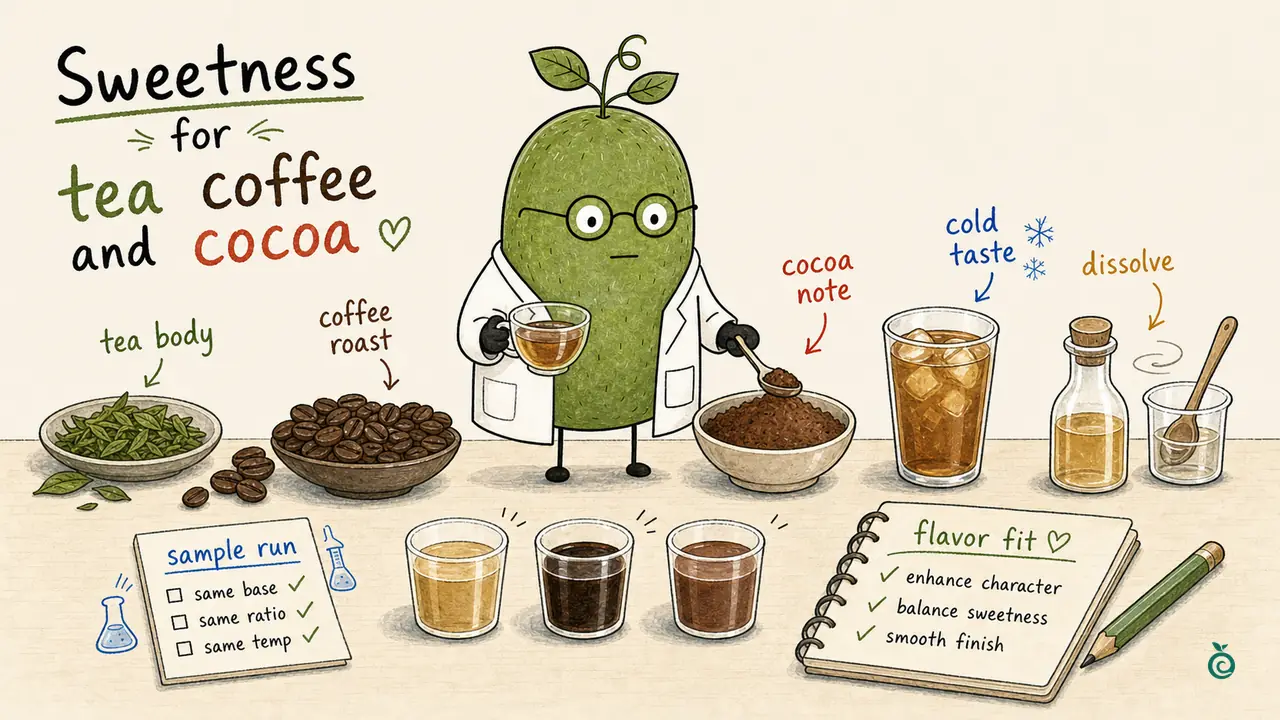
Separate hot and cold testing
A sweetener direction that tastes balanced in hot coffee may feel different in iced tea, cold brew, cocoa powder or milk tea. Test the product at the serving temperature buyers expect consumers to use.
Bitterness and aroma need attention
Coffee roast notes, tea tannins and cocoa bitterness can expose sweetness gaps or lingering notes. Review aroma release, aftertaste, sweetness timing and whether a blend direction is needed.
Milk and plant bases change the result
Dairy, oat, soy, coconut and creamer systems can round sweetness or create new mouthfeel questions. Test the sweetener in the final base, not only in black coffee or plain tea.
Powders need mixing checks
For instant coffee, milk tea powder, cocoa powder and sachets, buyers should check solubility, clumping, powder flow, serving weight, scoop behavior and whether the product will be mixed with hot or cold water.
Retail and foodservice packaging differ
Single sticks, sachets, jars, cafe bulk bags and RTD bottles create different cost, filling, label and storage questions. Packaging specification should be shared before final quotation.
Turn drink testing into a clear inquiry
Send target market, product type, packaging specification, estimated quantity, required certificates or documents and whether samples are needed, plus hot/cold serving information if already known.
Hot and cold drink comparison
Record coffee extraction or tea brewing, cocoa preparation where used, water, milk type, actual sweetener mass and serving temperature. Test hot and iced versions separately and document ice dilution. Code samples and compare sweetness onset, bitterness, aroma and finish. Keep a physical note for particles or sediment instead of treating every visible change as a taste result. Use the RTD process guide when the product will be manufactured and stored.
Review note
Reviewed October 2, 2026.
Common questions
Can monk fruit sweetener be used in coffee and tea?
Yes. It can be tested in coffee, tea, cocoa and milk tea products, but bitterness, aroma, base and serving temperature should be reviewed. Tell us which documents you need; we will check which files match the selected product.
Discuss this requestShould hot and iced drinks use the same sample?
Not automatically. Hot and cold serving conditions can change sweetness, solubility and aftertaste, so both should be tested when relevant. Tell us the taste issue you want to resolve; we will review the next sample direction.
Discuss this requestCan monk fruit work in milk tea or cocoa powder?
It can be tested, but powder flow, milk base, cocoa bitterness, solubility and serving size should be checked together. Tell us which documents you need; we will check which files match the selected product.
Discuss this requestCan Hengliyuan discuss private-label drink sweetener samples?
Hengliyuan can discuss samples after the buyer shares target market, drink type, packaging specification, estimated quantity, document needs and whether samples are needed. Tell us your packaging requirements; we will review the packaging proposal for your project.
Discuss this request