
Read this guide in
BEVERAGE APPLICATION
Monk Fruit Sweetener for RTD Tea, Coffee and Functional Beverages
Monk fruit sweetener for RTD tea and coffee: taste balance, solubility, acidity, stability and OEM sample testing for beverage brands.
Use this page for the RTD process decision: addition, thermal or other validated treatment, filling, packaging and storage. The coffee, tea and cocoa guide covers preparation and sensory comparison for freshly served drinks.
Ready-to-drink tea, coffee and functional beverages are important sugar-reduction categories. Buyers often want a natural sweetener story, lower added sugar and a cleaner label direction without making the drink taste thin or overly sweet.
Monk fruit sweetener can be a useful option, but beverage formulas must be tested as complete systems because tea notes, coffee bitterness, acids, minerals, flavors and processing conditions all affect sweetness perception.
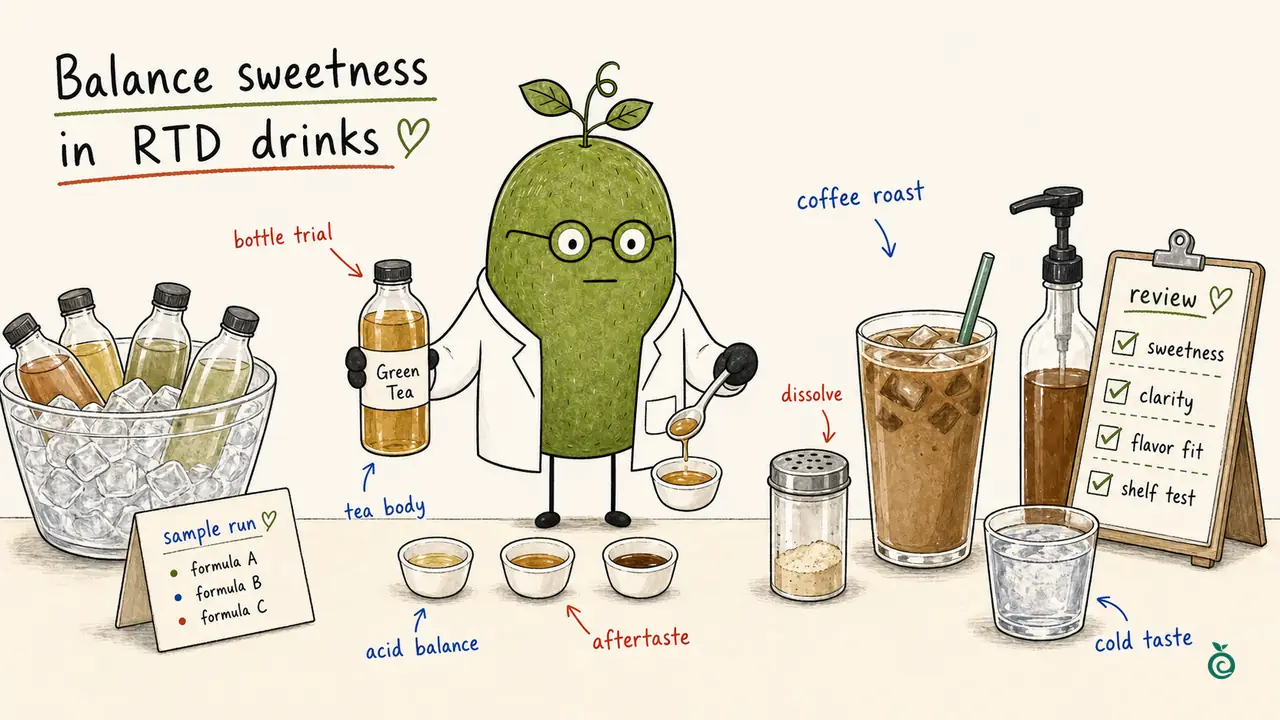
Why beverage formulas need complete testing
A monk fruit sample in plain water does not show how it will taste in lemon tea, milk tea, cold brew coffee, protein coffee, sparkling drinks or functional beverages. The full formula changes sweetness onset, finish and perceived aftertaste.
Match the sweetener to the beverage style
Tea drinks may need a clean finish, coffee drinks may need bitterness management, and functional drinks may need balance with acids, minerals or botanicals. The supplier should understand the beverage style before recommending extract or blend.
Check solubility and process conditions
Beverage buyers should review dissolving behavior, clarity, sediment risk, pH range, heat process, cold-fill or hot-fill conditions and storage expectations. These checks help avoid problems after scale-up.
Use sensory testing to control aftertaste
Aftertaste can come from the sweetener, dosage, flavor system, acids, tea polyphenols, coffee bitterness or minerals. Adjusting the full formula is usually more useful than judging only by ingredient name.
What buyers should prepare for OEM discussion
Prepare target beverage type, sweetness level, sugar-reduction claim direction, processing method, serving size, flavor, expected order quantity, certificate needs and whether the project is bulk ingredient supply or finished private-label production.
How Hengliyuan supports beverage projects
Hengliyuan can discuss monk fruit extract, beverage sweetener blends and OEM directions for RTD tea, coffee, solid drinks and functional beverages. Buyers can start with sample testing and specification discussion before quotation.
Hot-fill, cold-fill and aseptic routes need their own records
Name the production route before requesting a sweetener sample. Record the actual product formulation, pH, sweetener addition point, measured heat or treatment history, fill conditions and cooling. Hot filling, cold filling with a validated preservation system and an aseptic process are different routes; passing a tasting under one does not validate another. This guide does not specify a microbial kill step. For a pilot trial, compare the processed candidate with a matching control and, where useful, a separately labeled unprocessed sample. Use the actual pack and closure. Inspect before remixing, then compare clarity, sediment, color, coffee or tea aroma and sweetness finish at the planned checkpoints. Record oxygen and other process observations if the production team uses them. Keep formulation stability and process safety as separate approval records. If a result changes after processing, identify the relevant variable before requesting a new ratio. Confirm whether the material, water, preparation or process differed from the first sample. A new extract grade or carrier needs its own document and application review. The shelf-life claim belongs to the complete validated product, process and package.
Review note
Reviewed October 2, 2026.
Common questions
Can monk fruit sweetener be used in ready-to-drink beverages?
Yes. It can be tested in RTD tea, coffee and functional beverages, but the full formula should be checked for taste, solubility, pH and processing fit.
Is monk fruit better for tea or coffee?
It can work in both, but tea and coffee need different taste balancing because bitterness, acidity, aroma and processing conditions are different.
What should beverage brands test first?
Test sweetness level, aftertaste, solubility, clarity, pH, flavor interaction, processing conditions and taste after storage.
Can Hengliyuan support beverage OEM projects?
Hengliyuan can discuss ingredient supply, sweetener blends and OEM directions based on the buyer's beverage type, target market, packaging plan and document needs.
