
Read this guide in
MEAT SNACK VALIDATION SCORECARD
Low-sugar jerky and meat snack validation scorecard
Download a free jerky sample comparison sheet. Record control and candidate results, test methods, moisture, water activity, chew and storage without an email signup.
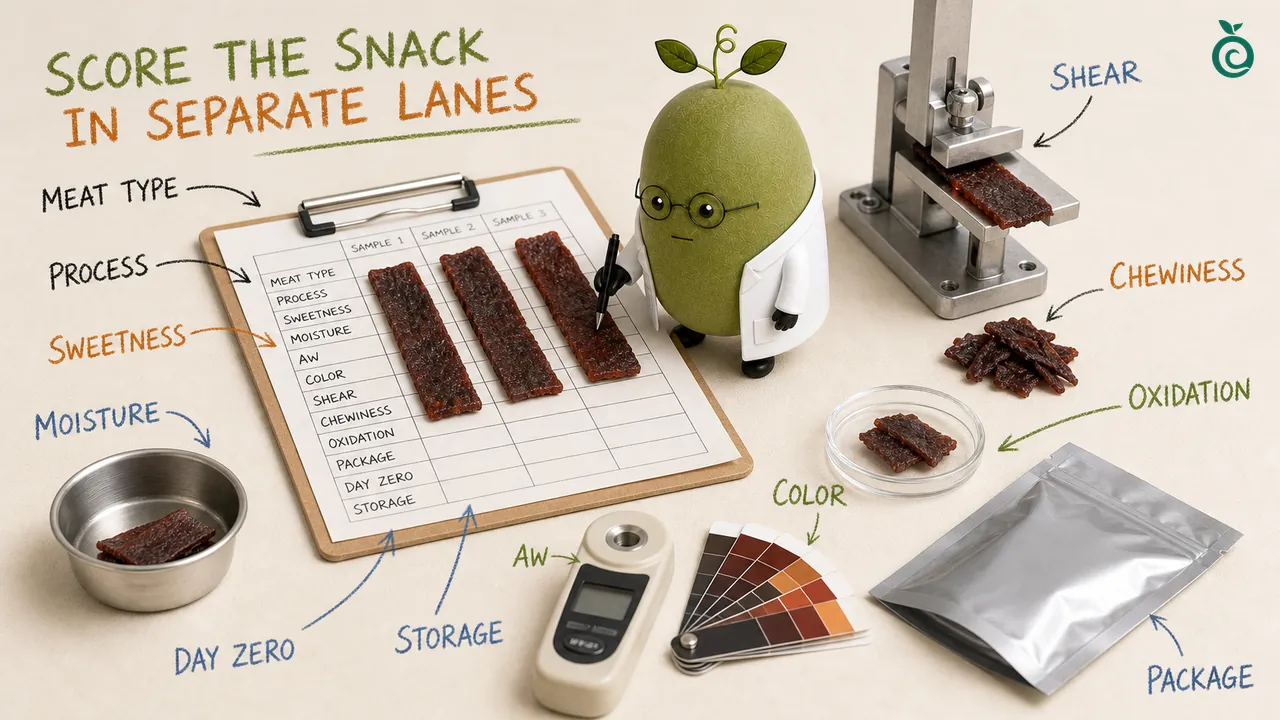
Use this scorecard to compare a control with a low-sugar meat-snack candidate under defined conditions. Download the blank Excel record below without leaving an email address. It keeps measured results, sensory observations and unresolved questions visible rather than combining them into one approval score.
The fields can be adapted to beef, pork or chicken jerky and other meat-snack formats. Set methods and requirements for the actual product before testing. Our preference is to carry one clear next question into the next sample, with the original observations still attached.
Download the blank comparison record
The workbook has one sheet with 27 fields and separate columns for the method or target, control and candidate. Make a copy for each matched trial, replicate or storage checkpoint; keep sample codes and dates traceable. Yellow cells are editable. Leave unrecorded results blank, and write Not measured or Not applicable when that is what you mean.
Set the comparison and requirements first
Record the species, whole-muscle or restructured format, thickness, formula changes and marinade uptake. Decide whether you are holding the drying schedule fixed or comparing at an agreed endpoint; record the actual endpoint or time achieved. Define the method, units and project requirement before seeing the candidate results. Do not borrow acceptance limits from a different meat or process.
Keep observations separate from approval
Use the table below to decide what belongs in each part of the record. Keep individual replicate results available when reporting averages. A blank cell is not a zero, a pass or evidence that the check was unnecessary.
| Record | Include | Avoid |
|---|---|---|
| Process and sample identity | Batch, preparation, cooking/drying reference, cooling and sampling conditions. | Treating two different processes as an ingredient-only comparison. |
| Moisture and water activity | Separate results, methods, temperature and units where applicable. | Converting moisture to aw without a validated basis. |
| Sensory and texture | Coded sample order, serving conditions, scale anchors, dimensions and instrument settings. | Mixing liking with intensity or comparing different scales. |
| Color, oxidation and packaging | Agreed color method, oxidation result with method/units, package and seal observations. | Calling visual color or odor an analytical oxidation result. |
| Storage and next action | Checkpoint, storage conditions, opened/sealed status, unresolved issue and owner. | Averaging away a failed or missing safety check. |
Make sensory records comparable
Only taste samples cleared under the project's food-safety procedures. Use coded samples and vary their order, while keeping serving conditions and instructions consistent. Write the anchors for any scale you choose, such as the meaning of each intensity level, and use that same scale for both samples. Keep preference separate from sweetness intensity, bitterness and lingering notes. No default numerical pass score is supplied.
Repeat measurements in the intended package
Record package material, fill, headspace where relevant, seal condition and opening history. At each agreed storage checkpoint, use a new copy of the record with the same sample identity and methods. Keep analytical oxidation results separate from odor observations. A storage record documents what was checked; its duration does not by itself establish commercial shelf life.
Choose the next change from the unresolved result
Review each requirement separately. If sweetness is the issue, discuss a sweetener adjustment; if chew changes, examine process, water relations and solids alongside the formula. Record the proposed change, owner and due date. Keep unresolved process-safety questions with the responsible food-safety team rather than clearing them with a favorable taste score.
Technical basis
The linked jerky formulation guide explains the research context and includes the original study references. FSIS commercial jerky guidance treats pathogen reduction and drying controls as distinct parts of the process. This blank comparison record supplies no formula, lethality schedule or automatic safety decision.
Common questions
Can I download the Excel record without giving an email address?
Yes. The download link opens the blank .xlsx file directly. No signup is required.
Discuss this requestDoes the sheet calculate a total score or approve a sample?
No. It records separate results and next actions. Strong sensory performance must not hide an unresolved safety, process or specification issue.
Discuss this requestCan I use it for different meats or formats?
Yes, as a field structure. Define methods, conditions and requirements for each actual product; do not compare different formats as though only the sweetener changed.
Discuss this requestHow should I record a missing measurement?
Leave an unrecorded result blank. Write Not measured or Not applicable when appropriate and explain any required follow-up. Do not enter zero unless zero was actually measured.
Discuss this requestHow should I track storage checkpoints or replicates?
Use a separate copy for each matched trial, replicate or checkpoint. Preserve batch and sample codes, dates, methods and storage conditions so results remain traceable.
Discuss this requestWhat should I send with the completed sheet?
Send the main unresolved result and the sample codes, with the formula/process changes you can share. Add the target market, packaging, estimated quantity and document needs for the ingredient discussion.
Discuss this request