Read this guide in
Hengliyuan application and selection
Tabletop Sweeteners: Erythritol Serving Size & Portion Guide
Set tabletop sweetener portions by weight, spoon or sachet. Compare erythritol and blends, then verify sweetness, scoop consistency and pack filling before approval.
For an erythritol tabletop sweetener, define how it should replace sucrose before setting grams per pack: by equal weight, equal volume, or one sachet or scoop in place of a defined amount of sucrose.
This choice affects whether erythritol is used alone or in a blended sweetener, the grams per serving, and whether the formulation can dose consistently in sticks, jars or other packs.
Hengliyuan supplies erythritol in powder and granular forms, with mesh specifications available for discussion. Against the target sweetness, use method and sensory requirement, we can also discuss erythritol with sucralose, monk fruit sweetener, steviol glycosides or another sweetener.
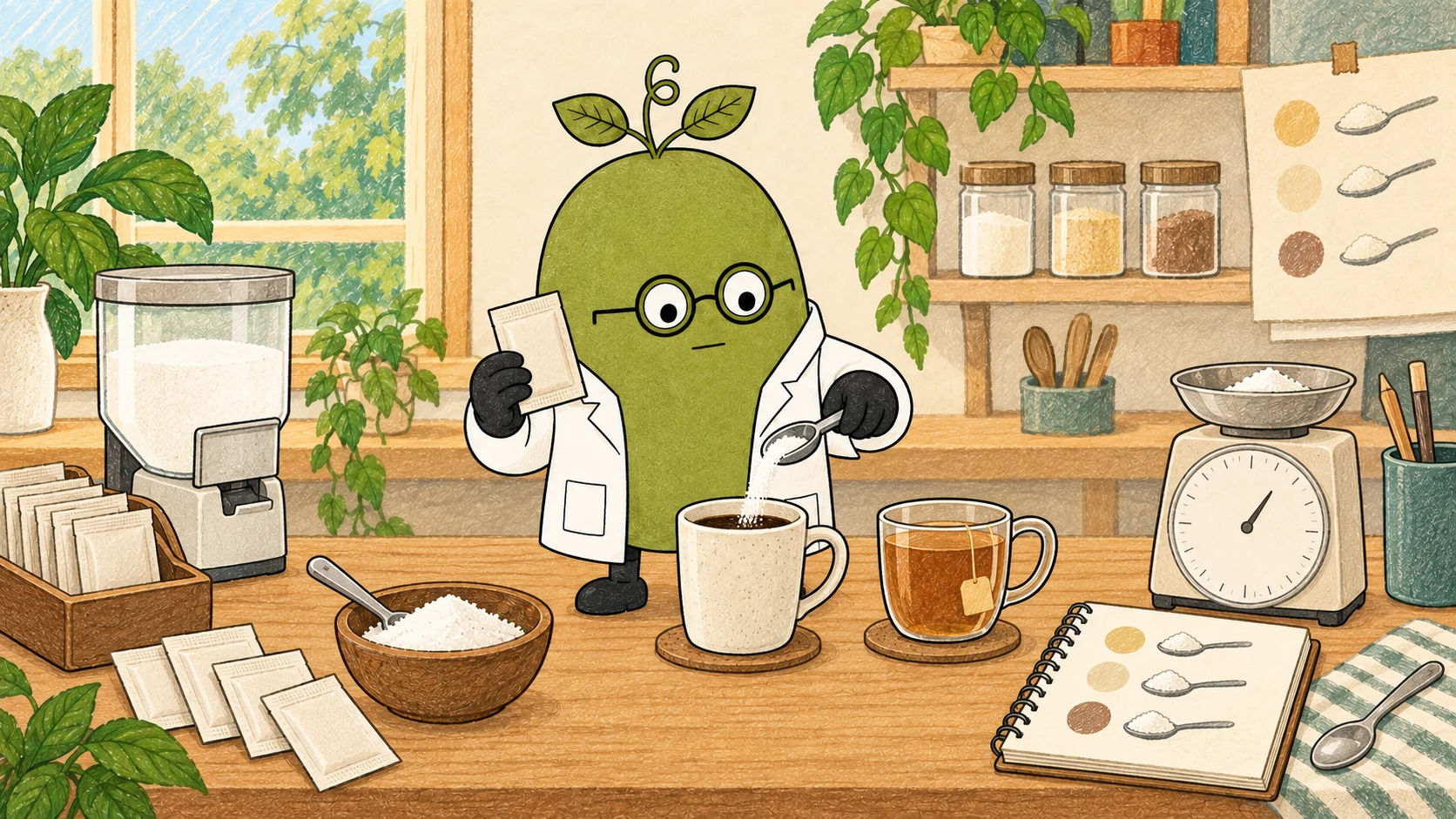
Use erythritol alone or in a blended sweetener?
Ingredion’s ERYSTA C40 technical specification lists relative sweetness at 60–70% of sucrose. This is a useful reference for pure erythritol, not a guaranteed sweetness ratio for a Hengliyuan blend or a finished drink. At equal weight, pure erythritol generally provides less sweetness than sucrose. If lower sweetness or a larger portion is acceptable and the cooling sensation suits the product, start by testing erythritol alone. If a small sachet or fixed-weight portion must deliver more sweetness, discuss a blend. In a blend, erythritol contributes bulk and sensory character while a high-intensity sweetener adds sweetness. Check onset, peak sweetness, finish, bitterness and cooling in the actual drink; adding nominal sweetness values does not establish the finished taste.
Equal weight and equal volume need different checks
Define what the customer means by “replaces sugar” before choosing a ratio. A gram, a spoon and a sachet are different dosing instructions. State the sugar reference and the consumer action you want to preserve.
| Use method | Define before sampling | Verify in the trial |
|---|---|---|
| Equal weight | The sugar mass one gram of finished product should replace | Weighed doses, sweetness and sensory result in the same base |
| Equal volume | The exact spoon or scoop and a level-fill method | Mass across repeated fills, plus sweetness of that measured portion |
| One sachet per use | Sugar-equivalent target, drink volume and sachet count | Actual fill mass, taste, dissolution and complete emptying |
| Adjust to taste | A clear starting dose and method for adding more | Whether consumers can measure small increments consistently |
For a spoon-based direction, use the intended spoon and filling method. Weigh repeated level spoonfuls of both the sugar control and the candidate, then compare their sweetness in the same drink. The same spoon volume does not establish the same mass. A heaped or compressed scoop is a different measure from a level scoop. If one level scoop is the approved direction, make that clear on the final pack rather than leaving consumers to infer it from the scoop shape.
Work back from the intended serving
Use the target coffee, tea or other drink and keep its amount and serving temperature consistent. A useful first trial is: 1. Prepare the sucrose control at a recorded dose. 2. Set the candidate serving in grams, level scoops or sachets, and record its actual mass. 3. Compare overall sweetness with the control. 4. Record cooling, aftertaste, bitterness and the original flavor separately. 5. Adjust one major factor at a time, save the new formula version and compare again. For a spoon-based sample, retain both the measured spoon mass and the sensory result. A formula can taste right at a precisely weighed dose yet dose inconsistently from the retail scoop. Test each intended use rather than approving a multi-use product in plain water alone. Coffee, tea and milk drinks differ in flavor and serving conditions, so record which applications the sample has actually passed.
Check the consumer portion and the filling line
A target serving weight does not show that every stick can be filled consistently. Powder or granule form, particle differences within the blend, equipment and handling conditions can affect feeding and metering. For sticks and sachets, check hopper discharge, fill-mass variation during the planned run, blend consistency after transfer, and how completely the opened pack empties. Inspect the seal area for powder contamination and the packed material for clumping or changed handling under the planned storage conditions. Agree the acceptable limits for the project before approval. For jars or tubs, test the supplied scoop using the intended consumer method. Repeat fills instead of weighing one ideal portion. Check whether storage or handling changes the way the material fills or leaves the scoop. Record any change that makes the stated serving harder to reproduce.
Verify blend consistency beyond one sample
A high-intensity sweetener may be present at a much lower mass than the erythritol. A correct overall recipe does not by itself show that each serving has the intended composition. Discuss premixing, staged addition or another appropriate blending method for the actual equipment. Use an agreed sampling plan covering different locations or time points, including relevant transfer and filling steps. Sensory comparison can flag differences; use a suitable analytical method when needed to verify composition. Do not approve scale-up from one good-tasting portion while blend consistency remains unresolved. Keep the formula version, process and sampling results connected to the accepted sample.
Set acceptance criteria before tasting
Use the checks below to define what the sample must do. Set the project’s acceptance limits before the trial; a generic pass/fail statement cannot replace the actual observation.
| Check | Record with the sample |
|---|---|
| Sweetness | Control dose, candidate dose and whether the intended serving matches the target |
| Taste | Cooling, bitterness, aftertaste and retention of the drink’s flavor |
| Dissolution | Drink temperature, stirring method and any visible particles or residue |
| Scoop or fill consistency | Repeated measured portions or filling-run observations against agreed limits |
| Blend consistency | Sampling locations or times and sensory or analytical findings |
| Packed performance | Pack type, storage conditions, observation time, clumping and emptying behavior |
For each sample, record its code and formula version, actual grams per portion, sucrose-control dose, measuring method, test drink, preparation and test date. Link each observation to that record so feedback such as “too sweet” leads to the right next adjustment.
Start with the use requirement, even without a formula
You do not need a finished recipe before contacting Hengliyuan. Tell us the intended drink or food, consumer measuring method, target sugar replacement, sales market and packaging direction. If serving weight is fixed, say so; if it can change, describe the sweetness and sensory result you want. Hengliyuan can discuss erythritol form, whether a blend is needed and samples suited to that brief. Test the sample in your own product and return the recorded dose, preparation and observations. Those results guide the next adjustment. Before ordering, connect the accepted sample to the full composition, serving directions, pack specification, quantity and document requirements. Confirm any untested uses separately.
Review note
Reviewed October 16, 2026. The cited Ingredion specification supports the pure-erythritol sweetness reference. Serving directions for a specific blend still require its own application and dosing checks.
Common questions
Does 1 g of erythritol replace 1 g of sugar?
Not automatically at equal sweetness. The cited technical specification gives pure erythritol a lower relative sweetness than sucrose. Define whether you want equal mass, equal spoon volume or a fixed sweetness per sachet, then test the selected material.
Discuss tabletop sweetener samplesCan equal-weight results support a spoon-for-spoon direction?
No. Measure the intended spoon and filling method separately. Record repeated spoonful masses and compare the sweetness delivered by that portion; equal volume does not establish equal mass.
Discuss tabletop sweetener samplesHow should one-sachet directions be confirmed?
Link the specified blend and actual fill mass to a defined sugar-equivalent target and intended use. Test taste, dissolution and emptying in that drink or food before finalizing the directions.
Discuss tabletop sweetener samplesWhat if the sample tastes right but the scoop varies?
Keep the sensory result, but resolve the dosing problem before approval. Check the scoop, filling method, powder or granule form and handling conditions. A precisely weighed tasting portion does not prove reliable consumer measurement.
Discuss tabletop sweetener samplesIs one sample enough to verify uniformity?
No. Use the agreed locations or time points through blending, transfer and filling. Compare servings and use an appropriate analytical method where needed; one acceptable portion cannot establish consistency across the batch.
Discuss tabletop sweetener samplesWhat should I send before requesting samples?
Send the target application, sales market, consumer measuring method, desired sugar replacement and pack format. State any fixed serving weight or ingredient requirements. You can discuss a sampling direction before the complete formula is decided.
Discuss tabletop sweetener samples