Monk Fruit Extract vs Stevia Extract: Which Works Better by Food Application?

Both monk fruit extract and stevia extract can provide high-intensity sweetness to foods, but no one ingredient is a guaranteed winner in all formulas. The acidity of the beverage, the protein of the dairy product, the bitterness of the tea and cocoa, and the volume and color required for baking will all change the behavior of both sweeteners.

Published by Guilin Hengliyuan Biotech

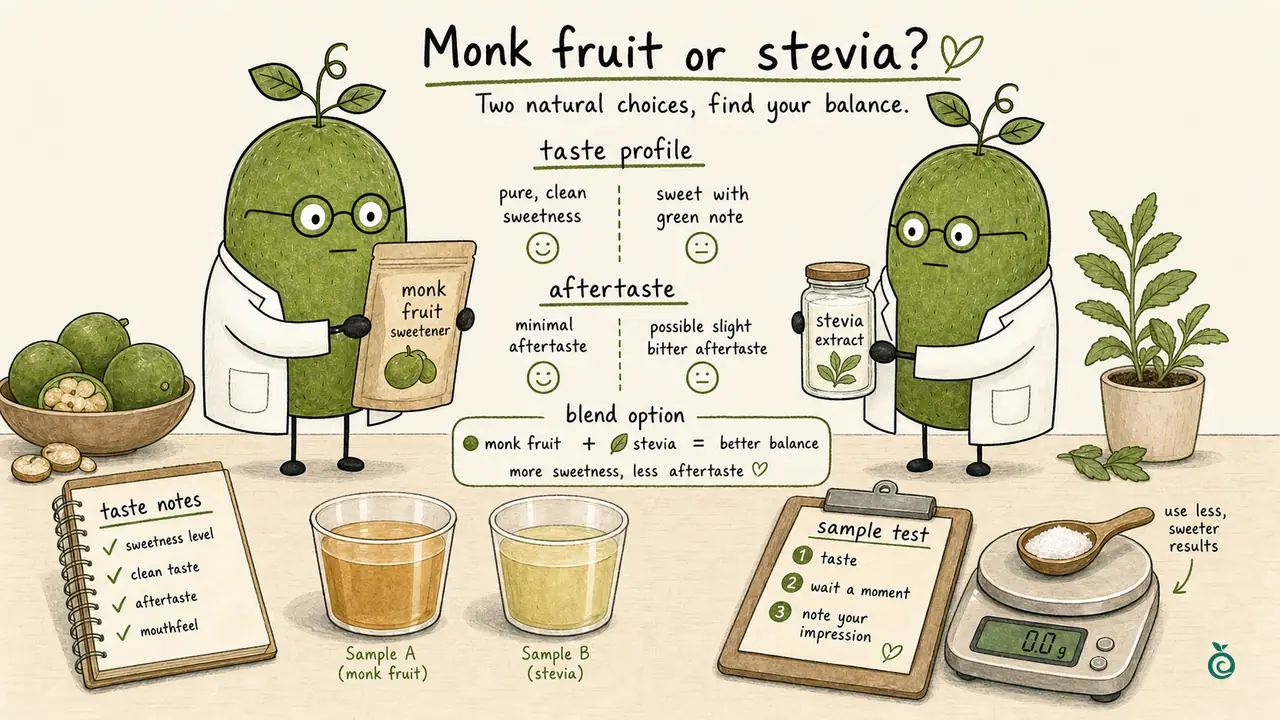
Monk Fruit Doctor illustration: Monk Fruit Extract vs Stevia Extract: Which Works Better by Food Application?

Existing direct comparison studies also point in the same direction. The sweetness intensity, bitterness, aftertaste and consumer acceptance of monk fruit and stevia in aqueous solutions, chocolate milk, natural yogurt and whey protein drinks are inconsistent. The purchaser should first confirm the specific specifications of the comparison, and then conduct a sweetening test on the real product.

Hengliyuan's understanding of these two sources of sweetness is also based on this premise. Monk fruit and stevia can be used separately or combined in a formula. Depending on the sweetness intensity, entrance speed, aftertaste, dosage per serving, cost, label orientation and application functions required by customers, the suitable combination and proportion of raw materials will also change accordingly.

First confirm what is being compared

"Monkose" and "stevia" are both commonly used names in the market, but they do not necessarily represent a single raw material. This article focuses on comparing standardized monk fruit extract or mogroside with food-grade steviol glycosides. If the sample is table sugar, bar or bagged sweeteners, continue to check for erythritol, allulose, maltodextrin and other carriers. The complete ingredients are different, and the comparison results reflect the entire set of blended products and cannot be directly attributed to monk fruit or stevia.

Compare itemsMonk fruit extract or mogrosideSteviol glycosides
plant sourcemonk fruit fruitStevia leaves or specific steviol glycosides produced by approved processes
Main sweetening ingredientsA variety of mogrosides, often with mogroside V as the specification indicatorStevioside and different rebaudioside, common Reb A, Reb D and Reb M, etc.
Frequently asked questions about specsMogroside V or total mogroside, what are the content and other ingredients?The composition of total steviol glycosides and specific glycosides, and the proportion of Reb A, Reb D and Reb M
FDA reveals sweetness rangeApproximately 100 to 250 times that of sucrose, depending on the mogroside contentApproximately 200 to 400 times that of sucrose, depending on glycoside composition and test conditions
Sweetness and aftertasteDelayed sweetness, lingering sweetness, fruitiness, bitterness, or astringency may occurlingering sweetness, herbal, licorice, bitterness, or astringency may occur
Physical effects in formulationsMainly provides sweetness, low addition amount cannot restore the volume and structure of white sugarMainly provides sweetness, low addition amount cannot restore the volume and structure of white sugar
Key documents when purchasingProduct specification, mogroside V or total mogroside caliber, complete ingredients and batch COAProduct specifications, glycoside composition, purity, production source, complete ingredients and batch COA

Sweetness multiples can only be used to determine a small trial starting point. Acids, bitter substances, aromas, proteins, fats and temperature in food all affect actual perception. Also labeled as high-intensity sweeteners, the two samples cannot be replaced by weight alone.

What comparative conclusions have been drawn from existing studies?

The following studies all put monk fruit and stevia into the same set of experiments. The specifications they use are different from the food base formula. The conclusions are suitable to help design samples and cannot be directly converted into formula ratios for all products.

Research conditionsSamples and key figuresResearch conclusionUsage for projects
2019 Temporal sensory study of isosweet water solutions20 participants evaluated 16 sweeteners in three tests. The samples were prepared to have a sweetness equivalent to a 10% sucrose solution, and changes in sweetness, bitterness, metallic taste, and chemical taste were recorded within 60 seconds.Reb A steviol glycosides and monk fruit sweeteners both have obvious and persistent bitter, metallic or chemical taste records, and the sweetness record is lower than that of sucrose.Aqueous solutions are suitable for watching the sweetness appear and subside, but you cannot conclude that one of them is necessarily better in real food.
2020 Black Tea, Chocolate Milk and Natural Yogurt Research20 trained participants compared 8 sweeteners, with target sweetness levels in each of the three foods based on a 10% sucrose solutionThe sensory performance of monk fruit and Reb A stevia will change with the base formula. The difference between the two and sucrose is most obvious in natural yogurt. Studies have observed low sweetness and side flavors such as bitterness and chemical taste.Tea, chocolate milk and yogurt should be tested separately and cannot share one aqueous solution. Conclusion
2015 Skim Chocolate Milk Study131 young adults compared nine chocolate milks, and 167 children further evaluated the sucrose control and two partially reduced sugar samples. Some sugar-reduced formulas use 39.7 g/L sucrose plus 46 mg/L monk fruit extract, or 39.7 g/L sucrose plus 30 mg/L stevia extract.Chocolate milk with high sweetener alone was less popular among the adult group than the sucrose control. Both partially reduced sugar samples were accepted by adults and children, and there was no conclusion that monk fruit was better than stevia.Chocolate milk can be tested for partial sugar reduction first, and then decide whether to continue to increase the substitution ratio.
2018 Whey Protein Beverage ResearchBase contains 25g whey protein/360ml. The study first conducted sensory evaluation of equal sweetness and time, and then asked 150 consumers to compare single sweetener and compound samples.The study selected a sugar-free blend direction of 25% stevia and 75% monk fruit, and a sugar-reduction direction of 25% stevia, 25% monk fruit and 50% fructose. Consumers are divided into two groups: those who value labeling and those who value flavor. Natural origin information increases the acceptance of compound samples among some groups.Protein-containing products are suitable for testing single raw materials and blend directions at the same time. Consumers' attitudes towards labels cannot replace real taste testing.
Research on multiple entrances of natural yogurt in 202250 participants compared equally sweet yogurt. For every 100 grams of plain yogurt, add 9 grams of sucrose, 10 grams of xylitol, 0.15 grams of stevia or 0.15 grams of clohan fruit sweetener.The astringency of stevia yogurt lasts longer, while the proportion of bitterness and astringency of monk fruit yogurt increases from the first to the third mouthful. In the preference ranking, xylitol is the highest, followed by stevia and monk fruit.In this yogurt, stevia is more acceptable than monk fruit. This result shows that monk fruit cannot win directly based on taste impression alone.
2026 School Lunch Chocolate Milk StudyThe study adjusted stevia, monk fruit and other sweeteners to a sweetness equivalent to 3.69% sucrose, and compared ordinary milk, lactose hydrolyzed milk and compound samplesIn regular chocolate milk, the stevia and monk fruit samples were both less liked than the sucrose control. After lactose was hydrolyzed, the amount of sweetener was reduced by about one-third, and the difference in consumer acceptance of each sample disappeared; after further blending, there was no difference in the overall preference of adults and children from the sucrose control.Changing the base formula and blending method may be more effective than simply replacing sweeteners

These studies do not present a champion across applications. They have repeatedly shown that food bases, sugar replacement ratios and blending methods can change results.

How does Hengliyuan understand the combination of two sweeteners?

Hengliyuanly did not regard monk fruit and stevia as raw materials that could only be chosen from one or the other. When used alone, each has its own sweetness profile and flavor profile. After putting them into the same set of formulas, you can first choose one to take on the main sweetness, and then use the other to adjust the speed, peak and back-end performance of the sweetness. There is no fixed answer as to who should be the main source of sweetness. It depends on the buyer's product base and taste goals. This type of combination does not mean adding both high-intensity sweeteners to a higher dosage. A more reasonable approach is to first determine the sweetness that the finished product needs to achieve, and then find the balance point through multiple proportions of samples. When a certain raw material exhibits obvious bitterness, astringency or lingering sweetness at high dosage, you can appropriately reduce its dosage and test whether another raw material can complement the sweetness curve. The final results are still subject to the results of the blind test and stability test. When customers say they "want natural sweeteners," they often have more specific requirements behind them. Some people care about the ingredient list, others need one packet to be exactly the same as a cup of coffee; dairy customers care about protein flavor and the aftertaste of continuous drinking; baking customers also need volume, moisture and browning. Hengliyuan will first break down these requirements before deciding to use a single raw material, an existing blended products or a customized formula.

Main requirements of customersRecipe directions that can be prioritized for evaluationThings that need to be confirmed
It is hoped that the source of ingredients will be mainly plant-based sweetening ingredients.Monk fruit and stevia alone or in combinationRaw material specifications, target markets and finished product labeling
Wish the sweetness was closer to a complete eating experienceLet one ingredient provide the main sweetness and use another to adjust the sweetness profileEntrance sweetness, peak, bitterness and lasting aftertaste
It needs zero sugar or low sugar, and at the same time, there must be an operable amount of addition.Erythritol plus monk fruit and stevia natural blend directionsSweetness, cooling, solubility and nutritional calculations per serving
Requires bake browning and corresponding bake performanceTesting allulose plus monk fruit and stevia in markets where regulations allow itColoring speed, baking temperature, texture and moisture
One pack is required for one cup of coffee or one brewed productDetermine the sweetness multiple and single sachet weight from the cup size and complete base ingredientsActual sweetness, dissolution rate and metering error for a full package
Need to control comprehensive costsCompare single ingredients and several blend ratiosThe actual cost to achieve the target sweetness per serving cannot be just based on the unit price per kilogram.
Products contain milk, whey protein or plant proteinIndividually designed sweetened samples for specific protein basesProtein flavor, powdery feel, astringency and continuous drinking experience

Hengliyuan's existing natural series uses erythritol, monk fruit sweetening ingredients and stevia glycosides, which are suitable for customers to conduct application verification first. When customers need to change the sweetness ratio, taste, dosage per serving, main sweetening ingredients or packaging method, they can switch to a customized formula.

How do beverage applications compare?

Transparent drinks, acidic fruity drinks, tea drinks and mineral-containing functional drinks need to be observed separately for dissolution, clarity, sweet and sour balance, aroma and aftertaste after drinking. The monk fruit sample may bring fruit-derived flavor, and the glycoside composition of the stevia sample may also change the bitterness and sustained sweetness. In the first round, you can keep the sugar control and make other sweet samples such as monk fruit, stevia, and monk fruit plus stevia. Acidity, flavors, minerals, processing conditions and serving temperatures remain consistent. Record the first mouthful of sweetness, peak value, short aftertaste and sustained aftertaste, and then observe changes in color, sedimentation and aroma after storage. Both ingredients can be candidates when a formula requires clear labeling or expression of a specific botanical source. The final selection will look at both the identity of the ingredient as permitted by the target market and the sensory results in a real beverage.

How tea, coffee and cocoa apps compare

Tea, coffee and cocoa inherently have a bitter, astringent or roasted flavor. When sweeteners enter this type of base formula, the side taste of the raw materials may be masked or may overlap with the original bitterness. Black tea and chocolate milk studies have shown that the performance of monk fruit and stevia varies with the base. Coffee items should also separate black coffee from coffee containing milk or other protein ingredients. The two types of products have different conditions for bitterness, fat and protein, and cannot share the same taste conclusion. There is another usage problem with meal stick packs. The formula should first determine the use of a whole package for one cup, and then design the sweetness multiple and single sachet weight based on the cup shape, complete base and target sweetness. What customers test is the complete experience of a cup of coffee, not just comparing the taste of two high-intensity ingredients in water.

How do dairy products and protein drinks compare?

Protein, lactose, acidity, and fat all affect sweetness. In the study of yogurt, stevia samples and monk fruit samples showed different astringency, bitterness and multiple entrance changes; the study of chocolate milk and whey protein drinks showed that partial sugar reduction and blending may improve acceptance. For products containing milk or other protein ingredients, the amount of equal sweetness should be determined separately. The sour taste, milky taste, cocoa or vanilla aroma, powdery feel and mouth residue are also recorded during the test. When the formula contains lactose or other ingredients that can contribute sweetness themselves, this part should also be included in the complete sweetness system. If the aftertaste of a single raw material is too long, you can test the combination of monk fruit and stevia, or you can keep part of the sugar or mix it with other approved main sweetening ingredients. The proportions in the study can only prove the test results under the corresponding base formula and cannot be directly copied to another yogurt or protein drink.

How do baking apps compare?

monk fruit extract and steviol glycosides are both highly sweetening ingredients. They provide sweetness but alone cannot restore the bulk, moisturizing, structure and browning effects of white sugar. When it is necessary to completely replace sugar, the project must also configure the main raw materials to undertake these functions. If the baked product does not rely on a significant Maillard reaction, the formulation direction of erythritol, monk fruit, and steviol glycosides can be tested. When browning and corresponding roasting performance are required, the directions of allulose, monk fruit, and steviol glycosides can be tested if the target market allows. Baking testing doesn't stop at batter sweetness. After the finished product is cooled, the volume, color, internal structure, moisture content, difference between the surface and center, as well as the sweetness and taste the next day should be compared. Monk fruit and stevia are mainly responsible for the sweetness curve here, and the physical effects of the main raw materials need to be verified separately.

How do solid beverages and tabletop sweeteners compare?

The single addition amount of high-intensity raw materials is very small, and solid beverages and table sweeteners usually need to solve the problem of weighing and mixing uniformity. When customers purchase pure raw materials, they must confirm whether the production end can accurately feed them; when purchasing blended products, they must check the carrier, sweetness multiple, dosage per serving, and complete ingredients. For products that provide one cup per pack or one scoop, first determine the actual usage and then design the blending ratio. Sweeteners with the same name may change sweetness, mouthfeel and nutritional calculations as long as the carrier or serving size is different.

Under what circumstances can you consider using it alone?

The project already has a mature main formula, only a small amount of sweetness needs to be added, and when a single raw material does not have an unacceptable aftertaste in the real base, the single-use direction can be continued. When using monk fruit alone, it is necessary to confirm the specifications of mogroside V or total glycosides and the flavor of the raw material itself. When using stevia alone, confirm the specific glycoside composition. Reb A, Reb D, and Reb M cannot be replaced by just the name "Stevia" and their flavor and cost may be different. Single ingredient solutions must also meet target market regulations, labeling directions and cost targets. The price of raw materials should be converted into the actual cost to achieve the target sweetness of a finished product, and you cannot just compare the quotation per kilogram.

Under what circumstances is it worth testing blending?

If a single-ingredient sample has the wrong sweetness onset, duration or finish, test monk fruit and stevia together. A blend may also help balance serving size, cost, label direction and ease of use when paired with a suitable bulking ingredient. Blending does not mean mixing two ingredients at one fixed ratio. The 2018 whey-protein beverage study found a blend that worked in that specific protein base. Other beverages, dairy products and tabletop sweeteners need their own ratios. The Reb A, Reb D and Reb M composition of the steviol glycosides, the mogroside specification of the monk fruit extract and bulking ingredients such as erythritol can all change the result. Hengliyuan can test the single ingredients first, then compare several blend ratios. This shows what each ingredient changes and whether the blend actually improves the finished product. Buyers can start with the existing natural series. If they need a different sweetness multiple, serving size, pack specification or application-specific taste, the project can move to a custom formula.

Will the target market change their choices?

Yes. Both raw materials are derived from plants, which does not mean that they have the same scope of use in various markets.

target marketmonk fruit High ExtractSteviol glycosidesProject reminder
ChinaGB 2760-2024 lists mogroside and stipulates the applicable food range and usage principlesGB 2760-2024 lists steviol glycosides, and different food categories implement corresponding use scope and limits.The use conditions of the two raw materials cannot be applied to each other. Check according to the finished food category.
United StatesFDA has not raised objections to multiple GRAS notifications for monk fruit extract, and the specifications and intended uses in the specific notifications apply.Specific high-purity steviol glycosides have a GRAS pathway, and whole leaf and crude stevia extracts cannot be treated as the same type of food sweetenersSpecifications, production methods and GRAS notification conditions need to correspond to actual raw materials
CanadaMonk fruit extract is currently only approved for tabletop sweetenersSteviol glycosides can be used according to approved food categories and conditionsBeverage or other processed food items cannot be moved directly from U.S. programs to Canada
European UnionThe identities of traditional monk fruit water decoction and high-intensity extract are different, and the high-intensity extract cannot be used as a water decoction.E 960a to E 960c steviol glycosides may be used under approved food categories and limitsStevia generally has a clearer food additive pathway in EU projects
Australia and New ZealandMonk fruit extract has been approved as a high-intensity sweetenerSteviol glycosides approved as high-intensity sweetenersStill need to review according to food category, raw material specifications and final label

Regulation tables are used only to determine preliminary routes. The project also checks the latest standards, specific food categories, ingredient specifications, usage amounts and finished product labeling.

How to conduct a conclusive round of sample testing

It is recommended to first determine a real base and a sugar control, and then prepare three groups of candidate samples.

samplepurpose
monk fruit directionObserve the sweetness profile, flavor and aftertaste of this specification in a real base
Stevia DirectionsObserve the sweetness profile and aftertaste of specific glycoside compositions in the same base formula
Monk fruit plus stevia blend directionsDetermine whether two raw materials can improve the sweetness connection or reduce a certain side taste in this application

The three groups of samples should achieve the same target sweetness and maintain consistent base formula, processing, packaging and eating conditions. You can use random numbers to do a blind test and record the sweetness appearance speed, peak value, short aftertaste, sustained aftertaste and overall preference. Beverages add dissolution, color and sedimentation, dairy products add sourness and mouth residue, and bakery products add volume, color and texture. After the first round, only advance in one or two directions closest to the target. In the second round, adjust the sweetness or blending ratio. The result is a plan that can be used for this product, not a permanent ranking of the two plant sweeteners.

How can Hengliyuan help?

Hengliyuan can provide monk fruit sweetening raw materials, blended sweeteners, customized formulas and OEM packaging support. Our sensory laboratory can arrange comparison of isosweet samples of monk fruit, stevia and blend directions based on the buyer's real food base. Customers do not need to decide whether they can only choose monk fruit or stevia. They can leave the application conditions and goals to us, and then gradually narrow the scope through samples. After the buyer provides the target market, food category, existing formula or sugar dosage, product specifications per serving, estimated order volume and main taste issues, we can first determine which raw material specifications are suitable for comparison, and then decide whether to use the existing natural series or enter a customized formula. The project can be entered from four directions. When customers already have mature formulas, we provide corresponding raw materials of monk fruit or stevia; when quick verification is needed, Hengliyuan existing natural blend series can be tested first; when existing products cannot meet taste and application requirements, we readjust the raw materials and proportions; when delivery of finished products is required, OEM packaging and mass production will be connected. Different stages can be selected individually or advanced continuously. After the project is confirmed, you can continue to connect sample numbers, specifications and batch documents, formula confirmation, packaging specifications and mass production arrangements. Hengliyuan has a Guilin origin supply chain, 600 acres of its own monk fruit planting base, 5,000 tons/year, 1,200 square meters of standardized factory buildings, 380 square meters of 100,000-level clean workshops, and can undertake OEM and ODM. - Learn about Hengliyuan monk fruit Extract - Learn about erythritol and steviol glycosides blended products - View custom blended sweeteners - Submit sample comparison requirements between monk fruit and stevia

Source

- US FDA's instructions on monk fruit, stevia and other sweeteners - Temporal sensory study of 16 sweeteners in 2019 - 2020 Black Tea, Chocolate Milk and Natural Yogurt Sweeteners Study - 2015 Study on Acceptance of monk fruit and Stevia Chocolate Milk - 2018 Natural Sweetener Whey Protein Beverage Research - 2022 Temporal Sensory Study of Natural Sweetener Yoghurt - Study on sugar reduction of chocolate milk in school lunches in 2026 - China GB 2760-2024 Food Additive Usage Standard - Canadian regulations on sweeteners and food labeling - Food Standards Australia and New Zealand's instructions on high intensity sweeteners - EU Steviol glycosides E 960a to E 960c regulations - European Food Safety Authority's evaluation of high-potency monk fruit extract

Related Hengliyuan products

Technical references

These sources support the listed test variables in their own systems. They do not set a universal formula, process, shelf-life result, regulatory approval or supplier performance guarantee.

Frequently asked questions

Does monk fruit sugar taste better than stevia?
You can't judge like this. In direct comparison studies, both monk fruit and stevia may experience bitterness, astringency, metallic taste or lingering sweetness, and the specific results will vary depending on the raw material specifications, dosage and food base. In the 2022 yogurt study, the stevia sample was liked more than the monk fruit sample.
Is stevia necessarily sweeter than monk fruit?
In the disclosure range given by the FDA, steviol glycosides are about 200 to 400 times that of sucrose, and monk fruit extract is about 100 to 250 times. However, different specifications and test conditions will change the results, and the amount added to the formula still needs to be determined by equal sweetness testing.
Can monk fruit and stevia be used together?
Can. Existing protein beverage research has tested the combination of monk fruit and stevia, but the research ratio is only applicable to the corresponding base formula. New projects need to be re-aligned with specific ingredient specifications and real food products.
Which one is better for drinks?
The answer may be different for clear drinks, acidic drinks, tea drinks and protein drinks. Check target market and ingredient identity first, then compare isosweet samples in the same beverage base.
Can two high-intensity sweeteners directly replace all white sugar in baking?
They provide sweetness and cannot replace the bulk, moisturizing, structure and browning that white sugar alone brings. Baking projects also need to select the main raw materials that bear these physical effects.

Apply this guide to your own product

Use the comparison points above with your target market, actual food or beverage base, process and packaging. Product fit, label treatment, regulatory status and finished-product performance still require project-specific checks.

Compare natural sweetener products or prepare a sample inquiry.