
Read this guide in
SYRUP SAMPLE SCORECARD
Zero-Sugar Syrup Validation Checklist: Real Base, Brix and Storage
Zero-sugar syrup validation checklist: compare samples in hot, cold and diluted bases on Brix, viscosity, aftertaste and storage.
A syrup can taste acceptable from a spoon and still fail after dilution, hot coffee, carbonation or storage. The first useful test therefore keeps the comparison fair and follows the syrup into the drink where it will actually be used.
Use this checklist for coffee syrup, soda concentrate, milk-tea syrup, fruit drink base and similar projects involving monk fruit, stevia, allulose-supported or erythritol-free directions. It is a sample plan, not a fixed formula or shelf-life approval.
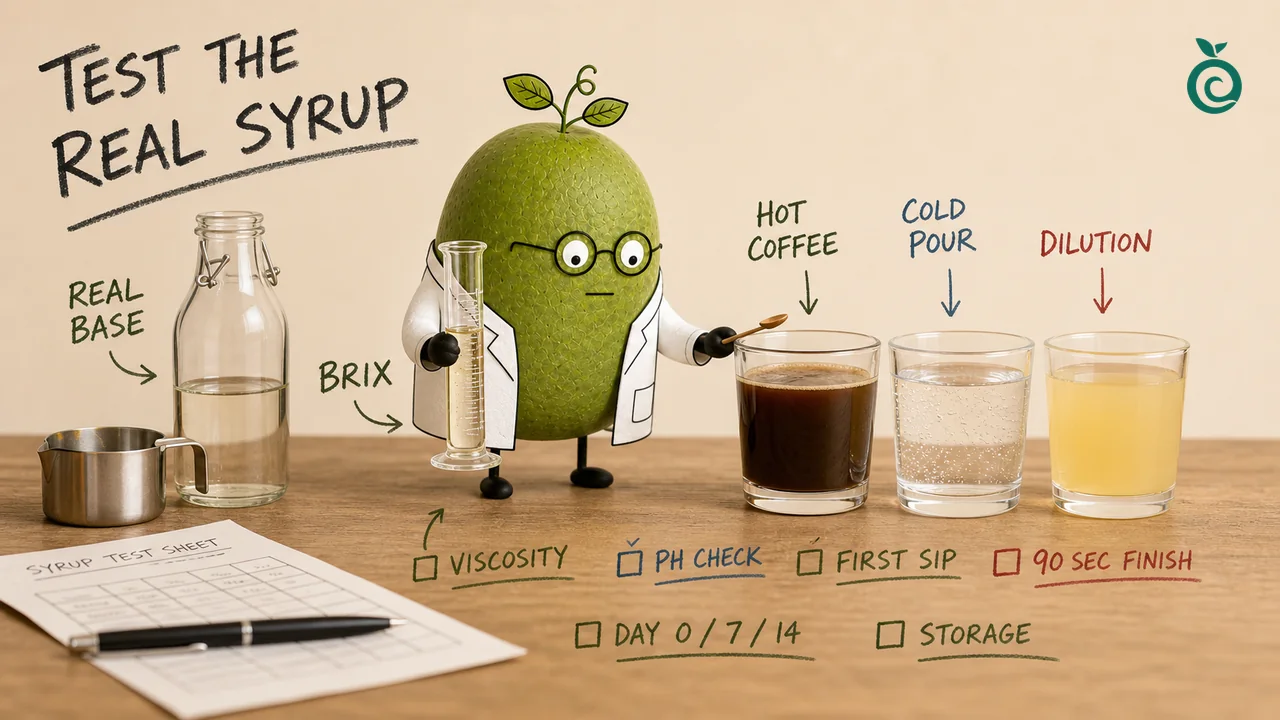
Write one decision at the top
State the decision in one sentence: can this syrup deliver the target sweetness and mouthfeel in the intended drink without an unacceptable finish? Add the market, product type, flavor, serving or dilution, package and current control. A clear question is more useful than a request for a generally better syrup.
Keep the first samples comparable
A practical first matrix is the current or sucrose control, one candidate direction, a second direction and one blend or body-support direction designed to answer a specific trade-off. Keep the serving conditions and target sweetness clear. If a sample also changes solids or acidity, record that as part of the route rather than calling it a pure sweetener comparison.
Test the real drink, not only water
Screening in water can find obvious problems, but final tasting should include the intended hot coffee, iced coffee, sparkling water, milk tea, fruit drink or other base. Record water and mineral profile, pH or acidity, flavor, protein or tea/coffee load, carbonation, mixing order, heat treatment, filling, serving temperature and storage conditions when relevant.
Record the physical syrup checks
Measure or describe Brix or total soluble solids, pH, viscosity, pump or pour behavior, dissolution, clarity, haze, sediment, separation, crystallization, color and foam where relevant. These fields describe the syrup's physical use; they do not prove food safety or shelf life. Use the buyer's method and units consistently across samples.
Use a time-sensory record
At the same serving temperature, record sweetness onset, peak, finish at 30 and 90 seconds when useful, bitterness, metallic or licorice-like notes, acid balance, aroma release, body, thinness, coating and repeat-sip acceptability. Existing sensory research and the local answer bank support separating first sweetness from the finish instead of judging from one sip.
Repeat the relevant process and storage checks
Compare the intended heat or cold process, package, light exposure and storage window. Day 0, 7, 14, 21 and 35 can be useful checkpoints when they match the project; they are not a universal shelf-life protocol. Recheck viscosity, clarity, separation, color, sweetness, aftertaste and package behavior under the conditions that matter to the finished product.
Turn the score into the next brief
Write which route answered the question, which attribute improved, which trade-off remained and what must be retested. Then send the result with target market, product type, packaging specification, estimated quantity, required certificates/documents and whether samples are needed. A good scorecard makes the next sample more specific; it does not turn one result into a global performance claim.
Technical references and boundaries
Reviewed August 2026 using Mao et al. (2025) on dynamic sweet-sour perception, Visalli and Galmarini (2024) on temporal sensory methods, the existing coffee-syrup customer answer records and the current official label sources listed in the syrup buyer brief. The sources support test design and evidence boundaries, not a fixed syrup ratio, storage guarantee or market approval.
Review note
Reviewed October 2, 2026.
Common questions
Should a syrup sample be approved from a water test?
No. Water can be a screening step. Final approval should use the real coffee, tea, soda, fruit or other beverage base and the intended serving conditions.
Which physical checks matter first?
Use the checks that match the application: Brix or solids, pH, viscosity, pour or pump behavior, clarity, sediment, separation, crystallization, color and foam.
Does a day-zero taste test prove shelf life?
No. Repeat the agreed physical and sensory checks in the intended package and storage conditions before making a shelf-life decision.
What information helps a supplier prepare the right syrup sample?
Send target market, product type, packaging specification, estimated quantity, required certificates/documents and whether samples are needed, plus the real base and process.
