
Read this guide in
YOGURT LABEL REVIEW
Zero Sugar Yogurt Label Guide: Allulose, Added Sugars and Sweetener Blends
Zero-sugar yogurt label guide: allulose, added sugars, sugar-free claims and sweetener blend sampling before artwork or quotation.
A zero sugar yogurt can still taste sweet, but the label only works when the sweetener choice, nutrition panel, serving size and target market are checked together.
This guide is for dairy brands, plant-based yogurt teams, importers and private-label buyers comparing allulose, stevia, monk fruit or natural sweetener blends for a US-style zero sugar or sugar-free yogurt concept.
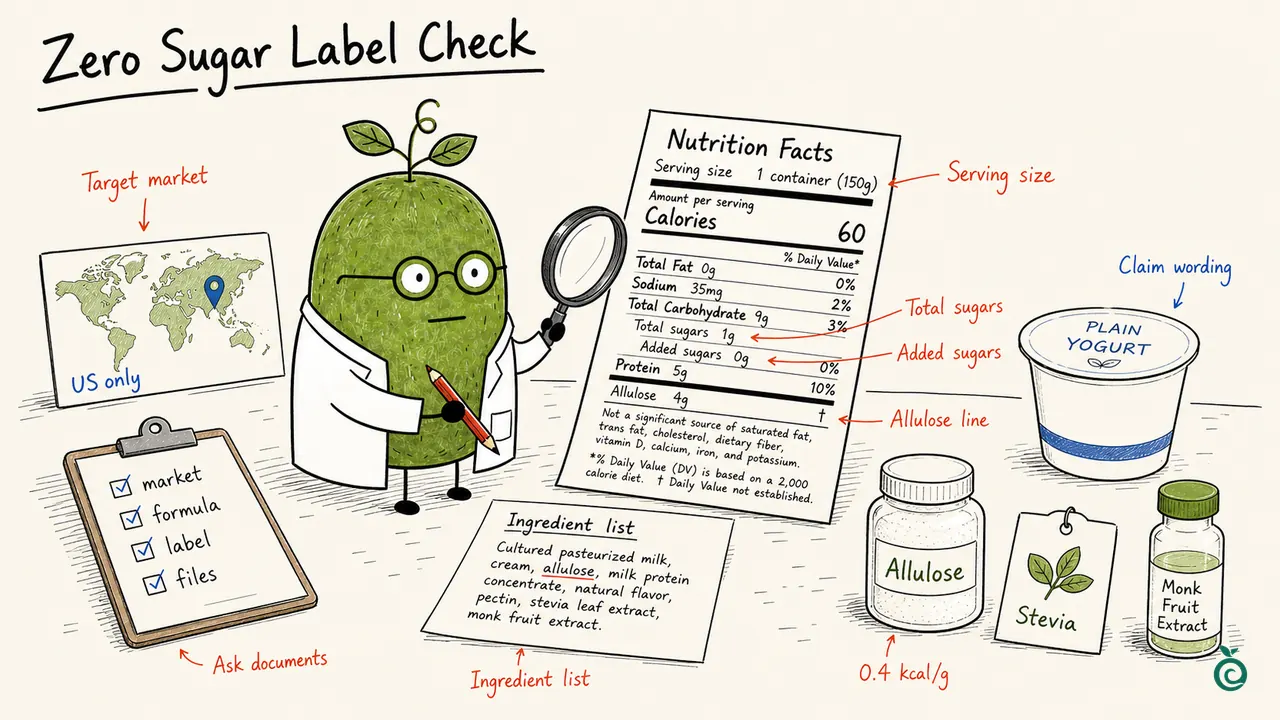
Start with the launch market
Do not approve a zero sugar yogurt brief from one global assumption. The United States, European Union, Canada, Australia, New Zealand, Indonesia and other markets can treat sweeteners, nutrition labeling and sugar claims differently. The first buyer question should be where the finished yogurt will be sold.
Separate sweetness from sugar on the panel
Sweet taste can come from allulose, steviol glycosides, monk fruit extract, flavor work, fruit preparation, lactose level, fermentation profile and acidity balance. A nutrition panel is a separate calculation based on the finished formula, serving size and local rule set. A sample that tastes right still needs label review before artwork.
Use allulose guidance carefully
For US Nutrition and Supplement Facts labeling, FDA's current allulose guidance says the agency intends to exercise enforcement discretion for excluding allulose from Total Sugars and Added Sugars declarations and using 0.4 kcal/g for allulose. That is a US label starting point, not a global approval statement or a finished-product compliance guarantee.
Check sugar-free wording before design
FDA's sugar-free claim reminder points buyers back to the rule that sugar-free foods must contain less than 0.5 g sugars per reference amount customarily consumed and per labeled serving. If the food is not low calorie or reduced calorie, the label may also need a calorie-related statement. This is why yogurt artwork should not be finished before the serving size and nutrition data are checked.
Build the label check into sampling
A practical first round can compare a current sugar control, a reduced-sugar control, an allulose-supported route where the market allows it, and one or two high-intensity sweetener blend routes using stevia or monk fruit. Keep the same yogurt base, pH or acidity, flavor, serving size and cold storage condition so sensory notes and label assumptions can be read together.
Prepare a supplier-ready brief
For samples or a quotation, share any available details on target market, product type, yogurt base, sugar-reduction or zero-sugar goal, serving size, packaging specification, estimated quantity, required certificates/documents and whether samples are needed. Add label language or a draft nutrition panel if available. If some details are undecided, we can clarify them together before confirming the sample or quotation.
References and boundary
Reviewed July 2026. FDA allulose guidance, FDA Added Sugars label guidance and FDA's sugar-free claim reminder support the US label discussion. These sources do not confirm rules for other markets. Published yogurt sensory studies support testing taste, acidity, texture and aftertaste in the real yogurt base; they do not provide a universal formula or legal advice.
Review note
Reviewed October 2, 2026.
Common questions
Can zero sugar yogurt still taste sweet?
Yes. Sweetness can come from permitted sweeteners, flavor design and the yogurt matrix. The label claim still depends on the finished formula, serving size and target market rules.
Is allulose counted as Added Sugars in the United States?
FDA's current guidance says it intends to exercise enforcement discretion for excluding allulose from Total Sugars and Added Sugars declarations and using 0.4 kcal/g for allulose. Buyers should still review the full US label and formula.
Does sugar-free mean low calorie?
Not automatically. FDA's sugar-free claim reminder explains that some foods need a calorie-related statement if they are not low calorie or reduced calorie.
What should buyers send before zero sugar yogurt samples?
Send target market, product type, yogurt base, packaging specification, estimated quantity, required certificates/documents and whether samples are needed.
