
Read this guide in
SYRUP BUYER BRIEF
Zero-Sugar Syrup Buyer Brief: Market and Label Before Ratios
Zero-sugar syrup buyer brief: set target market, label wording and finished syrup use before discussing sweetener ratios or samples.
For a zero-sugar syrup project, the first question is not which sweetener ratio to quote. It is what the finished syrup is, where it will be sold and what the label must say. A coffee syrup, soda concentrate and retail topping may use related ingredients but still need different market and application checks.
This guide is for beverage brands, foodservice syrup buyers, private-label teams and ingredient purchasers. It turns a vague request for a sweet percentage into a brief that can support a relevant sample and a more useful quotation discussion.
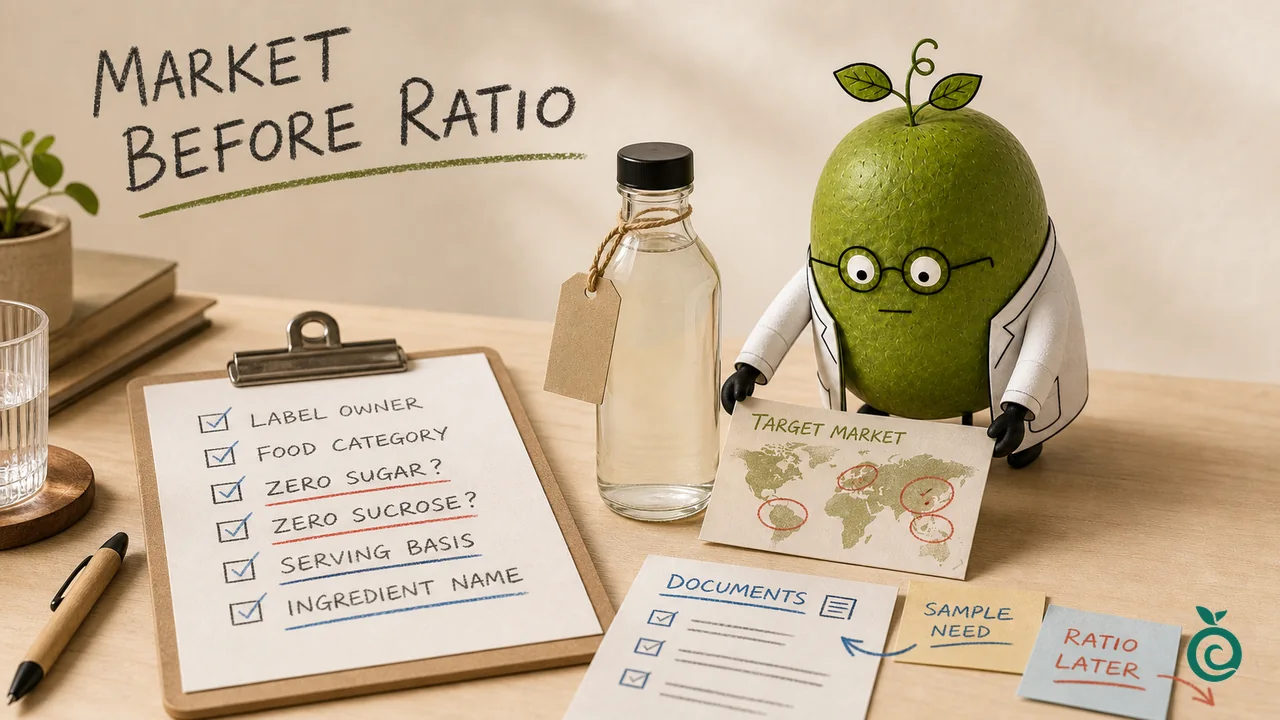
Market screening comes before a ratio
State the target country or region, sales channel, finished food category and who owns the final label review. Ingredient permission, sweetener naming, nutrition-panel treatment and claim wording can differ by market. A supplier can discuss a development direction, but a generic ratio cannot replace a product- and market-specific screen.
Zero sugar, zero sucrose and zero calories are different questions
For China, the Beijing Municipal Administration for Market Regulation explains that GB 28050-2011 uses a sugar threshold of no more than 0.5 g per 100 g of solid food or 100 mL of liquid food for a no-sugar or zero-sugar claim, while zero sucrose does not rule out other sugars. The GB 28050-2025 FAQ says that standard takes effect on March 16, 2027, so it is not a blanket current rule on August 8, 2026. Confirm the finished product, serving basis and current market rule before using any claim.
Allulose is a market input, not a global shortcut
FDA's final allulose guidance is a U.S. labeling starting point. It describes FDA's enforcement-discretion position for excluding allulose from Total Sugars and Added Sugars and using 0.4 kcal/g for label calculations, while still requiring allulose in the ingredient statement. That guidance does not approve an allulose syrup for every country, food category or claim.
Define what the syrup must do
Describe the use before naming the blend: hot coffee, iced coffee, sparkling water, soda concentrate, milk tea, fruit drink, mocktail, retail topping or another application. Add the serving or dilution method and any known Brix, total-solids, viscosity, clarity, pump-flow, pH, acid, heat-fill or storage requirement. These details determine which ingredient jobs matter.
Ask for a direction, not an invented universal formula
A useful first brief may compare an existing or sucrose control, a high-intensity sweetener direction and a body-supporting or blend direction where the market allows it. Monk fruit, stevia and allulose can play different roles, but the final choice depends on the real base, flavor, process, label and sensory result. Do not approve a ratio from a supplier page or a public competitor label.
The six fields that make the inquiry usable
Start with target market, product type, packaging specification, estimated quantity, required certificates/documents and whether samples are needed. Then add the real syrup use, flavor, dilution, current formula or control, target claim, process and main sensory question. A complete brief reduces back-and-forth without promising that the first sample will be the final formula.
Technical references and boundaries
Reviewed August 2026 using the National Health Commission of China GB 2760-2024 release notice, Beijing Municipal Administration for Market Regulation's zero-sugar explanation, the National Health Commission FAQ for GB 28050-2025 and FDA's final allulose labeling guidance. These sources support market and label screening; they do not approve a finished syrup, establish a universal ratio or guarantee a claim.
Review note
Reviewed October 2, 2026.
Common questions
Why ask for the target market before discussing sweetness percentage?
Because ingredient permission, label wording, serving basis and nutrition treatment can differ by market. The same syrup concept may need a different review in China, the United States or another region.
Does zero sucrose mean zero sugar?
No. A zero-sucrose statement does not by itself rule out other sugars. Check the nutrition panel and ingredient list against the target market's current requirements.
Can a U.S. allulose label approach be copied to China or the EU?
No. FDA guidance is a U.S. labeling reference. China, the EU and other markets require separate ingredient, claim and food-category review.
What should buyers send before asking for a syrup sample?
Send target market, product type, packaging specification, estimated quantity, required certificates/documents and whether samples are needed, then add the real syrup use and process details.
