
Read this guide in
SYRUP SWEETENER TESTING
Sugar-Free Coffee and Soda Syrup Sweetener Blend Guide
Sweetener blend guide for sugar-free coffee syrup, soda syrup and concentrates: dosage, dilution tests and label checks.
A sugar-free syrup is not only sweet water. In coffee, soda, mocktails and flavored beverage bases, syrup affects sweetness timing, body, viscosity, flavor release, acid balance and how the drink feels after repeated sips.
This guide helps beverage brands, cafe syrup makers, private-label teams and ingredient buyers compare allulose, monk fruit, stevia and natural sweetener blends before requesting samples.
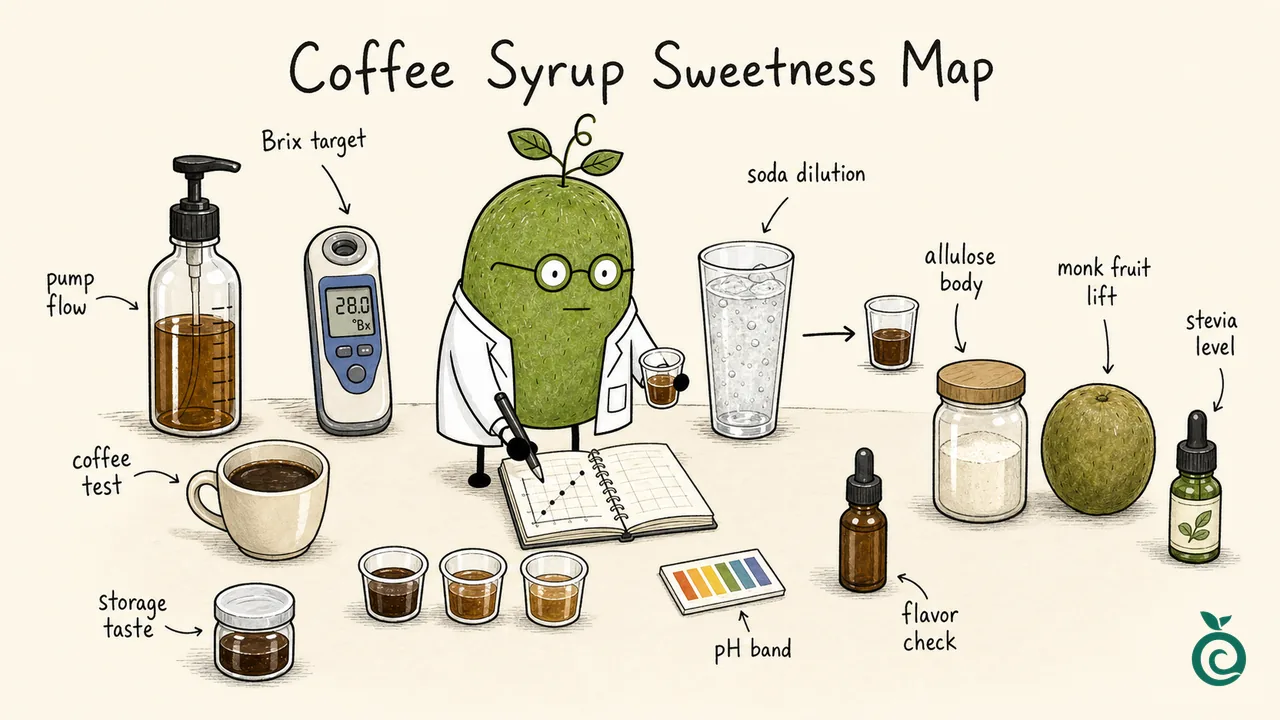
Define what the syrup must do
A hot coffee syrup, iced latte syrup, soda concentrate, cocktail-style simple syrup and fruit drink base do not need the same sweetener. Start with the drink use, dilution ratio, flavor, target sweetness, Brix or solids target, viscosity target, clarity and storage condition.
Do not choose allulose by sweetness alone
Allulose can be useful where a sugar-like curve or body matters and where the target market allows it, but it is less sweet than sucrose. It may need monk fruit or stevia for sweetness lift, or another texture direction if the syrup needs a stronger body.
Use monk fruit or stevia carefully
Monk fruit and stevia can close the sweetness gap at low use levels, but syrup flavors can expose lingering sweetness, licorice-like notes or bitterness. Coffee, cola, citrus, vanilla, caramel and fruit bases should be tested separately instead of approved from one plain syrup sample.
Test in the final drink
Taste the syrup in hot coffee, iced coffee, sparkling water, still water and the target beverage base where relevant. Record first sweetness, peak sweetness, lingering sweetness, bitterness, acid balance, aroma lift, mouthfeel, pump flow, dilution behavior and taste after storage.
Check process and label early
Hot fill, cold mix, pH, preservatives, flavors, color, clouding, crystallization risk and package format can affect the sweetener choice. Allulose, steviol glycosides, monk fruit ingredients, polyols and low-sugar claims also need target-market review before commercial launch.
Build a useful sample request
For faster supplier feedback, send target market, product type, flavor, dilution ratio or serving size, Brix or viscosity target if known, packaging specification, estimated quantity, required certificates/documents and whether samples are needed.
Technical references
Reviewed July 2026. FDA's allulose guidance is a US label starting point for Nutrition and Supplement Facts; it is not a global approval statement. A beverage sugar-reduction review supports treating sweetness, flavor, texture and preservation as one system. A 2026 espresso sensory study also reinforces that coffee bases can change perceived sweetness, acidity, roast notes and aftertaste. These sources support syrup testing decisions, not a fixed commercial formula.
Review note
Reviewed October 2, 2026.
Common questions
Is 100% allulose enough for sugar-free coffee syrup?
Not always. Allulose can support body in suitable markets, but it may need sweetness lift and application testing in the actual coffee or beverage base.
Can monk fruit or stevia be used in syrup?
Yes, but they should be used carefully and tested for lingering sweetness, bitterness, flavor fit, dilution behavior and storage taste.
Should syrup samples be tested in water first?
Water can screen obvious problems, but final approval should happen in the real coffee, soda, cocktail-style drink or flavored beverage base.
What should buyers send before syrup samples?
Send target market, product type, flavor, packaging specification, estimated quantity, required certificates/documents and whether samples are needed.
