
Read this guide in
NUT SPREAD VALIDATION SCORECARD
Peanut Butter & Nut Spread Sweetener Scorecard: Oil Separation, Particles, Spreadability
Nut spread validation scorecard: compare low-sugar peanut butter and cocoa spreads by sweetness, oil separation, particles and storage.
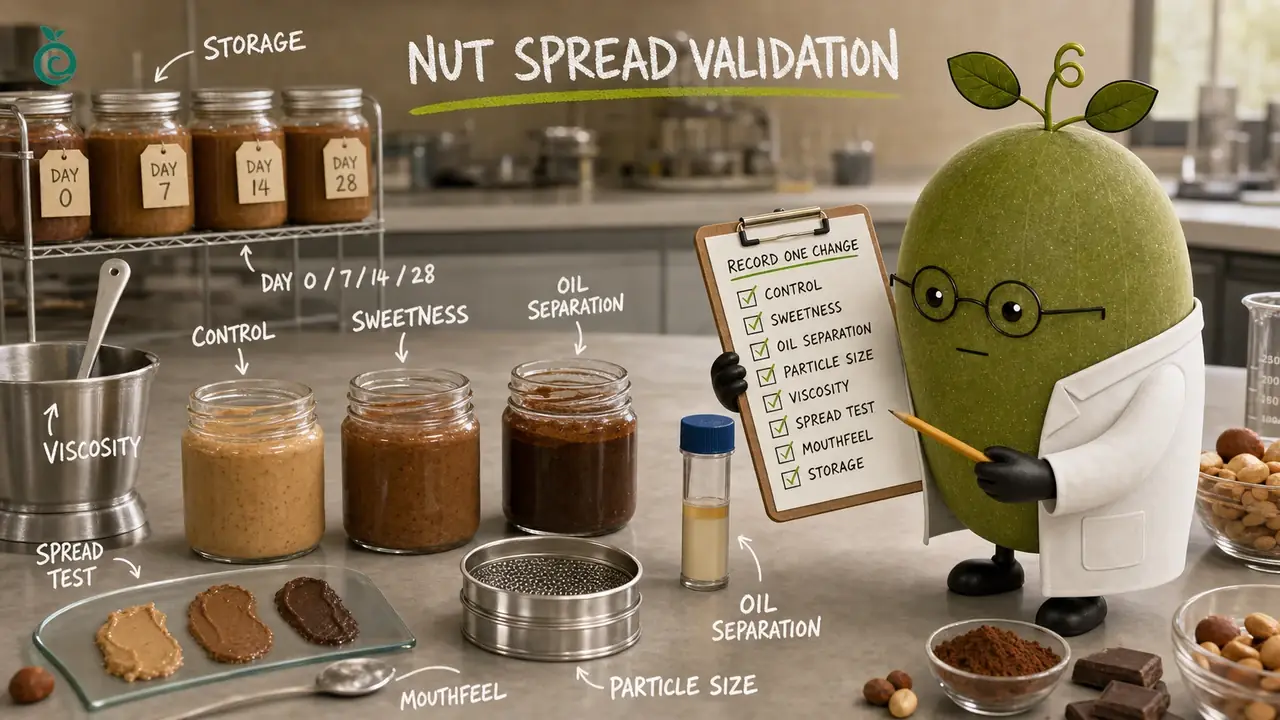
A spread sample is easier to compare when the team decides what will be measured before opening the jar. This scorecard keeps sweetness, oil separation, particle feel, spreadability, mouthfeel and storage behavior visible instead of letting one good first taste hide a later problem.
Use it for peanut butter, cocoa-hazelnut spread, pistachio spread, cashew spread and nut or cocoa fillings. The fields can be reused, but targets must be set for the actual product, process, package and market.
Define the product lane
Record the nut type, nut-paste percentage or description, cocoa or dairy components, retail spread or filling use, current sugar source, target sugar-reduction direction and intended use temperature. Do not compare a spoonable retail spread with a bakery filling as if they had the same release criteria.
Keep a control and change one main variable
Record the current or sucrose control beside each sample. Identify whether the sample changes sweetness, bulk solids, fiber, oil phase, particle size, emulsification, grinding or storage condition. A clear change log is more useful than a long list of ingredients with no explanation of what the sample was meant to test.
Record sweetness and finish separately
Use a matched tasting order for first sweetness, mid-palate, bitterness, licorice-like notes, cooling, lingering sweetness, nut flavor, cocoa intensity and overall fit. Do not use a sweetness score to stand in for oil separation, texture or oxidation.
Record oil phase and visible separation
Note surface oil, ring formation, layering, re-mixing time, surface dryness and any change after standing. Record sample mass, container, temperature and observation time where relevant. Visible oil is an observation, not by itself a safety, freshness or shelf-life conclusion.
Record particles, flow and spread
Use the agreed particle method or D10/D50/D90 values, then record viscosity or yield stress if available, spatula spread, hardness, adhesiveness, grit, powdery mouthfeel and oral melt. Keep the test temperature and conditioning time fixed so the comparison has a clear meaning.
Repeat the same checks in the real package
At day 0, 7, 14 and 28 or the project's agreed checkpoints, repeat taste, oil separation, spreadability, mouthfeel, color, oxidation and package-seal observations. Include temperature, humidity, light and opening frequency when they matter. A short storage screen is still a screening result, not a commercial shelf-life claim.
Turn the scorecard into the next sample
If sweetness fails, adjust the sweetener direction while holding the physical system steady. If spreadability or oil separation fails, review oil phase, particles, processing and temperature separately. If the package changes the result, keep the same formula and test the package question on its own.
Technical references and boundaries
Reviewed August 2026 using the cocoa-hazelnut spread study, pistachio spread study, nut-spread review and DAG oleogel peanut-butter study listed in the matching formulation guide. These sources support a structured scorecard; they do not set a universal pass score, formula, D90, viscosity, oil-separation limit or shelf-life guarantee.
Review note
Reviewed October 2, 2026.
Record these fields before comparing samples
- Product position and nut base
- Current or sucrose control
- Sweetness and aftertaste
- Oil separation and re-mixing
- Particle size and spreadability
- Use temperature and conditioning time
- Package and storage checkpoints
- One main variable changed
Common questions
What should a nut spread scorecard measure?
Measure sweetness timing and aftertaste, oil separation, particle size or grit, viscosity or spread, mouthfeel, color, oxidation, package condition and storage change with matched methods. Tell us the taste issue you want to resolve; we will review the next sample direction.
Discuss this requestCan one scorecard fit peanut butter and cocoa-hazelnut spread?
The field structure can be reused, but the targets and sensory language should be set for the actual nut base, fat system, process and use. Tell us which documents you need; we will check which files match the selected product.
Discuss this requestIs a day-zero taste test enough to approve a spread?
No. Repeat the agreed physical, sensory, package and storage checks before making a commercial decision. Tell us the taste issue you want to resolve; we will review the next sample direction.
Discuss this requestWhat should buyers send before requesting a scorecard-based sample?
Send target market, product type, packaging specification, estimated quantity, required certificates/documents and whether samples are needed, then add the nut base, oil phase, particle target and storage plan. Send us the details listed here; we will review the sample and quotation plan with you.
Discuss this request