
Read this guide in
FAQ
Monk Fruit Sweetener FAQ for Food and Beverage Manufacturers
Answers to common questions about monk fruit sweetener, monk fruit extract, applications, OEM manufacturing, samples, certificates and supplier selection.
This FAQ is written for food brands, beverage developers, private-label buyers and distributors evaluating monk fruit sweetener products.
For exact specifications, samples and export documents, contact Hengliyuan with your target market, application and packaging plan.
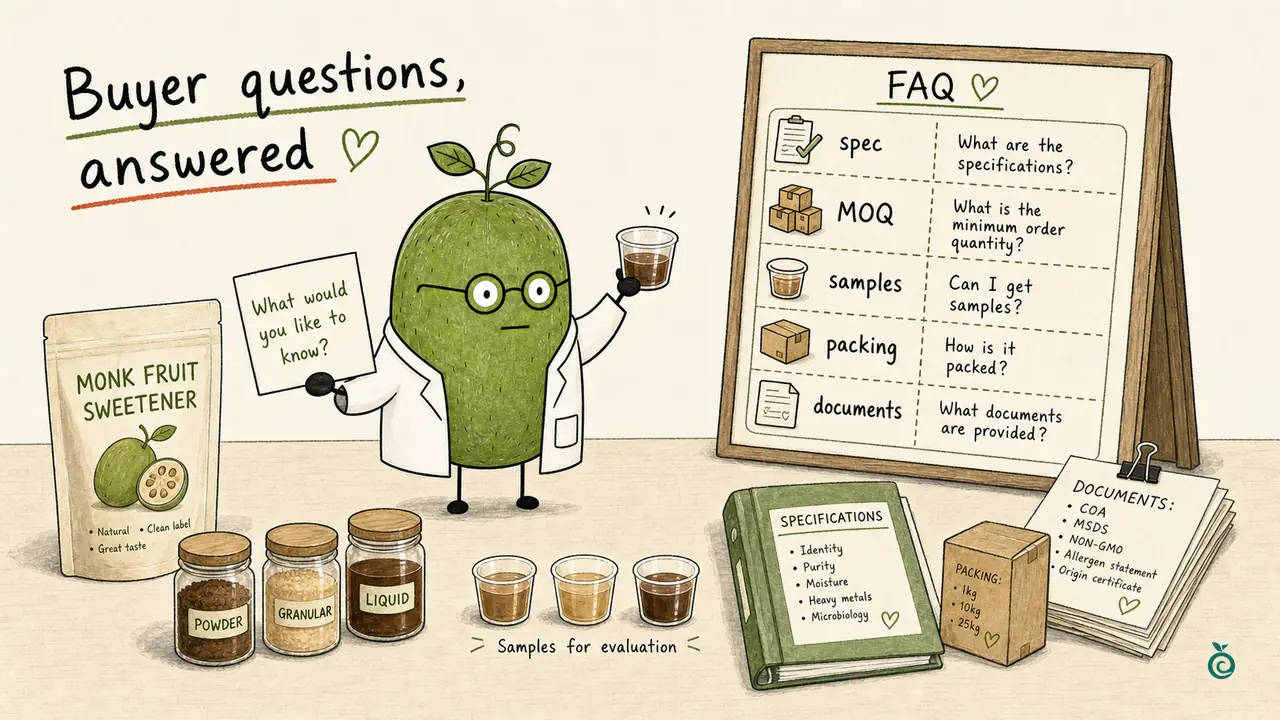
Identify the material before comparing it
A name such as monk fruit sweetener, extract or powder does not describe a single standardized material. Confirm the product form, analyte, carrier and test basis before comparing price, sweetness or documents.
Use the FAQ to make a sample question specific
For a sample or quotation, send the target market, finished food or beverage, packaging size, quantity, document needs, whether samples are needed and the one property to compare. A generic best-sweetener request does not identify the actual test.
What this FAQ cannot confirm
This page cannot approve a formula, label or market-access position, or guarantee taste, stability or shelf life. Check the actual product, batch document and finished application.
Read the detailed buying and testing guides
Use the matching guide when an FAQ raises a formulation or purchasing decision: dosage records, product certificates, juice concentrate, juice powder and beverage blends each need different evidence.
- Monk Fruit Sweetener Dosage and Pilot Batch Testing Guide
- Monk fruit certificates and COA: match each document to the product
- Monk Fruit Juice Concentrate: Specifications, Batch Data, and Storage
- Monk Fruit Juice Powder With or Without a Carrier: What's the Difference?
- Monk Fruit Stevia Blend for Beverages: Formulation, Ratio and Sample Guide
Review note
Reviewed October 2, 2026.
Common questions
What is monk fruit sweetener?
It is a sweetening ingredient or finished sweetener product made from monk fruit. Its sweetness mainly comes from mogrosides.
What is monk fruit extract?
Monk fruit extract is an ingredient derived from monk fruit and used as a sweetening ingredient in food and beverage applications. Its specification and intended use still need review for the target product and market.
What is Mogroside V?
Mogroside V is one of the important sweet components in monk fruit extract. Different extract specifications may contain different levels.
Is monk fruit sweetener zero calorie?
Many monk fruit sweetener products are designed for zero-calorie or low-calorie positioning, but the final nutrition profile depends on the full formula.
Can monk fruit sweetener replace sugar 1:1?
Some blends are designed for 1:1 sugar replacement, but pure monk fruit extract is much sweeter than sugar and is not usually used 1:1 by itself.
Does monk fruit sweetener have an aftertaste?
It can have a different finish from sugar. Formula design and blending help improve taste and reduce unwanted aftertaste.
Can it be used in coffee and tea?
Yes. Monk fruit sweetener is commonly used in coffee, tea and daily sweetening products.
Can it be used in beverages?
Yes. Beverage formulas should test sweetness, solubility, acidity, flavor interaction and stability.
Can it be used in bakery?
Yes, but baking applications may need a blend because sugar also affects texture, browning and bulk.
Can Hengliyuan make private-label monk fruit sweetener?
Yes. Hengliyuan supports private-label and OEM projects for monk fruit sweetener products.
What information should buyers provide for OEM?
Provide target market, product type, sweetness goal, packaging size, expected order quantity and any certificate requirements.
Can I request samples?
Yes. Buyers can contact Hengliyuan to discuss samples based on application and product direction.
What packaging sizes are available?
Packaging depends on the product format and project needs. Retail packs and bulk options can be discussed.
What certificates should I check?
Check food production documents, food safety certificates, factory audit documents and market-specific files when needed.
Where is Hengliyuan located?
Hengliyuan is located in Guilin, Guangxi, a region strongly associated with monk fruit origin.
Is monk fruit sweetener the same as stevia?
No. They are different natural sweetener sources. Monk fruit sweetness mainly comes from mogrosides, while stevia sweetness mainly comes from steviol glycosides.
Can monk fruit sweetener be blended with other sweeteners?
Yes. Blending is common when brands need better taste balance, solubility, bulk, cost control or 1:1 sugar replacement concepts.
What is the difference between monk fruit powder and monk fruit extract?
Monk fruit extract is usually a concentrated ingredient. Monk fruit powder may refer to different product formats, so buyers should confirm specification, sweetness level and ingredient list.
Is monk fruit sweetener suitable for syrup products?
Yes. It can be used in syrup concepts, but the formula should be tested for taste, sweetness intensity, stability and the target drinking method.
Can monk fruit sweetener be used in solid drinks?
Yes. It is suitable for solid drink and powder applications when the formula is adjusted for sweetness, flowability, solubility and packaging needs.
What should I test in a sample?
Test sweetness, aftertaste, solubility, aroma interaction, color, packaging fit and performance in the final application.
How do I choose a monk fruit sweetener supplier?
Check production capability, formula support, certificates, sample response, packaging options, export documents and communication quality.
Can Hengliyuan support export customers?
Yes. Hengliyuan supports overseas customers with monk fruit sweetener products, OEM discussion, samples and export-related documents.
Can Hengliyuan help develop a new formula?
Yes. Hengliyuan can discuss formula direction for beverages, coffee, tea, bakery, powders, syrup and retail sweetener products.
How should I start an inquiry?
Share your target product, market, packaging size, expected order quantity, sweetness requirement and any certificate needs.
Can dogs eat monk fruit sweetener?
Do not assume that a human sweetener product is suitable for a dog. Check the complete ingredients and ask a veterinarian before adding it to pet food. Some sweetener products contain xylitol, which FDA warns is dangerous for dogs; a monk fruit name on the front does not establish the composition or veterinary safety.
