
Read this guide in
TRI-BLEND FORMULATION GUIDE
Allulose, Stevia and Monk Fruit Blend: Formulation Guide
Allulose, stevia and monk fruit blend formulation guide: sugar reduction, 1:1-style sweeteners, beverages, bakery and private label.
Our recommendation is to add a third sweetener only when it solves a defined problem in the product. Compare an allulose–stevia–monk fruit blend with the current recipe and a suitable two-ingredient blend. Keep the combination that meets the taste, process and purchasing targets; three ingredients are not a quality grade.
Three ingredients do not automatically produce a better result than two. The useful choice depends on the application, ingredient restrictions and target market. Hengliyuan can discuss custom sweetener blends and sample requirements around those needs.
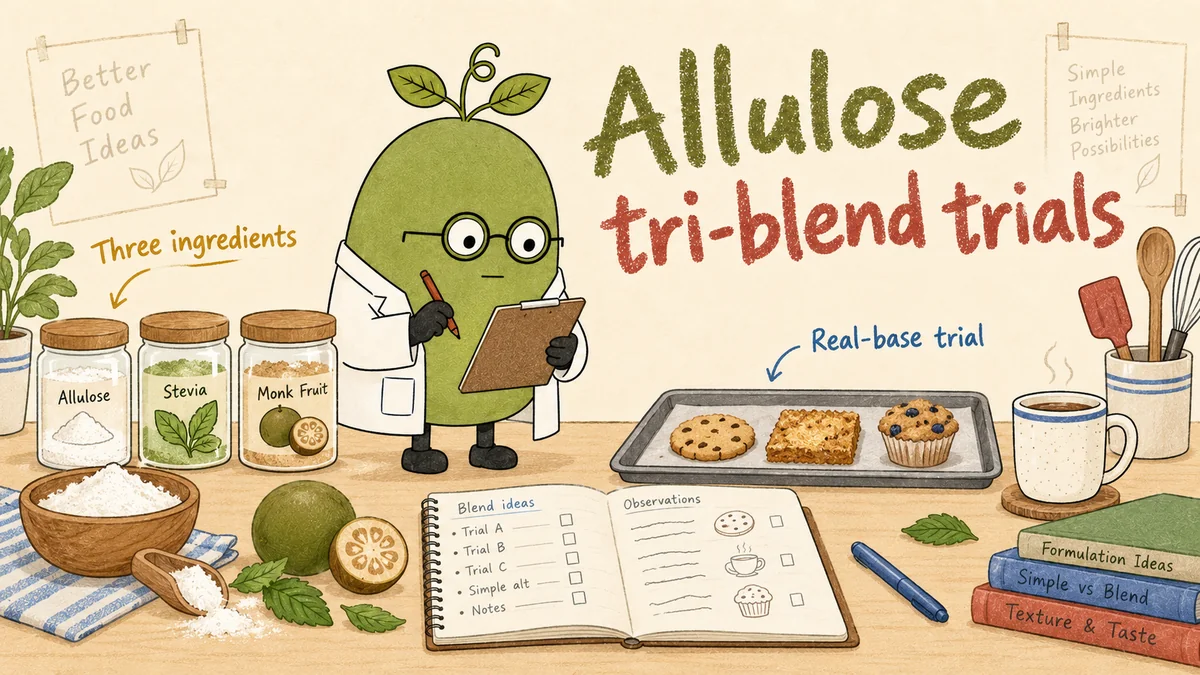
Give each ingredient a clear job
Allulose contributes bulk as well as sweetness, while the selected steviol glycosides and monk fruit extract supply concentrated sweetness. The exact grades and their proportions determine what is being tested. Do not treat the three ingredient names as a finished specification.
| Ingredient | Confirm before comparing samples |
|---|---|
| Allulose | Form, composition, moisture or solids basis, and the amount entering the finished recipe. |
| Steviol glycosides | Specific glycoside ingredient, grade and production route; evaluate its actual taste in the blend. |
| Monk fruit extract | Extract identity and mogroside specification; distinguish the extract assay from its inclusion rate. |
| Finished blend | Full ingredient list, proportions, sample revision, target sweetness and agreed finished-blend specification. |
Start with the product format
A tabletop 1:1-style sweetener, beverage powder, RTD drink, syrup, bakery blend and dairy-style product will not use the same balance. Buyers should define the final product format before asking for a tri-blend sample.
Check taste curve and mouthfeel together
Compare initial sweetness, peak intensity, bitterness and lingering sweetness separately in the actual base. If the tea, coffee or cocoa base is already bitter, keep a reference that helps distinguish the base flavor from the change introduced by the blend. Match the intended use rate first, then compare near the same sweetness if the samples differ in intensity. Keep both observations. Check body and processing in the finished product; assess powder flow only where the production or dispensing route makes it relevant. Repeat the relevant checks after processing and at the planned packaged-storage checkpoints.
Confirm allulose market rules
Allulose is not treated the same way in every market. Before building the formula around allulose, buyers should confirm whether the ingredient is allowed and how it should be declared in the target market.
Rule out unsuitable ingredients before adding complexity
A formulation containing only allulose, steviol glycosides and monk fruit extract contains no erythritol. Still confirm the full composition of the actual commercial blend, including any carrier or other added ingredient. The name alone is not enough to approve an ingredient exclusion. If stevia is excluded, this tri-blend is not suitable: discuss an allulose–monk fruit route instead. If monk fruit is excluded, compare an allulose–stevia route. If allulose cannot be used for the intended market and application, choose a different system before proceeding. Where all three ingredients are acceptable, compare the tri-blend with the relevant simpler candidate at the same product target. Keep the simpler option if the third ingredient does not deliver a useful improvement in the accepted product.
Record what the third ingredient actually changes
Use a current-product reference, a suitable two-ingredient candidate and the proposed tri-blend. These are suggested comparison groups, not Hengliyuan test results. Keep sample codes and actual doses with the notes. If other ingredients change, record them so the outcome is not attributed to the sweetener count alone.
| Decision | Record for each candidate |
|---|---|
| Ingredient fit | Any exclusions, grade requirements and target-market conditions. Reject an unsuitable composition before tasting. |
| Use rate and sweetness | Dose per defined finished batch or serving; result at intended use rate and near the same sweetness target. |
| Taste difference | Initial sweetness, bitterness, lingering sweetness and balance with the original flavor. State the specific improvement sought. |
| Application performance | The relevant process result, body or texture, plus observations at the agreed storage checkpoints. |
| Cost at the accepted dose | Compare the same acceptable finished quantity and include other recipe or process changes. |
| Next decision | Keep, revise or reject; identify the observation that supports the decision and the one change to test next. |
A 1:1 target must specify weight or volume. Equal sweetness by weight does not establish equal spoon volume, bulk or baking performance. Confirm the consumer use instructions and the actual application separately.
Turn the test into a clear supplier request
Start with the product you make, the taste or process issue you want to improve, and any excluded ingredients. Add the country of sale, target use rate or sweetness, and a current sample reference if available. We can clarify quantity, packaging, documents and sample requirements as the direction becomes clearer. You do not need a finished formula to start the discussion.
Sources for the formulation discussion
FDA explains why high-intensity sweeteners are used in smaller amounts to provide sweetness. The linked review examines how natural sweeteners affect sensory properties and food structure. These references support application testing; they do not establish the performance of a Hengliyuan blend.
How Hengliyuan makes the corresponding blend
Hengliyuan makes its allulose-based sweetener blends by high-speed powder mixing, which distributes the powdered ingredients in the selected formula. This is a common powder-mixing method. Confirm blend uniformity, particle size and application performance against the selected specification and sample.
Review note
Reviewed October 16, 2026. The tables are Hengliyuan’s proposed selection and trial records, not measured performance data. Ingredient availability, specifications and target-market requirements must match the selected project.
Common questions
Why combine allulose, stevia and monk fruit?
A tri-blend is one option to compare when reducing sugar. Evaluate it against the current product and simpler blends for taste, structure and application fit; using three ingredients does not guarantee a better result.
Discuss this requestCan a tri-blend replace sugar 1:1?
Treat 1:1 as a development target and state whether it means weight or volume. Confirm sweetness at the intended use rate, then check bulk, processing and texture separately. A sugar-like sweetness target does not establish identical baking performance or spoon volume.
Discuss this requestIs allulose suitable for every market?
No. Buyers should confirm local rules and label requirements before choosing an allulose-containing formula.
Discuss this requestWhat should buyers test first?
Test the blend in the real application for sweetness curve, aftertaste, mouthfeel, solubility, process behavior, label fit and packaging performance.
Discuss this requestIs an allulose, stevia and monk fruit blend erythritol-free?
A formula containing only those three ingredients contains no erythritol. Check the full ingredient list of the actual supplied blend, including any carrier or other addition, before approving an exclusion claim.
Discuss this requestCan I use this blend for a stevia-free product?
No. A blend containing steviol glycosides does not meet a stevia-free brief. Discuss an allulose–monk fruit option and confirm the selected formulation instead.
Discuss this request