Read this guide in
BUBBLE TEA FORMULATION GUIDE
Low-Sugar Bubble Tea Sweetener System Guide
Build a lower-sugar bubble tea system around the whole cup: compare syrup, milk base, pearls, ice dilution and taste before choosing a sweetener blend.
A lower-sugar bubble tea project has several sweetness decisions, not one. The tea or milk base, syrup, ice dilution and tapioca pearls can each change what the customer tastes in the finished cup.
Our factory view: reformulate the component, then approve the complete cup. A sweetener that works in water can still miss the tea flavor, syrup body or finish you need once milk, ice and pearls are added.
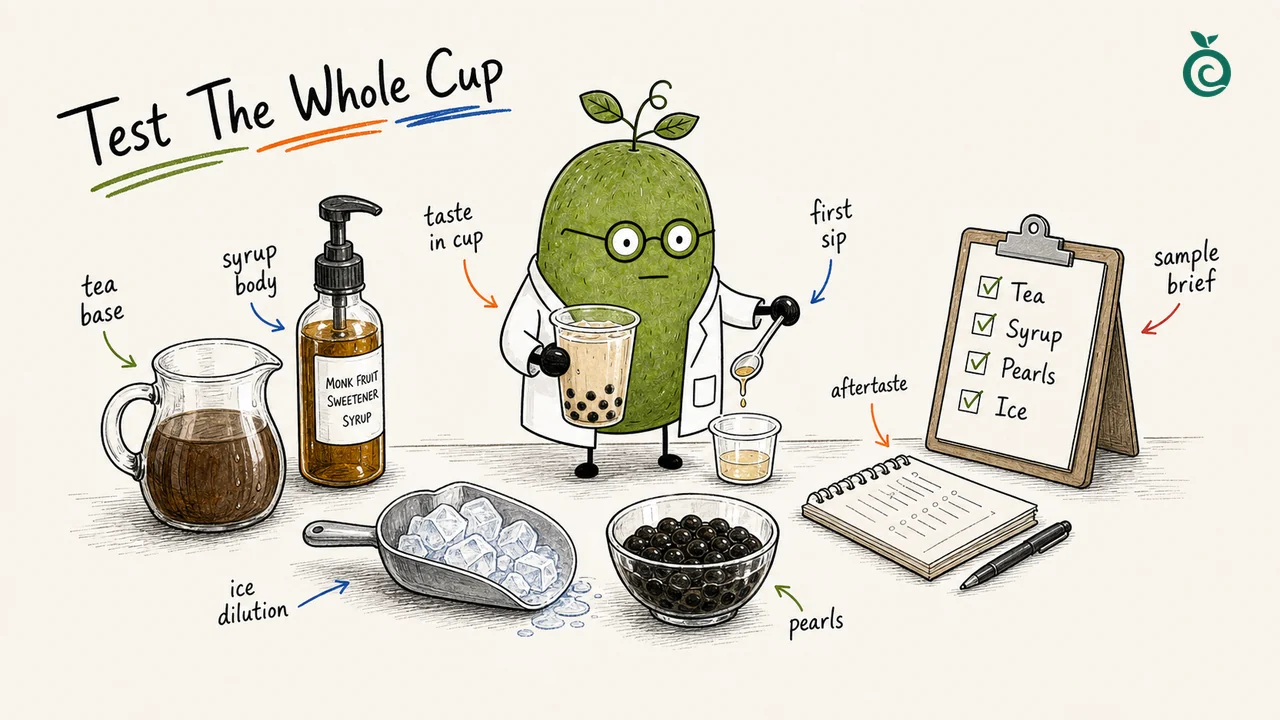
Map sweetness across the full cup
Start by separating the tea base, milk base, fruit syrup, toppings and ice. A milk tea, fruit tea and brown-sugar pearl drink can need different sweetness strategies even when the menu names sound similar. Decide which component needs the largest sugar reduction before selecting a blend. Record the mass used per serving and the sugar contribution from each ingredient, including milk or plant base, fruit preparations and topping syrup. A store’s “half sugar” setting may describe the added syrup dose; it does not by itself mean the complete drink has half the sugar. Keep serving size and the basis of the comparison explicit. Ice melt can dilute sweetness without removing the grams of sugar already in that cup.
A syrup reduction is not the whole-cup reduction
The example below uses hypothetical sugar contributions per complete cup, not measured products. The base and topping contributions stay unchanged while the syrup contribution falls. These figures are grams of sugar contributed, not grams of syrup or ingredient dose.
| Sugar source | Control cup | Syrup-change cup |
|---|---|---|
| Tea / milk base | 10 g | 10 g |
| Added syrup | 30 g | 5 g |
| Pearls / toppings | 20 g | 20 g |
| Complete cup | 60 g | 35 g |
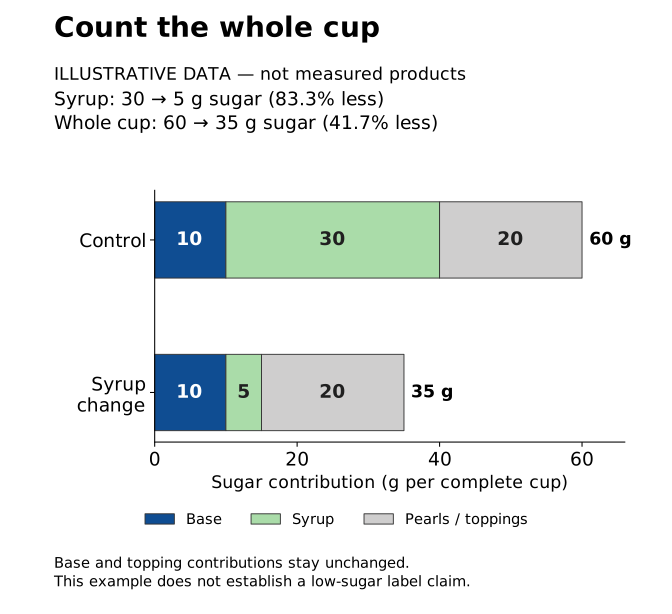
Calculation: (60 − 35) ÷ 60 × 100 = 41.7% less sugar in the defined cup. For a real recipe, use the actual serving quantities and appropriate ingredient composition data, then verify the finished product and destination-market claim requirements. Sugar reduction alone does not establish a matching percentage reduction in calories or a blood-glucose effect.
Choose ingredient roles before choosing a formula
Monk fruit or stevia can provide sweetness at low use levels. A bulk ingredient or carrier may still be needed for syrup body, sweetness timing or serving behavior. Allulose can be evaluated where its market and label position fit the project, while an erythritol-free system needs its own sensory and process trial. The right direction depends on which part of the cup is being reformulated.
Test syrup, base and pearls separately
Start with the component being changed, then compare matched finished cups. Keep tea strength, milk or plant base, serving size, ice mass, pearl portion and pearl holding conditions consistent. Record the syrup dose by mass as well as pump count: changing viscosity can change what a pump delivers. Taste at service and again after a defined holding interval. Record temperature and elapsed time rather than using an undefined “after ice melt” checkpoint.
| Trial point | Keep matched / record | Check |
|---|---|---|
| Syrup or powder | Grade, dose, mixing, heat exposure and storage | Dissolution, body, color, sediment or crystallization |
| Tea or milk base | Tea strength, base composition and serving temperature | Tea flavor, bitterness, aroma and mouthfeel |
| Pearls and toppings | Portion mass, coating syrup and holding time | Sugar carried into the cup, texture and finish after chewing |
| Complete cup | Cup recipe, ice mass, actual syrup mass and pump setting | Sweetness onset, peak, aftertaste and serving consistency |
| Held cup | Same elapsed time and conditions for control and candidate | Dilution, flavor change, separation and pearl texture |
Check the taste curve, not only total sweetness
Ask the tasting panel to note first sweetness, tea bitterness, dairy or plant-base notes, lingering aftertaste and how the drink changes after the pearls are chewed. That gives the product team a more useful picture than a single sweetness number.
Review process and packaging early
For syrup, check mixing, heat exposure, color, viscosity, filling, storage and dosing-pump behavior. For powders, check flow, clumping and cold-water mixing. For pearls and toppings, check coating, holding time and the finished-cup experience. The supplier sample should match the component you are actually changing. A lower-sugar syrup also needs its own preservation and shelf-life validation. Do not carry over the old syrup’s storage instructions solely because the new sample looks or tastes similar.
Keep market labeling separate from formulation work
For the United States, FDA's October 2020 final guidance states its enforcement-discretion position on excluding allulose from Total Sugars and Added Sugars, while using 0.4 calories per gram; allulose remains in Total Carbohydrate and in the ingredient statement. That is U.S. label guidance, not a conclusion for every market. Confirm local rules and packaging artwork before commercial launch.
Turn the trial into a useful supplier brief
Start with the component you want to change: syrup, powder, milk or tea base, or topping coating. Share the target market and a per-cup recipe if available, plus the current syrup dose, ice and pearl portions, ingredient restrictions and the taste problem. Include your preferred pack and expected volume when known. For the first comparison, define what a better sample must do: retain tea aroma, shorten the finish, improve body, or reduce sugar in the complete cup. We can clarify missing details together before confirming samples or a quotation.
Technical references
Massoud and Hashem’s 2023 study evaluated monk fruit sweetener, Rebaudioside A and bulking systems in dessert syrups. It supports checking sweetness and physical syrup properties together, but it is not a bubble tea trial and its ratios are not our recommended formula. FDA’s October 2020 final allulose guidance supports the U.S. label note above; it does not authorize the same approach in other markets. Reviewed October 16, 2026.
Common questions
Can monk fruit extract replace the whole sugar syrup by itself?
It can supply sweetness, but replacing sugar also changes mass and physical properties. Test body, dosing and taste in the actual syrup and finished drink; do not treat a high-intensity extract as a one-for-one syrup replacement.
Discuss this requestDoes a half-sugar order mean half the sugar in the drink?
Not necessarily. The setting may change only added syrup. Milk or plant base, fruit preparations, pearls and topping syrup can still contribute sugar. Compare the complete recipe on the same serving basis.
Discuss this requestDoes melting ice reduce the sugar in a cup?
It dilutes the drink but does not remove the grams of sugar already present in that cup. Record ice and holding time because the perceived sweetness can still change.
Discuss this requestCan fruit tea and milk tea use the same blend?
A blend can be a candidate for both, but test them separately. Acidity, tea strength, milk or plant-base composition and toppings can change the taste and mouthfeel.
Discuss this requestCan we discuss an erythritol-free system?
Yes. Share the market, component being changed, ingredient restrictions and target taste. The replacement needs its own body, mixing, dosing and sensory checks.
Discuss this requestWhat should I send for a bubble tea sample?
Start with the target market, component and main taste problem. A per-cup recipe, syrup dose, ice and pearl portions are useful if available. Packaging, quantity and document needs can be clarified as the project develops.
Discuss this request