
Read this guide in
PROTEIN BEVERAGE SENSORY
Protein Drink Sweetener Guide: Natural Options for RTM Shakes & Meal Replacements
Test natural sweeteners for protein drinks: monk fruit, stevia and allulose blend trials for RTM shakes, protein coffee and meal replacements.
This page covers the natural-sweetener trial brief for RTM protein drinks and meal replacements. The plant-protein guide addresses sweetener selection within that base; the soy stability scorecard separates physical stability observations from taste.
Protein drink buyers often want a natural sweetener system and a cleaner label. The practical answer is to test the real protein base early, because water tasting hides many of the problems that appear in a finished shake.
This guide is for ready-to-mix protein beverages, ready-to-drink shakes, protein coffee, meal replacement drinks and sports nutrition powders that need monk fruit, stevia, allulose-supported or custom natural sweetener blend trials.
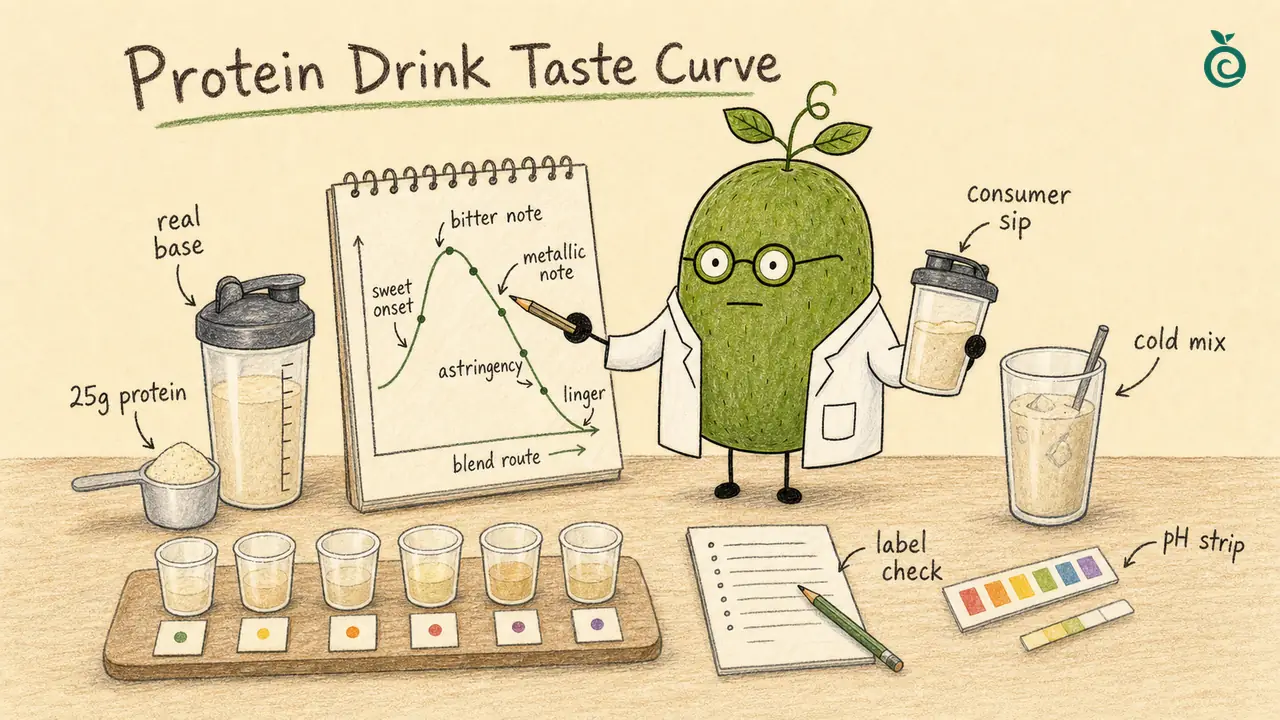
Protein changes the sweetener
Whey, milk protein, collagen, soy, pea and mixed plant proteins can expose bitterness, chalkiness, astringency or metallic notes. A sweetener that tastes balanced in water may taste thin, bitter or slow in a high-protein drink.
Build a time-based scorecard
Record first sweetness, peak sweetness, sweetness fade, bitterness, metallic note, astringency, aroma release, thickness and lingering aftertaste. A buyer should not approve a formula after one cold sip if the negative note appears 20 or 40 seconds later.
Compare singles with blends
Test monk fruit, stevia and blend directions side by side. Monk fruit can provide sweetness lift, while stevia type and dose can change bitter or licorice-like notes. Allulose or other body-support ingredients may be considered only when the target market and label plan allow them.
Do not let the label replace taste
Published protein beverage work shows that natural sweetener language may appeal to label-conscious consumers, but flavor still decides acceptance. Keep concept testing separate from blind taste testing so a strong label idea does not hide a weak formula.
Test powder and RTD conditions separately
RTM powder has different risks from RTD processing. Check instantization, cold-water mix, sediment, foaming, heat treatment if used, mineral load, acidity, viscosity and storage. The final sample should be tasted at the real serving size, not a lab shortcut.
Prepare a supplier-ready brief
Send target market, product type, protein source, protein per serving, flavor, target sweetness, packaging specification, estimated quantity, required certificates/documents and whether samples are needed. Add pH, minerals, active ingredients, processing and sweetener restrictions where available.
Technical references
Reviewed July 2026. A Journal of Dairy Science study used a 25 g protein per 360 mL ready-to-mix whey protein beverage model and compared natural sweetener systems with consumer acceptance. A Journal of Sensory Studies paper used temporal penalty analysis in protein beverages. These sources support a sensory test method, not a guaranteed Hengliyuan formula.
Review note
Reviewed October 2, 2026.
Common questions
Can monk fruit sweetener work in protein beverages?
Yes, it can support sweetness, but it should be tested in the actual protein base for bitter, metallic, astringent and lingering notes.
Is stevia better than monk fruit for protein drinks?
Not always. The better route depends on the protein source, flavor, dose, steviol glycoside type, pH and aftertaste target.
Should protein drink sweeteners be tested in water first?
Water can screen obvious problems, but final approval should happen in the real protein beverage or powder at the target serving size.
What should buyers send before protein beverage samples?
Start with your target market and product idea. Share any known packaging specification, estimated quantity, required certificates/documents and whether samples are needed; we can clarify the remaining details together. Add protein source, serving size and flavor if available.
