
Read this guide in
PROTEIN AFTERTASTE SCORECARD
Protein Powder Aftertaste Scorecard for Natural Sweetener Blends
Score protein powder aftertaste over time: sweetness onset, bitterness, metallic notes and lingering finish for blends.
Protein powder aftertaste is not one note. It can start as sweetness, turn bitter after ten seconds, become metallic late, or leave a chalky film that the sweetener seems to make louder.
This scorecard helps protein powder and sports nutrition buyers compare monk fruit, stevia, allulose-supported and natural sweetener blend routes without turning the test into a vague opinion meeting.
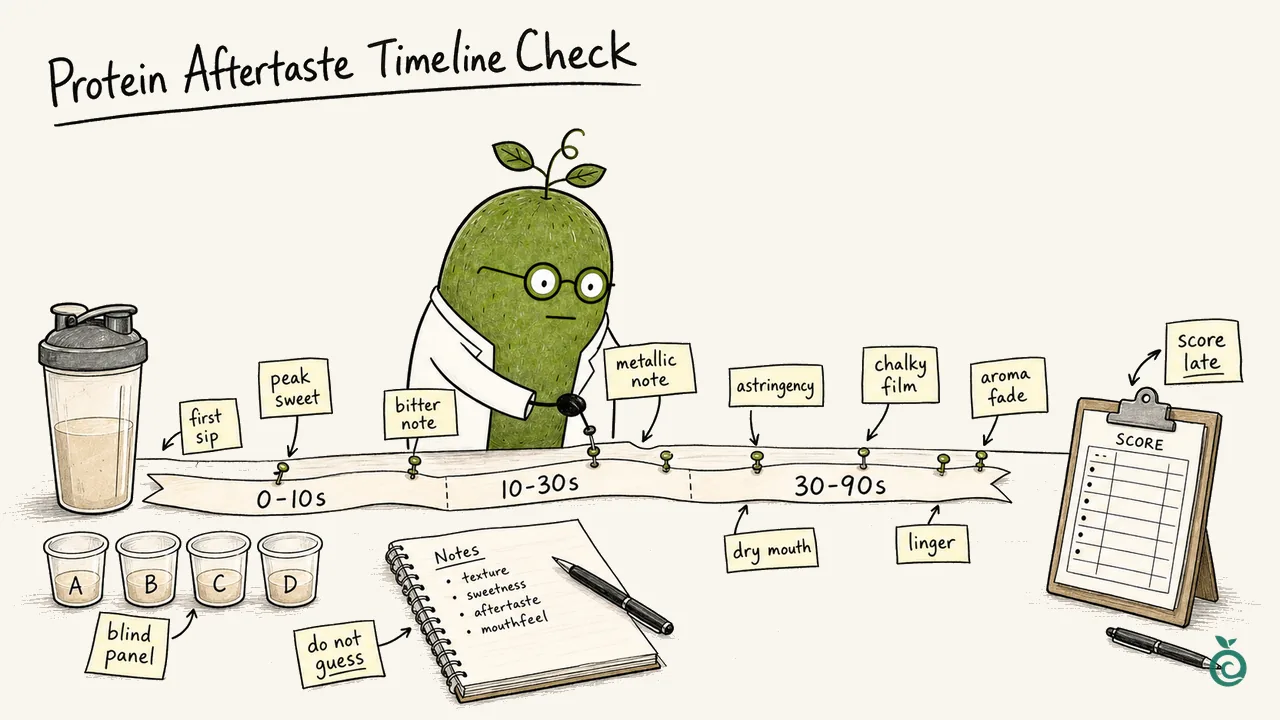
Score the first sip separately
Record aroma, first sweetness, flavor match and early bitterness in the first 5 to 10 seconds. This catches whether the formula opens cleanly or starts with a protein, mineral, cocoa, vanilla or plant-base clash.
Watch the middle of the curve
From 10 to 30 seconds, note peak sweetness, creaminess or thinness, chalkiness, astringency and whether the main flavor still feels connected. Many protein samples fail here because the sweetness rises after the flavor has already faded.
Measure the finish
At 30 to 90 seconds, score lingering sweetness, bitter finish, metallic note, licorice-like note, throat catch, dry mouth and powder film. This late window is where stevia, monk fruit, protein hydrolysates and plant proteins often show their trade-offs.
Keep label preference out of blind tasting
Natural sweetener positioning can matter to buyers and consumers, but the blind sample must still taste acceptable. Run the first panel without ingredient claims, then review label, cost, certificates and target-market fit after the sensory notes are clear.
Turn scores into sample decisions
A useful next sample changes only one or two variables: sweetener dose, sweetener blend, flavor level, acid or salt balance, body support, protein source or mixing method. Changing everything at once makes the result hard to use.
Technical references
Reviewed July 2026. Harwood and Drake used temporal liking and TCATA in protein beverages and reported penalties tied to bitter, metallic, astringent and lingering notes: https://doi.org/10.1111/joss.12644. Parker, Lopetcharat and Drake also used time-intensity, TDS and TCATA in 25 g protein per 360 mL whey beverages: https://doi.org/10.3168/jds.2018-14707. These methods guide scorecard design; they are not a ready-made commercial formula.
Review note
Reviewed October 2, 2026.
Common questions
How long should a protein powder aftertaste test run?
A simple first screen should cover the first sip, 10 to 30 seconds and 30 to 90 seconds after tasting. Longer tests may be useful for very lingering formulas.
Which notes should buyers score for natural sweetener blends?
Score first sweetness, peak sweetness, sweetness fade, bitterness, metallic note, licorice-like note, astringency, chalkiness, dry mouth, aroma and protein note.
Can blending monk fruit and stevia remove all aftertaste?
Blending can reduce some off-notes in a specific base, but it is not a guarantee. The protein source, flavor, dose, market rules and body system still need testing.
What should buyers send before aftertaste troubleshooting?
Start with your target market and product idea. Share any known packaging specification, estimated quantity, required certificates/documents and whether samples are needed; we can clarify the remaining details together. Add current sweetener, protein source and known off-note if available.
