
Read this guide in
PROTEIN POWDER BASE TEST
Sweetener for Protein Powder: Why Water Testing Is Not Enough
Test sweetener for protein powder in the real base, not water: serving setup, matrix comparison and pass-fail brief.
A sweetener that tastes balanced in water can still turn a protein powder into a sweet, chalky or slow-finishing shake. Protein changes flavor release, thickness, bitterness and the way sweetness fades.
This guide is for whey, collagen, meal replacement and plant protein powder buyers who need monk fruit, stevia, allulose-supported or custom natural sweetener blend samples for a real product, not a cup-water check.
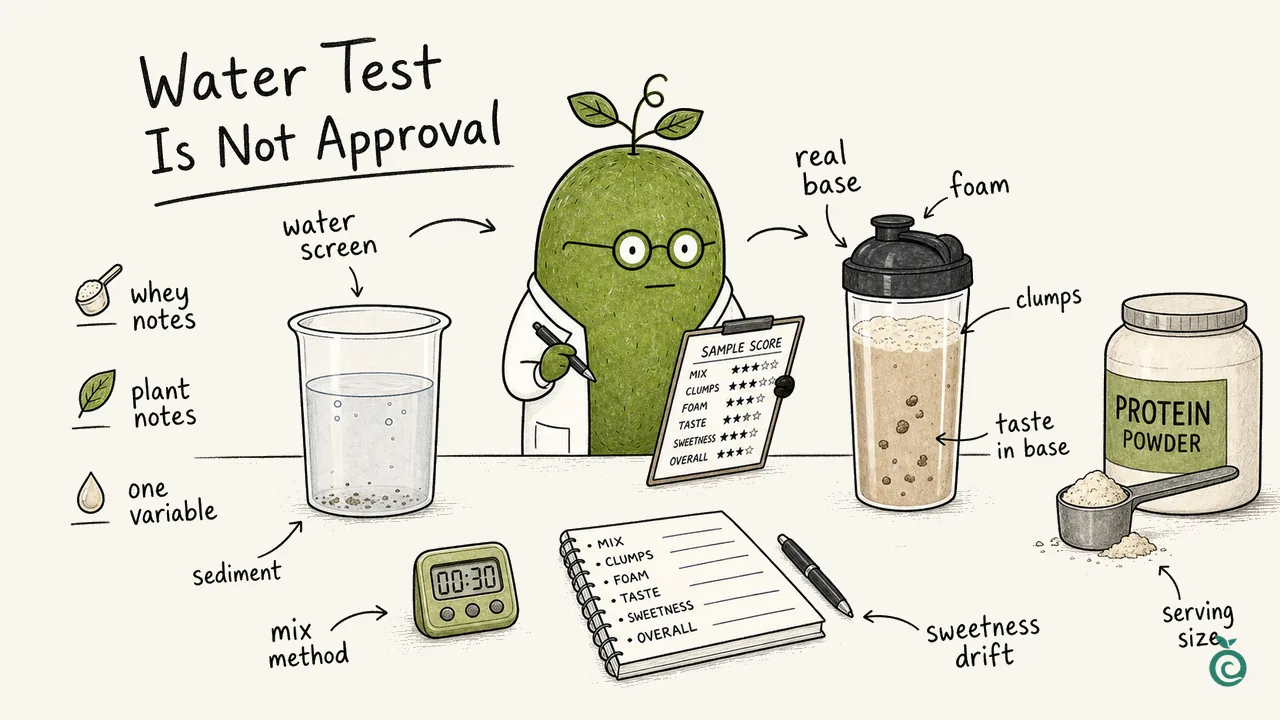
Start with the actual serving
Set the test around the finished use case: powder grams per serving, water or milk volume, shaker or blender method, standing time and serving temperature. A one-gram sweetener comparison in plain water is useful only for screening obvious off-notes.
Protein source changes the result
Whey isolate, whey concentrate, collagen, pea, soy, rice and mixed plant proteins bring different background notes. Some bases feel creamy, some feel thin, and others bring beany, bitter, earthy or astringent notes that make the same sweetener taste stronger or slower.
Check texture before blaming sweetness
Chalkiness, powder clumps, foam, sediment and thin body can make sweetness feel worse. Test particle size, lecithin or instantizing approach, gum or fiber support, powder flow and rest time before deciding the sweetener alone caused the problem.
Compare sweetener systems gently
Build a small matrix instead of pushing one ingredient hard. Compare a control, a monk fruit lift, a stevia or Reb-type direction, and a blend route. Allulose or other body-support ingredients should be added only when the target market and label plan allow them.
Use a simple pass-fail brief
Record first sweetness, peak sweetness, sweetness fade, bitter note, metallic note, astringency, chalkiness, body, aroma, clumping and sediment after one minute. The sample should pass in the product base before it moves to pilot or packaging review.
Technical references
Reviewed July 2026. Parker, Lopetcharat and Drake tested natural sweeteners in a 25 g protein per 360 mL ready-to-mix whey beverage model: https://doi.org/10.3168/jds.2018-14707. A Journal of Sensory Studies texture study reported that whey-protein texture and sweetener type interact in sweetness perception: https://doi.org/10.1111/joss.12333. These sources support real-base testing; they do not provide a universal protein powder formula.
Review note
Reviewed October 2, 2026.
Common questions
Why does a protein powder taste fine in water but too sweet in the finished shake?
Protein, flavor, thickness, minerals, acids and serving size can change sweetness onset, peak and aftertaste. Water testing can miss those interactions.
Should monk fruit or stevia be approved from a cup-water test?
No. Use water only as an early screen, then test the sweetener in the final protein base at the real serving size.
What should a first protein powder sweetener matrix include?
Include the current control, one monk fruit route, one stevia or Reb-type route and one blend direction. Add body support only where the target market and label plan allow it.
What should buyers send before protein powder sweetener samples?
Start with your target market and product idea. Share any known packaging specification, estimated quantity, required certificates/documents and whether samples are needed; we can clarify the remaining details together. Add protein source, flavor and mixing method if available.
