
Read this guide in
YOGURT SENSORY SCORECARD
Low-Sugar Yogurt Sweetener Testing: Sensory Scorecard Method
Score low-sugar yogurt sweeteners with a sensory scorecard: sweetness timing, acidity, texture, bitterness and a supplier sample brief.
A low-sugar yogurt drink can have acceptable sweetness and still show a separate separation or whey-off problem. Record sweetness and acidity alongside visible serum, phase separation and texture at defined time points; do not treat a change in one row as proof that the sweetener caused every physical change.
Use this scorecard before asking a supplier to adjust allulose, stevia, monk fruit or an erythritol-free natural sweetener blend for spoonable yogurt, yogurt drinks, Greek-style yogurt, fermented dairy desserts or plant-based yogurt.
Define the yogurt base first
Record whether the product is spoonable yogurt, drinkable yogurt, Greek-style yogurt, fruit yogurt, fermented dairy dessert or plant-based yogurt. Add milk or plant base, protein, fat, stabilizer, fruit preparation, pH or acidity target, heat process and cold storage condition.
Keep a control sample
A useful test usually needs the current sucrose control, a partial-sugar reduction and one or more sweetener routes. Without a control, the team may blame the sweetener for a problem caused by fruit acid, fermentation, stabilizer, protein or storage.
Score sweetness over time
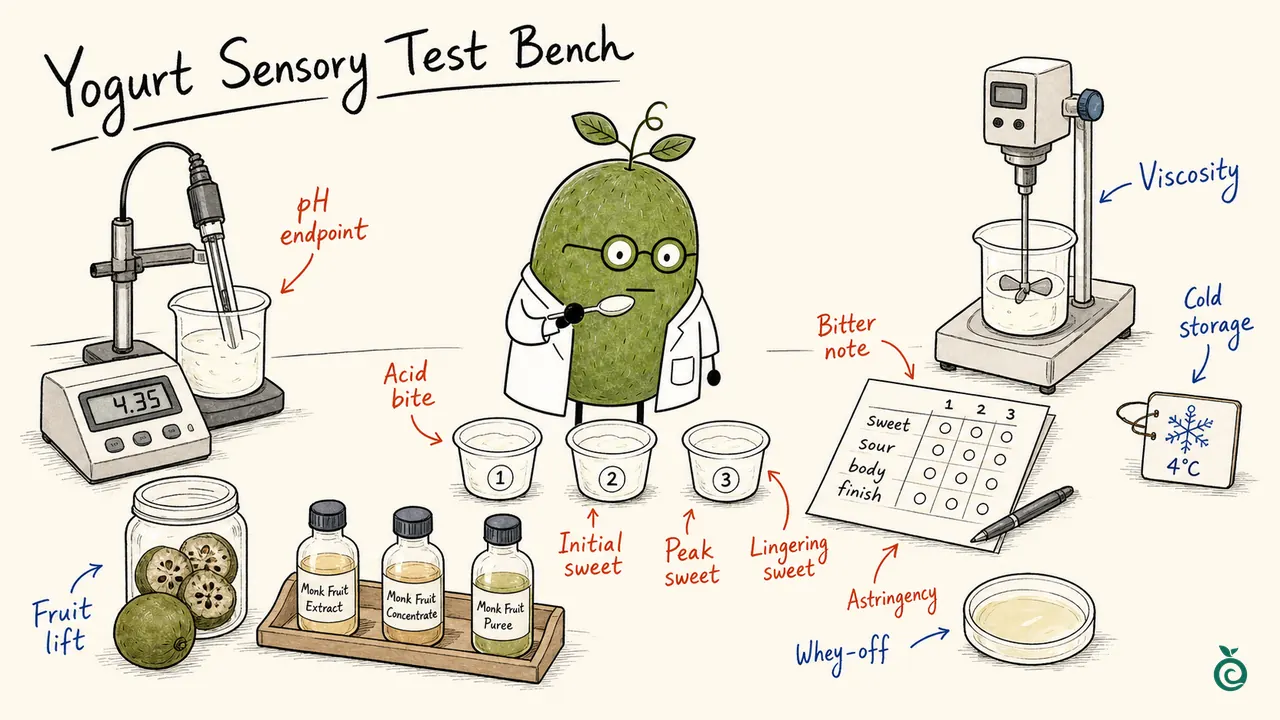
Write separate scores for initial sweetness, peak sweetness, sweetness fade, lingering sweetness, bitter note, licorice-like note, astringency and mouth-drying. A 2022 temporal-sensory yogurt study reported changes across repeated intake, so one quick spoonful is not enough.
Score acidity and texture beside taste
Low-sugar yogurt can taste thin even when sweetness is correct. Record sourness, fruit lift, creaminess, thickness and viscosity separately from visible serum, whey-off, sediment or a distinct upper layer. For drinkable yogurt, note the same base, protein and fat direction, pH or acidity context and heat process before comparing samples.
Use a fixed separation observation sequence
At minimum, log the blended or filled sample at the agreed initial point, after the process, after cooling and at each storage checkpoint used by the project. Record whether an upper liquid layer is visible, whether it remixes, how much sediment is present and whether the cup or bottle was disturbed. Keep these observations beside sweetness, sourness, viscosity and mouthfeel rather than replacing them with one overall pass/fail score.
Give each sweetener a job
Allulose may help a more sugar-like curve or body where the target market allows it. Stevia can lift sweetness, but glycoside type and dose affect bitterness and linger. Monk fruit can also support sweetness lift, but it should be tested for bitter or astringent finish in the actual yogurt base.
Turn the scorecard into a sample brief
Send the supplier the control direction, target sweetness, sugar-reduction goal, yogurt base, protein and fat direction, pH or acidity context, heat process, packaging, target market, required documents and sample needs. State whether the next sample must answer sweetness, acidity, visible separation, remixing, viscosity or cold-storage behavior. Change one or two clear variables, not the whole system at once.
Technical references
Reviewed July 2026. Journal of Dairy Science 2024 reported consumer testing of sweeteners in yogurt and found taste remained central to liking and purchase intent. A 2022 yogurt temporal-sensory study reported different bitter, astringent and lingering patterns for stevia and monk fruit samples. A published allulose yogurt study and a 2025 Food Science and Technology yogurt sweetener study support matrix-specific sensory testing, not a universal formula.
Review note
Reviewed October 2, 2026.
Common questions
How should a low-sugar yogurt drink log sweetness and separation?
Keep separate rows for sweetness and sourness, viscosity and mouthfeel, and visible serum or phase separation. Record the same yogurt base, pH or acidity context, heat process and storage checkpoints for the control and sample.
Is allulose better than stevia in yogurt?
Not always. A published allulose yogurt model reported strong consumer results, but the best route depends on market rules, yogurt base, texture target, flavor and cost.
Why test repeated spoonfuls?
Some bitterness, astringency or lingering sweetness becomes clearer after several bites. A first-spoon test can miss the finish that consumers notice later.
What should buyers send before a yogurt sample comparison?
Send target market, product type, yogurt base, protein or fat direction, packaging specification, estimated quantity, required certificates/documents and whether samples are needed. Add the main sweetness or separation question and the storage checkpoints to observe.
