
Read this guide in
YOGURT SWEETENER TESTING
Low-Sugar Yogurt Sweetener Blends: Stevia, Monk Fruit & Allulose Guide for Fermented Dairy
Compare stevia, monk fruit and allulose sweetener blends for low-sugar yogurt: taste, texture, label fit and a buyer sample brief.
Yogurt and fermented dairy make sweetener choices more visible than many drinks. Acid, cultured dairy notes, protein, fruit preparation, viscosity and cold storage can turn a clean water sample into a thin or lingering yogurt sample.
This guide helps dairy buyers, plant-based yogurt teams and ingredient purchasers prepare a better sample brief before comparing stevia, monk fruit, allulose-supported or erythritol-free natural sweetener blend directions.
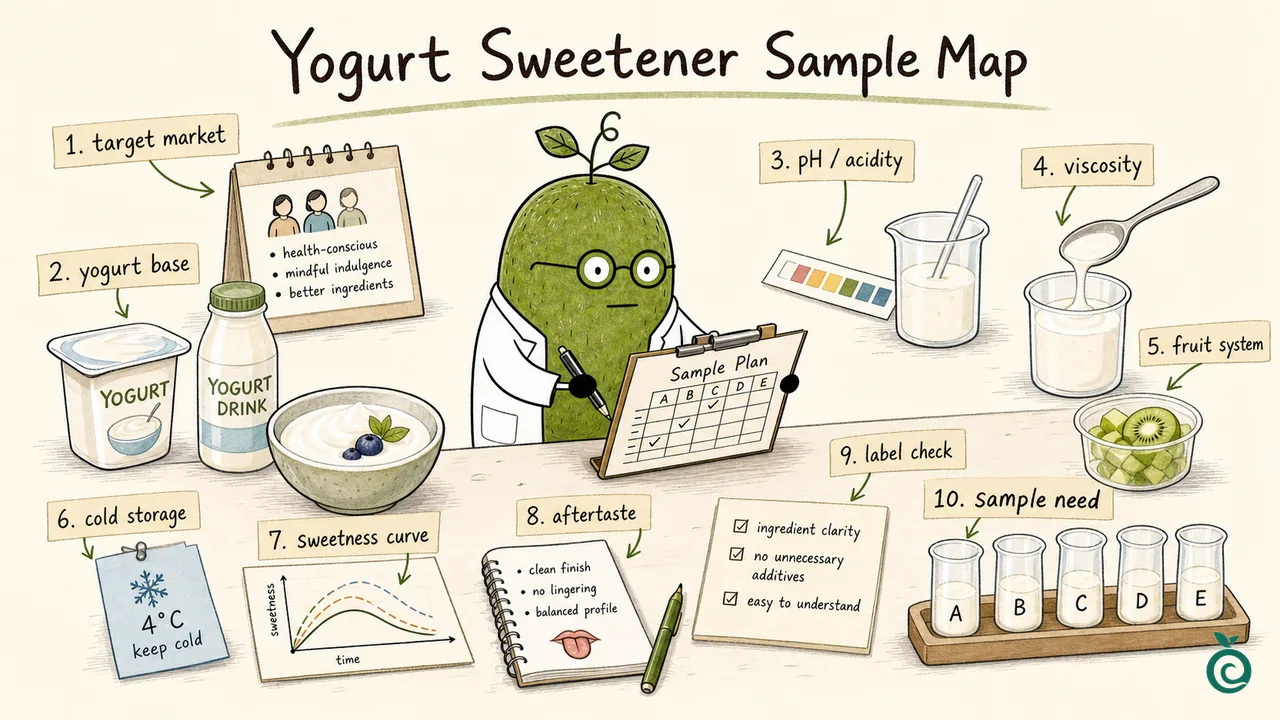
Start with the fermented base
A spoonable yogurt, drinkable yogurt, Greek-style base, fermented plant base or fruit-on-bottom cup should not use the same sample plan. Name the milk or plant base, protein level, fat level, fruit system, stabilizer, pH or acidity target and whether the product is chilled, ambient or heat-treated after fermentation.
Separate sweetness from texture
Stevia and monk fruit can lift sweetness at low use levels, but they do not replace sugar's solids, viscosity or body. Allulose, rare sugars, fibers or carbohydrate systems may help texture in suitable markets, but each choice changes label, cost, process and sensory results.
Build a small sample matrix
Compare the current sucrose control, a partial-sugar reduction, a stevia or monk fruit direction, an allulose-supported direction where allowed and one erythritol-free blend if that is a label target. Keep sweetness target, serving size and fruit level fixed so the results can be read.
Measure what buyers actually notice
Score initial sweetness, peak sweetness, lingering sweetness, sourness, bitterness, metallic notes, fruit lift, creaminess, thickness, watery finish, syneresis, sediment and taste after cold storage. A yogurt sample can be sweet enough and still fail because it feels thin or finishes bitter.
Check market and label fit early
Allulose, steviol glycosides, monk fruit ingredients, polyols, fibers and low-sugar claims are handled differently by market. Confirm the launch country, ingredient names, nutrition-panel assumptions and claim language before artwork or volume quotation.
Supplier brief for yogurt projects
For useful samples, send target market, product type, yogurt base, fruit or flavor system, sugar-reduction target, pH or acidity if known, process condition, packaging specification, estimated quantity, required certificates/documents and whether samples are needed.
Technical references
Reviewed July 2026. A 2026 strawberry yogurt drink study found that stevia replacement changed viscosity, total solids, calories and carbohydrate level in that model while pH, acidity, protein, fat and water-holding did not show significant change. A 2025 Food Science and Technology yogurt study compared stevia, FOS, xylitol and isomaltulose using time-intensity, CATA and consumer acceptance. A 2025 Journal of Food Science yogurt study examined rare sugars such as allulose and tagatose. These sources support sample design; they do not prove a universal yogurt formula or market-access conclusion.
Review note
Reviewed October 2, 2026.
Common questions
Can stevia work in low-sugar yogurt?
It can be tested, but the fermented base, fruit system, pH, viscosity, storage and glycoside profile affect the finished taste.
Can allulose be used in yogurt?
Allulose may be useful for sugar-like sweetness or body in markets where it fits the regulation and label plan. Buyers should confirm the target market before commercial launch.
Is monk fruit enough to replace sugar in yogurt?
It can support sweetness, but sugar also affects solids, body and flavor balance. A blend or texture-support direction is usually worth testing.
What should yogurt buyers send before samples?
Send target market, product type, yogurt base, flavor, packaging specification, estimated quantity, required certificates/documents and whether samples are needed.
