
Read this guide in
CANADA LABELING NOTES
Monk Fruit Sweetener Canada: Labeling Guide for Monk Fruit Extract and Stevia
Selling sweeteners in Canada? Labeling guide for monk fruit extract and steviol glycosides: Health Canada lists, CFIA names and conservative claims.
Canada sweetener work should start with the product category, not with a broad ingredient claim. Monk fruit extract, steviol glycosides, allulose and sweetener blends do not share one simple rule.
This guide is for buyers preparing tabletop sweeteners, beverages, bakery products, nutrition bars, syrups or private-label projects for Canada and who need a conservative supplier discussion before label artwork or volume quotation.
Start with the finished food
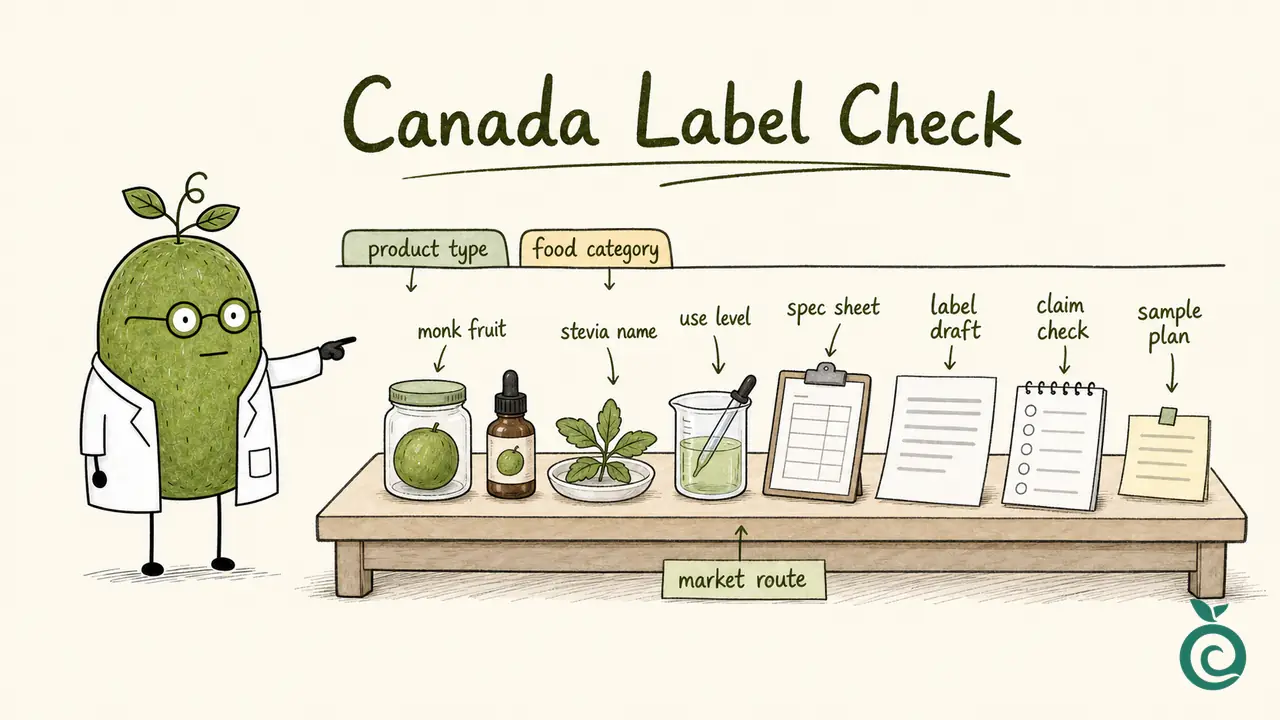
Ask where the product will be sold, what the finished food is, and whether the sweetener is used in a tabletop product, beverage, bakery item, bar, powder, syrup or other category. Health Canada permissions and CFIA label expectations are tied to the food and ingredient identity.
Check monk fruit extract carefully
CFIA's sweetener labeling guidance lists monk fruit extract in the table-top sweeteners context. Buyers should not turn that into a blanket statement for every Canadian food category without checking the finished product and current Health Canada list.
Check steviol glycoside identity
Steviol glycosides need to match Health Canada's permitted sweetener list, the applicable food category, use limit and specification route. CFIA also provides permitted label synonyms for steviol glycosides, including related ingredient-name notes. The production route and specification should be checked before label wording is locked.
Keep allulose separate
Do not assume a US allulose label approach applies to Canada. If a buyer wants allulose in a Canadian-market product, treat it as a separate regulatory and label review before samples, artwork or nutrition-panel assumptions.
Prepare the supplier review file
Start with your target market and product idea. Share any known packaging specification, estimated quantity, required certificates/documents and whether samples are needed; we can clarify the remaining details together. For Canada, add the intended food category, ingredient specification, proposed use level, label draft and any existing regulatory opinion.
Keep claims conservative
Natural, no added sugar, low calorie, keto-style, sugar-free and clean-label language depend on the finished product, nutrition data, ingredient list and Canadian rules. A supplier can help organize documents and samples, but final market launch should be confirmed with the buyer's regulatory adviser.
References
Reviewed July 2026. Sources checked include Health Canada's List of Permitted Sweeteners, published December 18, 2024; CFIA sweetener labeling guidance; and CFIA permitted synonyms for steviol glycosides. These official sources support Canada-specific review steps, not legal advice or automatic approval for every product.
Separate retail tabletop sweeteners from another food use
CFIA’s sweetener-labeling guidance and Health Canada’s permitted-sweetener list should be read for the exact material and finished-food category. The monk fruit extract permission discussed in the Canadian notice concerns table-top sweeteners; do not extend that notice to every beverage, bakery product or retail blend. Confirm the current permitted use and its conditions before the formulation and label are approved.
Review note
Reviewed October 2, 2026.
Common questions
Is monk fruit allowed in Canada?
CFIA guidance lists monk fruit extract in the table-top sweeteners context. Buyers should still confirm the exact finished product category before planning a broader Canadian-market launch.
Can stevia be used in Canada?
Steviol glycosides can be used only according to Health Canada's permitted sweetener list, food categories, limits and specifications. Check the ingredient identity and label name before artwork.
Is allulose handled the same way in Canada as in the US?
No. Do not use US allulose nutrition-label guidance as a Canada approval statement. Confirm Canada-specific status before samples, claims or label work.
What should buyers send before Canadian-market samples?
Start with your target market and product idea. Share any known packaging specification, estimated quantity, required certificates/documents and whether samples are needed; we can clarify the remaining details together. Add food category, use level, specification and label draft if available.
