
Read this guide in
COFFEE AND TEA SWEETENER TESTING
Natural Sweeteners for Coffee and Tea: Sensory Testing Guide
A practical buyer guide for testing stevia, monk fruit, allulose and natural sweetener blends in coffee, tea, powder drinks and RTD beverages.
This guide defines coffee-and-tea sensory comparisons. Use the fruit-juice and coffee sample guide when the decision is whether a result transfers between different beverage bases.
Coffee, tea and beverage powders expose sweetener problems quickly. Bitterness, astringency, roast notes, acids, minerals and aroma release can make a sweetener sample taste good in water but weak or harsh in the finished drink.
This guide is for buyers comparing stevia, monk fruit, allulose and natural sweetener blends for coffee, RTD tea, instant tea, electrolyte powders, drink sticks and similar beverage projects.
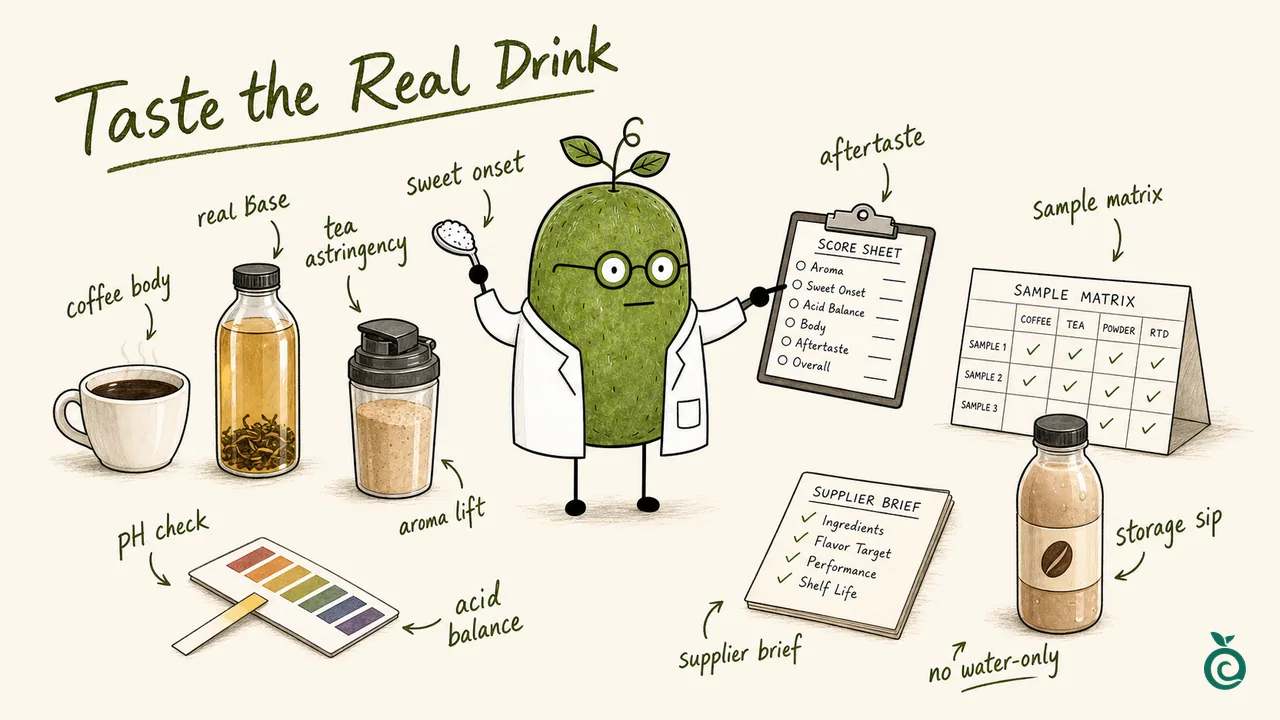
Start from the real drink, not water
Plain water is useful for checking solubility and obvious off-notes, but it is not enough for approval. Test in the actual coffee, tea, powder drink or RTD base with the intended dilution, pH, acid system, mineral load, flavor, processing route and serving temperature.
Score aroma, acid and sweetness together
A fruit or tea flavor can seem quiet when sweetness and acidity are not balanced. Record aroma lift, sourness, bitterness, astringency, sweetness onset, peak sweetness, lingering sweetness, dry mouthfeel and aftertaste after repeated sips. This helps separate a weak flavor problem from a sweetener-balance problem.
Treat stevia, monk fruit and allulose as different tools
Stevia can provide strong sweetness lift but needs glycoside and aftertaste screening. Monk fruit can help round sweetness in some beverage systems. Allulose may support body or a more sugar-like curve in markets where it fits the regulation and label plan. The useful question is not which one is best, but what job each one must do in the finished drink.
Do not ignore processing and storage
Hot coffee, cold-brew coffee, UHT tea, hot-filled tea and instant powder each create different checks. Look at clarity, sediment, color change, viscosity, sweetness drift, flavor loss and aftertaste after storage. A sample that works at room temperature on day one may not fit an RTD process.
Build a sample brief a supplier can use
For a sample discussion, share any available details on target market, drink type, serving size, sugar-reduction goal, flavor, pH if known, Brix or solids if known, process, packaging specification, estimated quantity, required certificates/documents and whether samples are needed. If some details are undecided, we can clarify them together before confirming the sample or quotation.
Technical references
Azevedo et al. (2015), Cusielo et al. (2019) and Cusielo et al. (2026) examined defined espresso systems. They support comparing sweetness, coffee character and temporal sensory attributes in the actual base. They do not establish a dosage, acceptance result or preferred extract for every coffee, tea or fruit drink.
- Azevedo et al. (2015), High-intensity sweeteners in espresso coffee: ideal and equivalent sweetness and time-intensity analysis
- Cusielo et al. (2019), Sensory Influence of Sweetener Addition on Traditional and Decaffeinated Espresso
- Cusielo et al. (2026), Between Bitterness and Sweetness: How Decaffeination and Sweeteners Shape the Sensory Experience of Espresso Coffee
Review note
Reviewed October 2, 2026.
Common questions
Why does a flavor powder taste weak in water?
The drink may need the right sweetness, acidity, mineral balance and dilution before the aroma reads correctly. Water-only testing can hide the real flavor-release problem.
Can stevia work in coffee or tea?
Yes, stevia can be tested, but the glycoside profile, roast or tea base, acid balance, serving temperature and aftertaste target all matter.
When should buyers consider allulose?
Allulose may be useful where body, sweetness curve or sugar reduction is important and where the target market allows it. Label and regulatory checks still come first.
What should buyers send before beverage samples?
Send target market, drink type, flavor, serving size, packaging specification, estimated quantity, required certificates/documents and whether samples are needed.
