Read this guide in
Hengliyuan application and selection
Stevia vs Sucralose in Electrolyte Drink Powder: Sample Testing Guide
Compare stevia and sucralose at matched sweetness in your electrolyte powder. Record serving dilution, salt balance, aftertaste and blend-uniformity checks.
Our recommendation is to compare steviol glycosides and sucralose at matched sweetness in the same complete electrolyte base. First identify the commercial ingredient or blend, then fix the minerals, acids, flavor, powder serving mass and reconstitution water volume. Screen sweetness, salt balance and aftertaste before retesting the selected samples as a full serving.
For a brand that requires plant-derived high-intensity sweeteners, start with steviol glycosides and confirm the selected material's production route and label fit. Where artificial sweeteners are accepted, sucralose is a candidate. Choose from the finished drink, rather than the sweetness of an ingredient in water.
Identify the actual sample before comparing the names
A sample labelled stevia or sucralose may be a concentrated ingredient or a preparation containing carriers and other sweeteners. Its composition changes the weighed dose, sensory result and cost per serving. Keep the exact product name, specification and lot in the record.
| Record | Steviol glycoside sample | Sucralose sample |
|---|---|---|
| Identity | Glycoside composition, specification and sample/lot code | Sucralose specification or complete blend identity and sample/lot code |
| Other ingredients | Carriers, fillers and other sweeteners, if present | Carriers, fillers and other sweeteners, if present |
| Matched sweetness | Dose established in the complete electrolyte base | Dose established in the same base against the same target |
| Actual addition | Commercial material mass per serving; stock concentration and dilution if used | Commercial material mass per serving; stock concentration and dilution if used |
Commercial blend mass and active sweetener mass are different entries. Keep their units and bases explicit; do not compare price per kilogram or sweetness multipliers as though the materials were identical.
Match sweetness while keeping the complete base visible
Use the current sugar formula or product as the reference when one exists. For a new product, agree a sweetness target and reference preparation first. Record every change needed to replace sugar mass or accommodate a carrier; those changes are part of the formula, even when the mineral, acid and flavor targets remain fixed.
| Trial | Preparation | Question |
|---|---|---|
| A: reference | Actual current formula or agreed reference, with serving mass and water volume | What sweetness and sweet–sour–salt balance are we targeting? |
| B: steviol glycosides | Identified material, adjusted to matched sweetness in the stated complete base | How do onset, bitter/metallic notes, lingering sweetness and liking compare? |
| C: sucralose | Identified material, adjusted to the same target in the stated base | How do balance, aftertaste and full-serving liking compare? |
Keep water source, temperature, mixing, serving conditions and tasting order controlled and recorded. If a stock solution is used for accurate bench dosing, account for its added water and other ingredients. A fixed-dose screen and a matched-sweetness comparison answer different questions; do not relabel one as the other.
What the published studies contribute
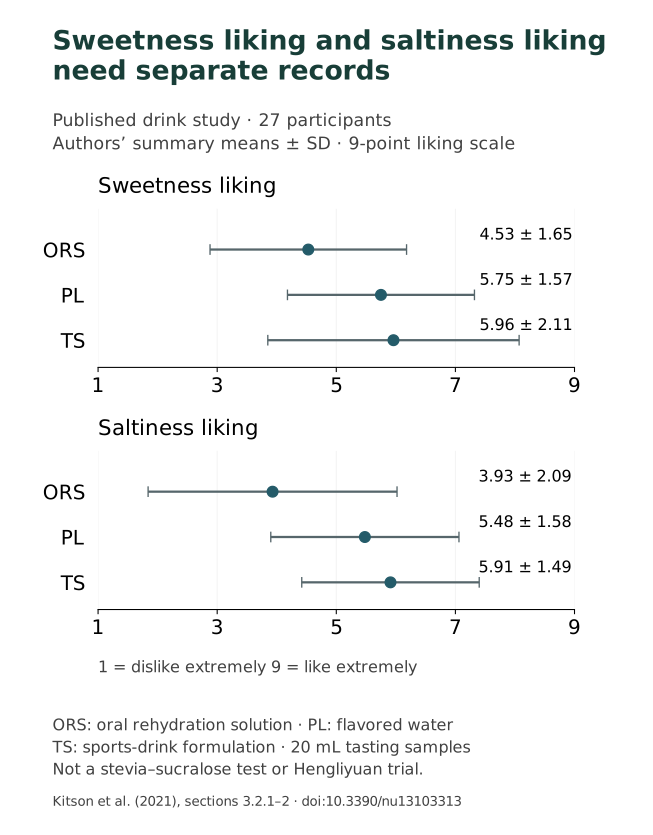
Kitson et al. (2021) tested three different carbohydrate/electrolyte drinks with 27 participants using 20 mL tastings before and during 60 minutes of cycling in heat. The figure below shows reported summary liking scores, not sweetener intensity or a stevia–sucralose trial. Parker et al. (2018) first established matched sweetness in vanilla whey beverages containing 25 g protein per 360 mL water. A trained panel then used three temporal methods; a separate consumer stage included 150 people. This supports separating temporal profiling from consumer acceptance, but its protein matrix is not an electrolyte-powder dosing guide. Kinnear and de Kock (2011) followed 128 consumers for 14 days with equal-sour lemon–lime sports drinks. Initial preference did not predict preference after repeated exposure. For us, that is a reason to check continued drinking when relevant, not a mandatory 14-day protocol or a score curve that can be reconstructed from an abstract.
Keep sweetness liking and saltiness liking separate
The authors report these summary means and standard deviations on a 1–9 liking scale; the table makes the plotted values available as text. ORS means oral rehydration solution, PL flavored-water placebo and TS sports-drink formulation.
| Study drink | Sweetness liking: mean ± SD | Saltiness liking: mean ± SD |
|---|---|---|
| ORS | 4.53 ± 1.65 | 3.93 ± 2.09 |
| PL | 5.75 ± 1.57 | 5.48 ± 1.58 |
| TS | 5.96 ± 2.11 | 5.91 ± 1.49 |
Record the taste over a full serving
Use coded samples, a stated scoring method and consistent checkpoints. Describe intensity separately from liking: a stronger salty note and a less-liked salty note are different observations. Record panel size, repeats, tasting order and the actual preparation.
| Observation | Record for each identified sample |
|---|---|
| Sweetness onset | When sweetness becomes noticeable under the stated tasting method |
| Peak sweetness | Intensity relative to the reference, using the same scale |
| Sweet–sour–salt balance | Which note dominates and whether the balance is liked |
| Bitter or metallic notes | Intensity, onset and effect on the intended flavor |
| Lingering sweetness | Observation after swallowing, with actual timing and method |
| Whole-serving acceptance | Liking over the intended serving and, where relevant, repeated use |
An immediate sip and later observations can reveal different problems. Discrete checkpoint scores are not a continuous time–intensity curve. A full-serving trial is our recommended next screen; the published 20 mL study above did not perform that test for your product.
Use the result to choose one next change
Keep the previous sample and complete preparation record as the comparison. Change a defined factor in the next round so the result remains interpretable.
| Observation | Next check |
|---|---|
| Sweetness matches but sourness or saltiness is off | Check mineral/acid identity, dose and water preparation before attributing the gap to the sweetener |
| Steviol sample has excessive bitter or lingering notes | Record when and how strongly they occur; compare the selected grade, dose or a stated blend direction |
| Sucralose sweetness matches but flavor misses the target | Confirm ingredient versus blend, then test a defined acid/flavor adjustment |
| Neither sample matches the reference | Recheck the reference, dosing basis, stock dilution and matched-sweetness procedure |
| First sip works; a full serving is less acceptable | Keep whole-serving and repeat-drinking observations before confirming the direction |
| Taste target is met | Lock material identity, dose and reconstitution; proceed to separate powder and pack checks |
A good cup does not prove powder uniformity
Low-dose sweeteners need an appropriate weighing and premixing process. Dissolving a bench sample to the target sweetness does not show that a production batch or individual sachets contain an even distribution. Set the premix and sampling plan around material specifications, carrier, particle size, equipment and batch size. Where uniformity must be demonstrated, use an appropriate analytical method and agreed acceptance criteria; tasting cannot substitute for an assay. Review moisture, packaging, stability and finished-product labeling separately for the actual project.
Start with the drink and the taste gap
Tell Hengliyuan the target market, drink flavor, intended powder serving and water volume, plus the main issue: salty, sour, bitter, lingering or overall balance. Share the current sweetener, material restrictions and reference product if known. A complete formula or finished trial is not required to start the discussion. Clarify whether you need a single ingredient, a blend or a different packing project, and request the actual composition, specification and available sample documents. Quantities, packaging and document requirements can follow. A plant-derived requirement or claim needs the selected material and destination-market review, not just the word stevia.
Common questions
Can I compare the sweeteners in water first?
Yes, as an ingredient screen. Make the selection in the complete electrolyte base with the stated serving mass, water and preparation, because minerals, acids and flavor can change the result.
Discuss the beverage-powder sampleShould I add the same weight of stevia and sucralose?
Equal ingredient mass does not establish equal perceived sweetness. Identify each commercial material, find the matched-sweetness dose in the same base and record actual additions and any stock dilution.
Discuss the beverage-powder sampleDoes stevia always have more aftertaste?
No single ranking covers every glycoside composition, dose, carrier and drink base. Compare identified samples at matched sweetness and record the timing and intensity of any bitter, metallic or lingering notes.
Discuss the beverage-powder sampleCan the published liking scores choose our sweetener?
No. The chart compares different complete drinks, not stevia with sucralose. Liking scores describe preference under that study method; they are not sweetness intensity, a recommended formula or our factory test results.
Discuss the beverage-powder sampleMust we run a 14-day consumer study?
Set the protocol for the intended product and decision. The repeated-exposure paper shows why a single initial preference can be insufficient; its duration is not a universal requirement.
Discuss the beverage-powder sampleCan tasting confirm sachet uniformity?
No. A cup tasting screens sensory performance. A production uniformity claim needs representative sampling, an appropriate assay and agreed acceptance criteria for the actual mix and batch.
Discuss the beverage-powder sampleDoes a stevia ingredient automatically meet our plant-derived claim?
Confirm the specific preparation, production route, other ingredients and target-market labeling requirements. The category name alone does not establish the claim for the finished drink.
Discuss the beverage-powder sampleCan I contact you before the formula is complete?
Yes. Start with the market, drink idea, water per serving and taste gap. Share what is available; the sample identity, documents, quantity and quotation scope can be clarified next.
Discuss the beverage-powder sample