
Read this guide in
RICE CRACKER VALIDATION SCORECARD
Rice cracker validation scorecard: crispness, moisture and breakage
Compare rice-cracker trials with a practical record table: sweetness, structure, moisture, water activity, handling damage and package history.
A rice-cracker sample is easier to compare when the team decides what will be recorded before tasting and packing. This scorecard keeps sweetness, puffed structure, moisture, crispness, breakage, package condition and storage change visible in separate rows.
Use it for thin rice crackers, thick puffed rice snacks, extruded cereal pieces, baked rice crisps and coated puffed grains. Reuse the field structure, but set the actual targets for the product, process, package, transport plan and launch market.
Read final breakage and added damage separately
Keep pre-existing defects visible when comparing the final condition and the change over a handling step. Use the same definition and denominator for each stated before/after comparison.
| Virtual example | Before handling | After handling | Change |
|---|---|---|---|
| A: 100 original pieces | 8 broken (8%) | 12 broken (12%) | 4 percentage points |
| B: 100 original pieces | 1 broken (1%) | 7 broken (7%) | 6 percentage points |
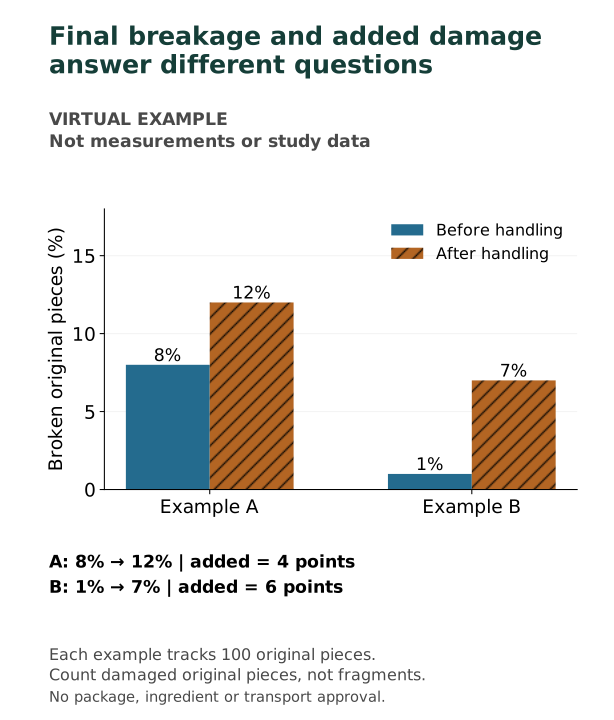
The final fraction describes what reaches the next stage. The change describes what was added during the defined handling step. Keep both when comparing a proposed package or process with its control.
Define the product lane and control
Record the rice or starch base, thin or thick format, baked, fried or extruded process, coating or seasoning, current sugar system and the current or sucrose control. Do not compare a fragile thin cracker with a dense cereal piece as if they shared one breakage or crispness target.
Use one record for each defined comparison
Write the control and candidate codes, formula revision, batch, pack identity, actual checkpoint and assessor beside the results. Keep the agreed method, unit and product-specific target visible; leave an unmeasured field marked not measured instead of assigning a pass. The table is a record structure, not a weighted total or an automatic release rule.
| Record row | Control and candidate observations | Method or condition to retain |
|---|---|---|
| Sweetness and finish | Onset, peak, aftertaste, bitterness or licorice-like note, seasoning fit | Coded samples; comparable serving conditions and a balanced tasting order; record assessor and scale. |
| Puffed structure | Thickness, volume, density, porosity, coating and visible defects | Actual geometry, sampling and method; identify whether the formula or process also changed. |
| Moisture and water activity | Separate measured values, units and test date | Moisture method and wet/dry basis; aw instrument, temperature, preparation and conditioning. |
| Crunch and fracture | First-bite crunch plus the chosen instrumental or sensory result | Sample orientation, temperature and assessment method; do not equate peak force with sensory crispness. |
| Handling damage | Baseline and after-handling damage, fines and missing material | Defined handling step, damaged-piece rule, count or mass denominator, sample identities and recovery. |
| Package and storage | Material, seal observations, fill weight, headspace and actual history | Barrier data with units/conditions when available; elapsed time, temperature, humidity and opening history. |
Make the breakage denominator explicit
Choose a count-based or mass-based measure before handling the samples. A count result needs a rule for an intact, chipped or broken original piece; it must not grow just because one cracker produces several fragments. A mass result needs a defined retained fraction, collection or sieve method and the mass used as its denominator. Count percent and mass percent are different results, even when both are called breakage. Record baseline damage, after-handling damage and any unrecovered material. Subtract percentages only when the definitions and denominator remain comparable; state the difference in percentage points. Where the same original pieces cannot be tracked, identify the matched baseline and handled units and how they were sampled. Do not describe a before/after difference as damage caused solely by one packaging variable when formulation, geometry or handling also changed.
Keep moisture, aw and crunch as separate results
Write down the actual moisture method and whether its percentage uses a wet or dry basis. For water activity, retain the instrument, sample preparation, conditioning and temperature. Record the sensory and fracture results alongside them so a changed reading can be assessed against the actual loss of acceptable crunch. A published humidity step, moisture content or aw from a different rice or cereal model is not this product's acceptance limit. Use the existing crispness guide for the research distinctions and the rice-cracker formulation guide for sweetness, puffing and process decisions. This scorecard records their outcomes; it does not replace the formulation work.
Separate unopened storage from after-opening checks
Set checkpoints for the project's package, distribution and intended use, then record actual elapsed time and conditions. A planned date is not a measurement. Keep unopened storage units distinct from units opened for moisture, fracture or sensory testing; use separately identified sealed units when a checkpoint consumes or exposes the sample. A bag opened at the first test belongs to an after-opening history thereafter. Multiple readings or pieces from one bag do not become independent production batches. Keep batch, package unit and repeat reading distinguishable, including any deviation, so a later comparison has a usable baseline.
Treat the food and package as one storage question
Keep pouch, carton, tray or jar format, actual material, seal test or observation, fill weight and handling history with the food record. Distinguish an observed intact seal from a verified seal-performance result. Barrier data need their method, unit and test conditions; a material name alone does not establish the pack's moisture protection. Sirpatrawan's 2009 rice-cracker study compared two cracker varieties in polyethylene and polypropylene pouches under defined storage conditions. Its moisture-based simulation agreed differently with the two products, and the abstract identifies other possible shelf-life factors for the second variety. It supports recording product composition, package and storage together; it does not supply a universal moisture limit or approve a pack for your rice cracker.
Turn a failed row into the next sample question
If sweetness fails while physical results hold, review the supplied sweetener composition, actual addition and flavor direction. If puffing or density fails, review the rice base, formula and process records. If crunch changes during storage, examine the measured moisture/aw results alongside package and exposure history. If pieces break, compare geometry, pre-existing defects, the handling step and pack protection. These are investigation routes, not proof that one ingredient caused the result. Change a defined variable or name a combined formulation/process route, retain the control and record the next question. A short screen helps choose samples; finished-product quality, safety, label, transport and commercial shelf-life decisions need the project's own review and validation.
Send the rice-cracker problem you already know
Start with the product format, target market and the main issue: taste, puffing, crunch loss or breakage. Add control and candidate records, supplied sweetener identity, actual addition, process, package and observations when available. Estimated quantity, required documents and sample arrangements can follow; you can contact us before the full scorecard or purchasing brief is complete.
Record these fields before comparing rice-cracker samples
- Rice or starch base and product format
- Current or sucrose control
- Sweetness and aftertaste
- Puffed volume, thickness and porosity
- Moisture and water activity methods
- First-bite crunch and fracture
- Breakage after handling or transport simulation
- Package, seal and storage checkpoints
Common questions
What should a rice-cracker scorecard measure?
Keep sweetness, puffed structure, moisture, water activity, crunch/fracture, handling damage and package/storage observations separate. Record the actual method, condition, unit and control so a failed row can guide the next sample.
Discuss this requestCan the same targets cover thin crackers and dense puffed pieces?
Reuse the field structure, then set the criteria for the actual base, geometry, process, pack and use. A fragile thin cracker and a dense cereal piece do not share an automatic texture or breakage target.
Discuss this requestIs breakage by piece count the same as breakage by mass?
No. Define damaged original pieces and the original-piece denominator for a count result. Define the collected fraction, method and mass denominator for a mass result. Keep fines and unrecovered material visible rather than mixing both measures into one percentage.
Discuss this requestWhy record damage before handling?
A final broken fraction includes pre-existing damage. A comparable baseline helps distinguish the final condition from damage added over the defined handling step; report a change between percentages in percentage points.
Discuss this requestCan one opened bag represent every storage checkpoint?
It can describe that bag's after-opening history. It cannot also represent unopened storage at later checkpoints. Use separately identified sealed units when testing consumes or exposes the sample, and distinguish bags, batches and repeated readings.
Discuss this requestDoes an acceptable moisture or aw reading approve shelf life?
No. Keep the method and product-specific criterion with the result and assess relevant sensory, package, storage and finished-product requirements. A number from another cereal model or a short tasting screen is not a commercial shelf-life approval.
Discuss this requestWhat can we send before the scorecard is complete?
Start with the rice-cracker format, market and one problem to improve. Send the control, sweetener grade, addition, process, package and observations you have; quantity, documents and sample details can be clarified as the direction develops.
Discuss this request