
Read this guide in
PLANT-BASED BEVERAGE MATRIX
Plant-Based Functional Beverage Sweetener Matrix Guide
Sweetener guide for plant-based functional beverages: monk fruit, stevia and allulose directions for oat, soy, chickpea and hibiscus drinks.
Plant-based functional drinks often fail when the sweetener is chosen in isolation. The base may bring beany notes, starch, fiber, color, acidity, sediment or astringency before the sweetener is even added.
This guide helps beverage buyers build a first sample matrix for chickpea, oat, soy, almond, hibiscus, botanical, tea-fruit and other plant-based drinks using monk fruit, stevia, allulose-supported or custom natural sweetener blends.
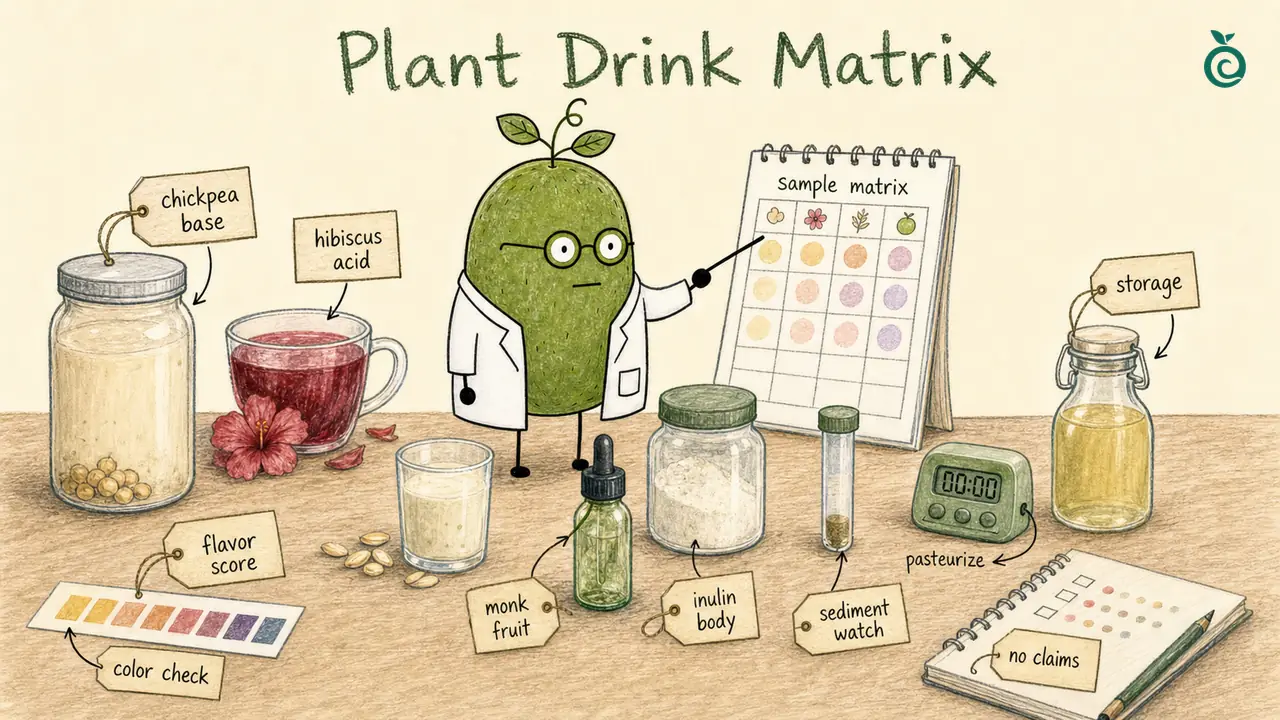
Start with the plant base
Name the real base before discussing the sweetener. Chickpea, soy, oat, almond and botanical extracts differ in protein, starch, fiber, fat, color and background flavor. Those differences can change sweetness, bitterness, body and sediment.
Treat acid, color and sweetness as one matrix
Hibiscus, citrus, tea and berry directions can hide some notes but expose others. Build a small matrix that changes acid level, flavor, sweetener type and body support together. Do not approve a sweetener only because it tastes clean in water.
Use monk fruit carefully
Monk fruit can lift sweetness in plant-based and botanical drinks, but the dose has to fit the flavor system. Too much sweetness lift can leave a slow finish or make plant notes more obvious. Stevia or Reb-type options need the same real-base testing.
Plan body and sediment support
If sugar is reduced, the drink may taste thin or show more sediment. Inulin, fibers, stabilizers, hydrocolloids or allulose-supported routes may be considered where they fit the market and label plan. They should be tested for viscosity, settling, color and shelf storage.
Keep functional language separate
A plant-based beverage can be positioned around ingredients, flavor and sugar reduction, but antioxidant, immunity, gut, weight or disease language needs market-specific evidence and regulatory review. Supplier pages should not turn a formulation paper into a health claim.
Prepare a first sample brief
Send target market, product type, plant base, flavor, pH or acid system, packaging specification, estimated quantity, required certificates/documents and whether samples are needed. Add heat treatment, target solids, fiber or stabilizer preference and shelf-life target if known.
Technical references
Reviewed July 2026. A 2025 Beverages paper used mixture design in a chickpea and hibiscus beverage with inulin, monk fruit and cinnamon, then evaluated consumer perception. The study supports matrix testing for plant-based drinks; it does not provide a transferable commercial formula or claim basis.
Keep the plant base visible in the sample matrix
Oat, soy, chickpea and hibiscus bases do not create the same flavor or physical system. Record protein, oil, solids, acidity, process and serving condition for each base, then compare the sweetener direction within it. A result in one base is a reason to test another, not proof of transfer. Separate sweetness and aftertaste from sediment or emulsion observations, and retain one clear control for each application.
Review note
Reviewed October 2, 2026.
Common questions
Can monk fruit be used in plant-based functional beverages?
Yes, it can be tested for sweetness lift, but the result depends on the plant base, acid system, flavor, body, sediment and storage.
Can allulose help plant-based beverage mouthfeel?
It may be considered where the target market and label plan allow it, but it must be tested for sweetness, solids, color, stability and nutrition-panel assumptions.
Should hibiscus or fruit acid be adjusted with the sweetener?
Yes. Acid, color, aroma and sweetener dose should be tested together because they change how sweetness and aftertaste are perceived.
What should buyers send before plant-based beverage samples?
Start with your target market and product idea. Share any known packaging specification, estimated quantity, required certificates/documents and whether samples are needed; we can clarify the remaining details together. Add plant base, flavor and process details if available.
