
Read this guide in
GUM AND MINT SWEETENER TESTING
Sugar-Free Chewing Gum and Mints Sweetener Blend Guide
Sweetener blend testing guide for sugar-free gum, mints and tablets: timing, flavor release, storage and sample briefs.
Sugar-free gum and mints are not judged by first sweetness alone. Consumers notice how fast mint or fruit aroma appears, whether sweetness drops too early, whether bitterness lingers and how the piece changes during chewing or storage.
Use this guide when planning stevia, monk fruit, allulose-supported, polyol-based or erythritol-free sweetener blend directions for chewing gum, pressed mints, tablet candy and breath-freshening confectionery.
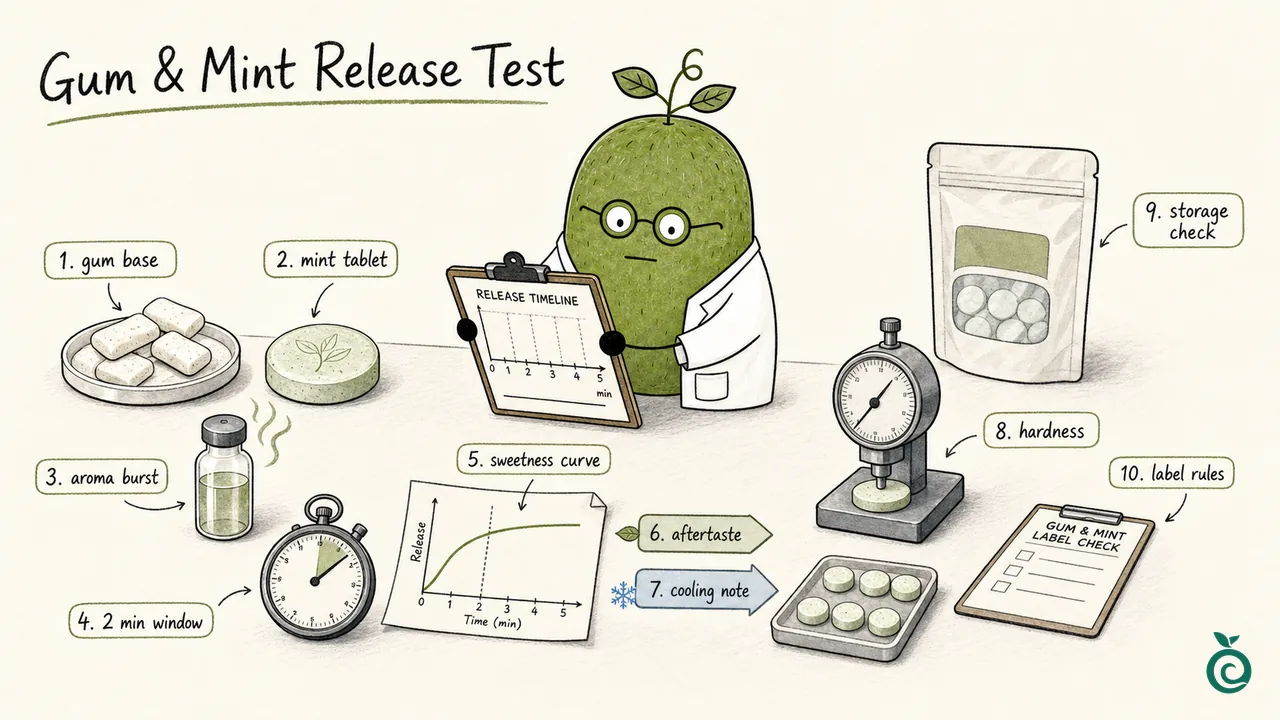
Define the format before the sweetener
Chewing gum, coated gum, compressed mints, tablet candy and chewable confectionery need different sweetener and flavor-release decisions. Start with gum base or tablet system, piece weight, coating, flavor type, cooling target, texture target and storage condition.
Track the first two minutes
In gum and mints, the early eating window matters. Record aroma burst, cooling, initial sweetness, peak sweetness, bitterness, lingering sweetness and how quickly flavor falls. A sample can taste strong at 20 seconds and still feel empty after two minutes.
Choose the sweetener role carefully
Stevia can support high-intensity sweetness, monk fruit may help round the finish in some systems, and allulose or carrier-supported directions may be considered where the target market and process allow them. Polyols or fibers may still be needed for bulk, hardness or cooling, depending on label goals.
Do not ignore storage
Gum and mints can lose freshness, aroma and perceived sweetness after warm or humid storage. Test hardness, cracking, coating, stickiness, flow, package barrier, aroma loss and sweetness after a short accelerated screen before approving a sample.
Prepare documents and label checks
Tell the supplier the target market early. Sweetener permission, polyol warning rules, ingredient naming, natural flavor position, allergen files, halal files, COA and export documents may affect whether a sample direction can become a commercial quote.
Supplier brief for gum and mints
Send target market, product type, gum or mint base, flavor, sweetness and cooling target, whether polyols or erythritol are allowed, packaging specification, estimated quantity, required certificates/documents and whether samples are needed.
Technical references
Reviewed July 2026. A 2026 LWT study on sugar-free chewing gum found that aroma perception can peak early during chewing, while sweetener release showed an initial burst followed by sustained release in its model. A 2025 Food Science & Nutrition study tested stevia as an aspartame alternative in sugar-free gum and also observed storage-related sensory changes. These sources support release testing, not a universal gum formula.
Review note
Reviewed October 2, 2026.
Common questions
Can stevia replace aspartame in sugar-free gum?
It can be tested, but the result depends on gum base, polyol system, flavor, dosage, storage and target market rules.
Can monk fruit be used in gum or mints?
Monk fruit can be considered as part of a sweetener direction, but it should be tested for onset, lingering sweetness, bitterness and flavor fit in the real base.
What matters most in gum sweetener testing?
Track aroma burst, first two minutes of sweetness, lingering aftertaste, texture, coating, storage freshness and packaging behavior.
What should buyers send before gum or mint samples?
Send target market, product type, base system, flavor, packaging specification, estimated quantity, required certificates/documents and whether samples are needed.
