
Read this guide in
YEAST BREAD SUGAR REDUCTION
Reduced-Sugar Yeast Bread Sweetener Guide
Test monk fruit, stevia, allulose and sweetener blends in reduced-sugar yeast bread without losing proofing, volume, softness or shelf life.
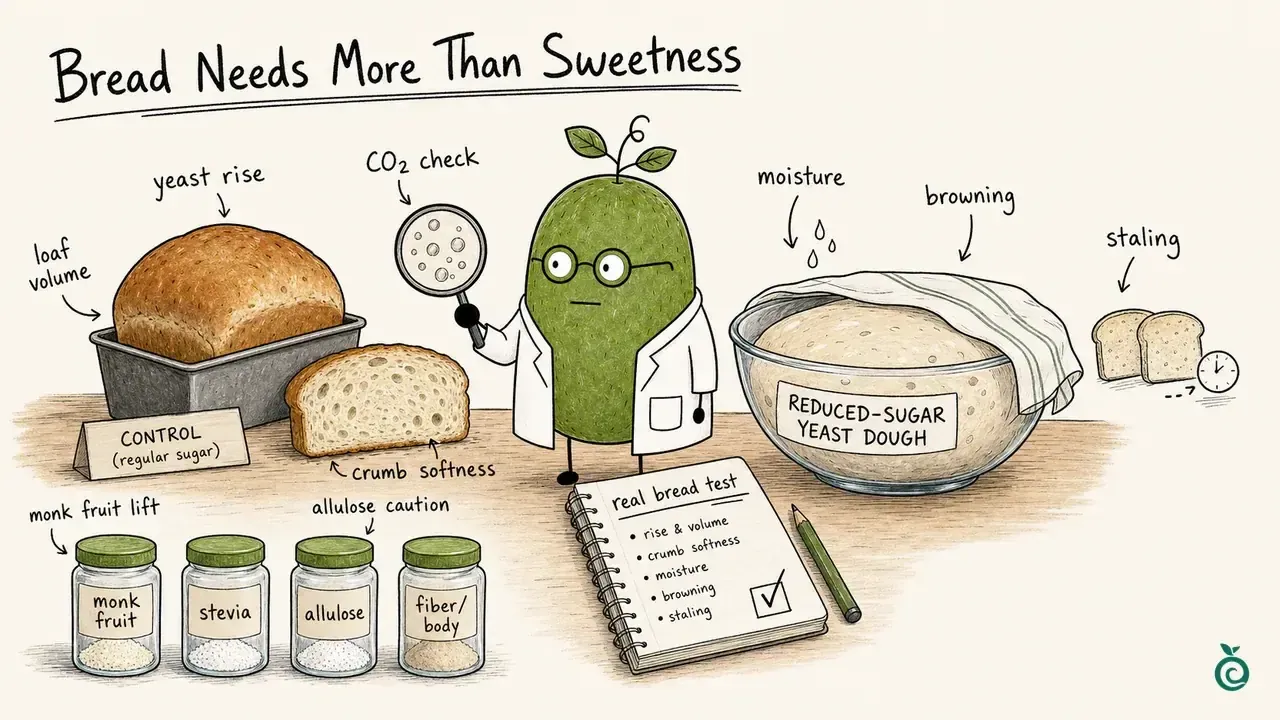
Reduced-sugar yeast bread cannot be planned by sweetness replacement alone. Sugar also changes yeast activity, dough expansion, crust color, crumb softness, moisture and how the loaf ages in the bag.
This guide helps bakery buyers brief Hengliyuan on monk fruit, stevia, allulose-supported and natural sweetener blend directions without treating one test loaf as a universal formula.
Start with fermentation, not sweetness
In yeast bread, part of the sugar system supports fermentation and early dough expansion. A high-intensity sweetener can replace perceived sweetness at a low dose, but it does not feed yeast, add solids or rebuild crumb structure. Keep a control loaf and record proof time, dough height, oven spring and specific volume before judging taste.
Why monk fruit and stevia need a partner
Monk fruit and stevia can help sweetness lift, but they do not replace sugar's bulk, fermentable carbohydrate or water-binding role. They usually belong inside a broader bakery system with the right flour, process, humectant or fiber direction. Approving them in water is not useful for bread.
Use allulose carefully
Allulose may help browning and moisture in suitable markets, but it is still not a simple sugar swap. A published baker's yeast study reported lower carbon dioxide production and reduced early expansion when D-allulose replaced sugar in a model bread process. Other bakery work points to potential freshness and softness benefits in specific systems. Both findings support controlled bench trials, not a fixed percentage recommendation.
Rebuild body and moisture
When sugar is reduced, the loaf can become smaller, drier or firmer because solids, water distribution and starch staling change. Some studies have tested oligosaccharides, CMCNa, rare sugar syrup or related systems for softness and staling behavior. Buyers should translate that evidence into sample variables: solids, hydration, mixing, proofing, baking profile, water activity, packaging and storage checks.
Check the label by market
Allulose, sugar claims and sweetener names are market-specific. In the United States, FDA allulose guidance and 21 CFR 101.60 are useful label references. In the EU, allulose status is tied to the Novel Food process and should not be treated like the U.S. label approach. Confirm the launch market before artwork, nutrition panels or claim language are fixed.
Send a bread-specific sample brief
A practical supplier brief should include target market, product type, packaging specification, estimated quantity, required certificates/documents and whether samples are needed. For yeast bread, also add flour type, current sugar level, target reduction, yeast level if known, proofing method, baking profile, shelf-life target and the main problem: weak rise, dense crumb, dry bite, pale crust, sticky dough or fast firming.
Technical references
Reviewed July 2026. Sources used include the 2022 International Journal of Food Science and Technology study on D-allulose and baker's yeast fermentation (DOI: 10.1111/ijfs.15945), the 2025 LWT paper on allulose and freshness in yeast-made bakery products, the 2024 Journal of the Science of Food and Agriculture paper on oligosaccharides, CMCNa and D-allulose in sugar-reduced bread (DOI: 10.1002/jsfa.14065), FDA allulose labeling guidance, U.S. 21 CFR 101.60 and the EU Novel Food Union list context. These sources support test design and label checks; they do not prove a universal commercial formula.
Review note
Reviewed October 2, 2026.
Common questions
Can monk fruit replace all sugar in yeast bread?
It can replace part of the sweetness, but it does not replace sugar's fermentation, bulk, browning, moisture and texture roles. Test it inside a complete bread system. Tell us which material discussed here you want to source; we will check its specification and sample options.
Discuss this requestDoes allulose work better than sugar in bread?
Not as a blanket statement. Allulose may help browning or freshness in some systems, but published yeast-bread work also shows fermentation and expansion trade-offs that need bench testing. Tell us which material discussed here you want to source; we will check its specification and sample options.
Discuss this requestWhy does reduced-sugar bread become dense or dry?
Possible causes include less fermentable sugar, weaker gas expansion, lower solids, changed water distribution, starch staling, packaging and storage conditions. Tell us your packaging requirements; we will review the packaging proposal for your project.
Discuss this requestWhat should bakery buyers send before samples?
Start with your target market and product idea. Share any known packaging specification, estimated quantity, required certificates/documents and whether samples are needed; we can clarify the remaining details together. Add the bread formula goal, current sugar level and process details if available.
Discuss this request