
Liquid ingredient selection
Monk Fruit Syrup: Which Ingredient Are You Buying?
Monk fruit syrup can mean juice concentrate, liquid extract or a blended sweetener. Identify the ingredient before requesting samples.
“Monk fruit syrup” is a search term, not a precise ingredient specification. A buyer might mean monk fruit juice concentrate, a liquid monk fruit extract or a finished sweetener blend. Ask what is in the material before comparing sweetness, price or dosage.
This guide helps food and beverage teams identify the form they need and request comparable samples. Hengliyuan's linked product pages describe available directions; the selected sample and its current documents determine the actual specification.
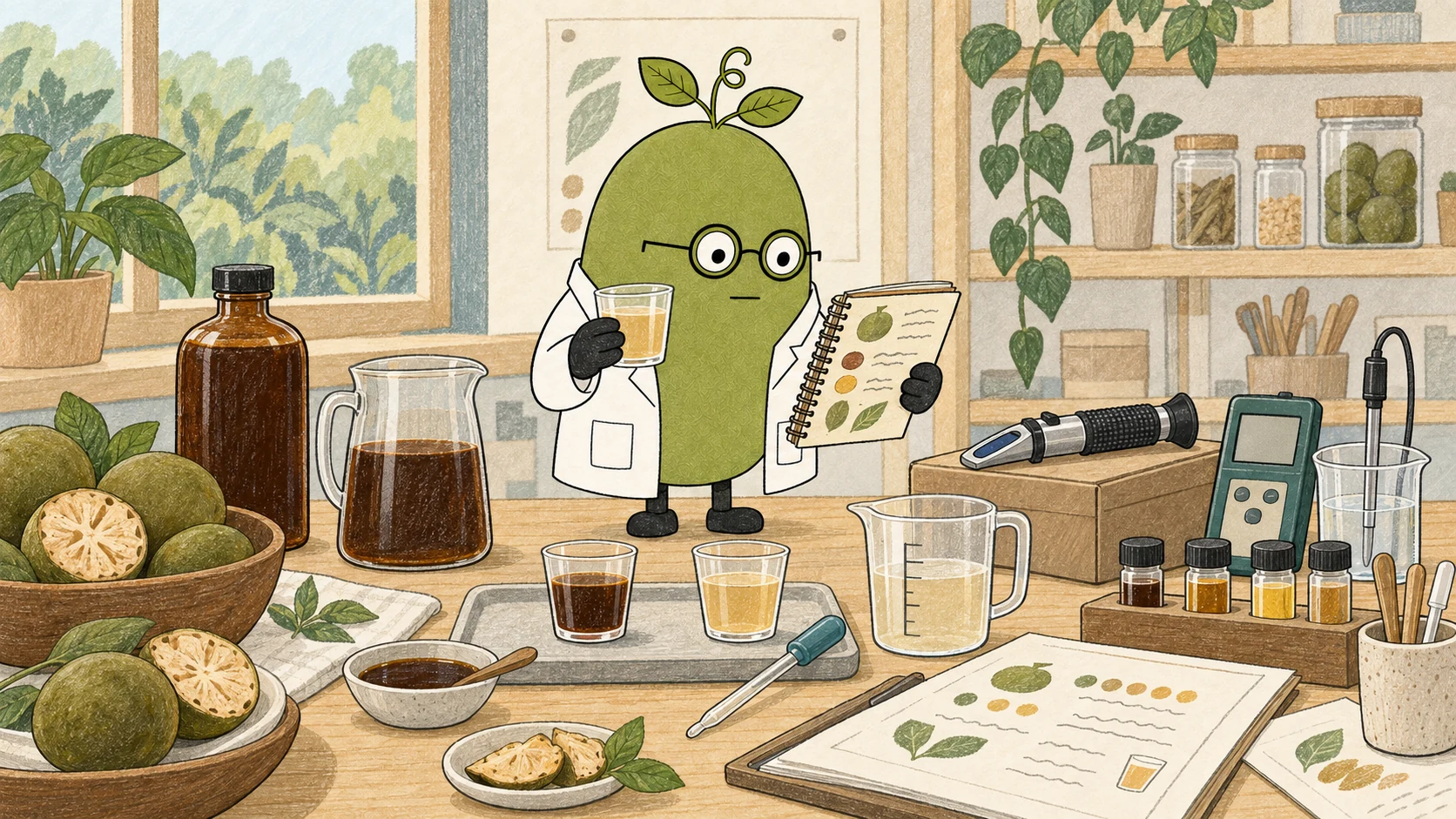
The Doctor illustration shows liquid appearance and instrument checks alongside sample notes. Its colours, containers and instruments are illustrative, not measured Hengliyuan results or evidence that a liquid is sugar-free. Identify the actual composition and specification before treating two liquids as equivalent.
Three liquid forms: confirm the composition first
Ask which liquid material is being quoted. The botanical name alone does not distinguish juice concentrate, an extract in liquid form and a formulated syrup. Use the specification and composition declaration to connect the sample to its intended function.
| Form | Composition basis | Specification question | Application |
|---|---|---|---|
| Juice concentrate | Processed fruit juice | Solids method and actual composition | Fruit flavor and drink projects |
| Liquid extract | Defined extract in a stated liquid system | Assay, solvent / carrier and concentration | Low-dose sweetness trials |
| Formulated syrup | Complete sweetener blend and liquid ingredients | Full ingredient list, solids and dose | Ready-to-use syrup or concentrate |
Does “monk fruit syrup” mean juice concentrate?
Sometimes. Monk fruit juice concentrate is a liquid fruit-derived ingredient. It is not interchangeable with a high-intensity extract simply because both come from monk fruit. Juice concentrate can contain fruit sugars and other soluble solids, while a refined extract has a different composition. The U.S. FDA's response to a specific monk fruit juice concentrate notice describes that material as a liquid concentrate; it does not establish the composition of every supplier's product. If fruit character matters in a beverage, compare flavour and decolorized juice concentrate samples in the actual base. Request the current ingredient list, Brix, relevant mogroside assay, processing description and batch documents. Brix describes soluble solids; it is not a mogroside percentage or a sweetness ratio.
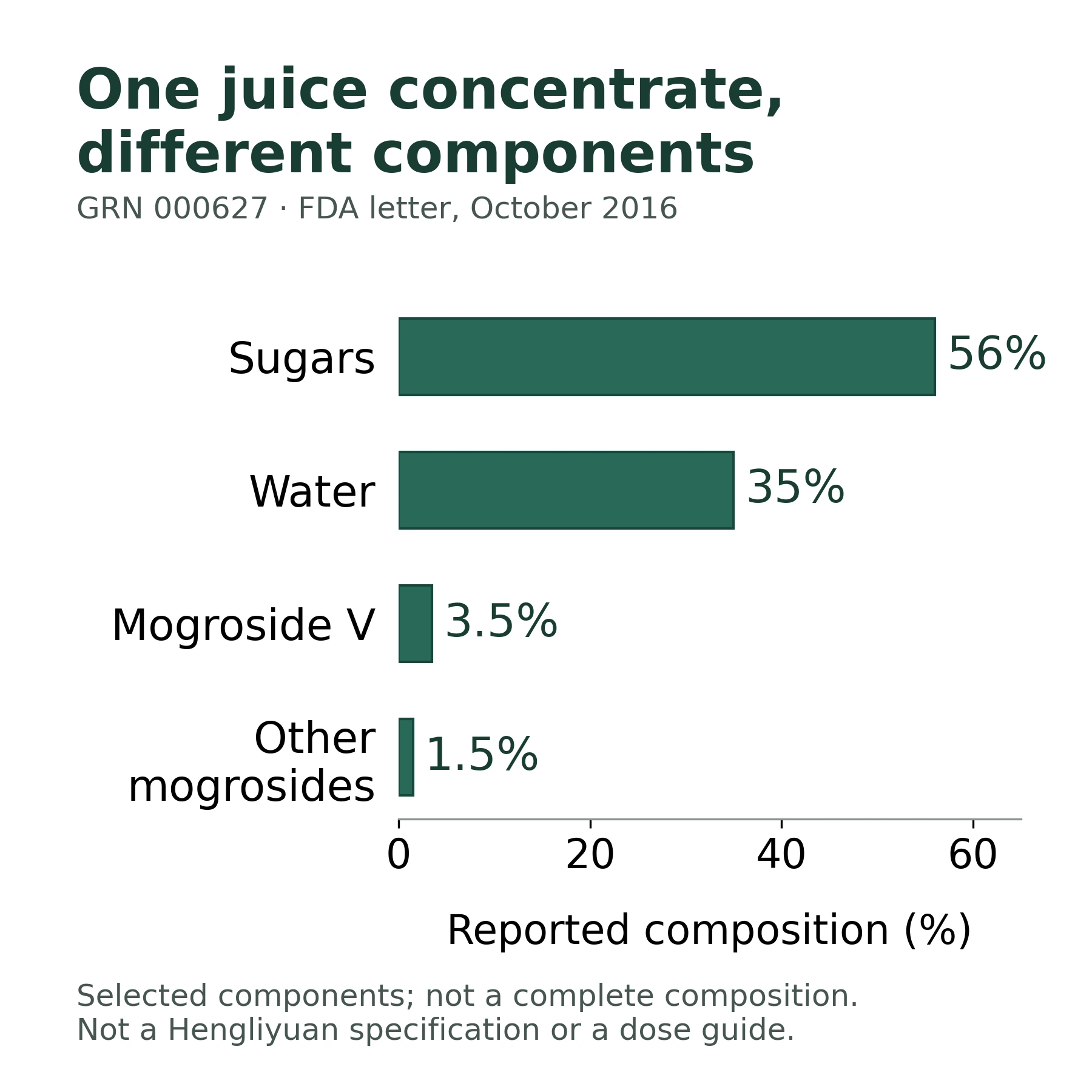
A reported juice concentrate can contain sugars and mogrosides
The October 2016 FDA response for GRN 000627 records the composition of one juice concentrate described by another company. This historical example helps explain why the words monk fruit do not identify a liquid's complete composition. It does not establish Hengliyuan product specifications or approval of any other material.
Could the buyer mean a liquid monk fruit extract?
Yes. An extract-based liquid may be specified by its monk fruit extract or mogroside content rather than by fruit-juice solids. The word “liquid” alone does not reveal the assay basis, carrier, concentration or intended use. Ask for the complete composition and the selected grade's current specification instead of applying a juice-concentrate Brix figure to an extract. Compare candidate materials at the same finished-product sweetness target, then evaluate taste and process fit in the real formula. Do not transfer a dosage calculated for one extract grade to another.
When is it a formulated sweetener syrup or blend?
A ready-to-use syrup or liquid sweetener may combine monk fruit with other ingredients. The brand or search phrase cannot tell you whether it contains juice concentrate, extract, another sweetener, a carrier or added sugar. Obtain the full ingredient list and the intended label market before discussing a sweetness claim or a finished-product label. For a custom blend, explain the product format, current formula, target taste and process. Hengliyuan can discuss a suitable formulation direction and sample; the actual ingredients, availability and commercial terms must be confirmed for that project.
Keep Brix, assay, dilution and dose on their own basis
Ask how each reported value was obtained and whether it describes the supplied liquid, a diluted sample or a dry-solids basis. Keep the material name, batch, method and any dilution with the result. A Brix value and a mogroside assay answer different questions; use the appropriate composition or analysis to answer a question about sugars. Record the supplied ingredient amount separately from any stock solution you prepare for a trial. If one instruction uses grams and another millilitres, obtain the density for that material at the relevant temperature before converting between mass and volume. A density from a different concentrate or grade is not a substitute. For a cost comparison, use the actual amount of each accepted commercial material in the same amount of finished food or drink, and compare prices with the same currency, pack and delivery scope. Keep preparation water and other recipe adjustments visible rather than comparing only the price of a kilogram of unlike liquids.
What should a first sample request specify?
State whether you need fruit flavour, a less noticeable colour, an extract-led sweetness system or a finished liquid blend. Include the food or beverage base, destination market, named sugar or current sweetener reference, target sweetness, processing conditions and ingredient restrictions. Then ask each supplier for the exact product name, ingredient list, specification, batch COA if available, sample form and packing proposal. Test candidates in the real base at a matched sweetness target. Record flavour, colour, handling and the amount used. Compare cost only after those differences are known; a price per kilogram alone does not compare unlike materials. Start with the product and the reason you need a liquid; a complete formula and final pack are not required for the first contact. Keep unopened storage instructions separate from handling after opening or dilution, and confirm the selected liquid's actual conditions and package. A clear freshly prepared sample does not establish microbial safety or finished-product shelf life.
Common questions
What does monk fruit syrup mean on a supplier offer?
It may refer to juice concentrate, an extract in a liquid system or a formulated sweetener syrup. Request the exact name, full composition and specification for the offered material. The same search phrase does not make the three forms interchangeable.
Discuss liquid ingredient selectionIs Brix a measure of mogroside V or proof that a liquid is sugar-free?
No. Keep the soluble-solids reading separate from the mogroside assay and actual sugar composition. Ask for the method, sample preparation and reporting basis relevant to each question; do not infer those other properties from the Brix number.
Discuss liquid ingredient selectionCan I use the same number of millilitres as a different syrup?
A volume instruction does not identify the ingredient mass or active concentration. Check the exact material, composition, reporting basis and density at the relevant temperature before any mass-to-volume conversion. Evaluate the actual addition in the finished application.
Discuss liquid ingredient selectionShould the sample comparison use equal dose or equal sweetness?
Name the purpose first. Fixed addition shows the result under that addition; a matched-sweetness comparison can require different amounts. Keep both commercial-material amounts, any dilution and the same finished-product quantity identifiable rather than treating the two comparisons as equivalent.
Discuss liquid ingredient selectionDoes a fresh liquid sample prove storage stability after opening?
No. Confirm unopened instructions and the proposed after-opening or after-dilution use separately for the selected liquid and package. Appearance, sensory results and any required safety or shelf-life validation answer different questions.
Discuss liquid ingredient selectionWhat is enough information to start a liquid-sweetener enquiry?
Send the food or drink, final sales market, desired fruit character or colour, reason for choosing a liquid and any excluded ingredients. Add a reference sweetener and the process if known. The material form, documents, sample arrangements and later supply pack can be clarified together.
Discuss liquid ingredient selection