Read this guide in
Hengliyuan Applications and Selection
Monk Fruit Juice Powder for Powdered Drinks: Formula, Solubility, and Taste
Choose monk fruit juice powder for instant drink mixes. Compare six beverage bases, carrier requirements, consumer mixing and serving taste, with a free trial log.
For powdered drink mixes, our factory starts with the finished beverage and the way consumers prepare it. Tea, coffee and milk tea, fruit and botanical flavours, protein, functional-ingredient mixes, and cocoa drinks need different sweetness and flavour decisions. Choose the juice powder specification against that brief, then test it in the complete mix.
Hengliyuan offers juice powder with or without an added carrier. Tell us the flavour to retain, the sweetness target and the preparation method; confirm the selected composition and evaluate the matching sample. A powder that works in warm water has not automatically passed a cold-water or milk-based application.
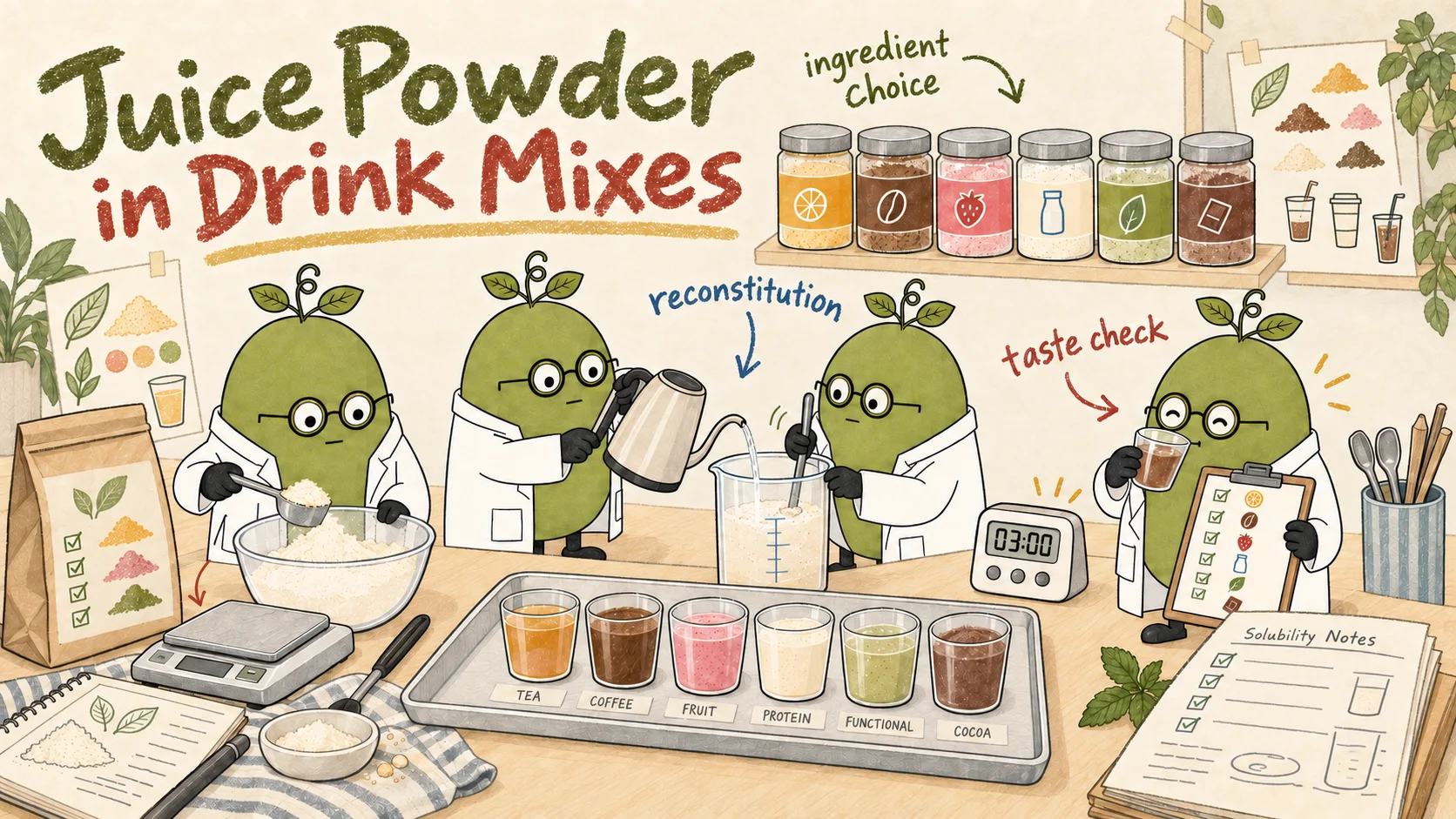
The illustration shows weighing, mixing and tasting across six beverage bases. Its timer and tick marks are illustrative, not a required three-minute mixing method or evidence that a sample has passed the tests.
Choose samples around the beverage base
The six groups below describe application priorities, not fixed product assignments. They overlap: a cocoa protein drink needs both the protein-base and cocoa-flavour checks.
Tea drink mixes
Decide whether tea aroma should lead or whether monk fruit flavour is part of the intended character. Compare sweetness with tea taste, aroma retention and the finish. For a mix intended for both hot and cold preparation, evaluate each method separately and include hot-prepared tea after cooling.
Coffee and milk tea mixes
Use the actual coffee, tea and milk base. Check bitterness against sweetness, coffee or tea aroma, and how the sweetness fits the milky flavour. Decide whether monk fruit flavour supports the intended blend or distracts from the main flavour. Dairy-powder and plant-based versions need their own formula checks.
Fruit and botanical drink mixes
Start with the sweet–sour balance and the intended flavour. Define whether monk fruit flavour is welcome or needs to stay unobtrusive. Check colour, clarity and appearance after preparation against the product’s positioning. A deliberately cloudy drink does not need to be judged by a “clearer is better” rule.
Protein drink mixes
Evaluate the juice powder in the actual dairy or plant-protein base. Water alone cannot establish whether the finished protein drink works. Compare sweetness, the base’s own flavour, lingering aftertaste, graininess and overall mouthfeel. State the specific taste problem in the current formula and judge the change against that reference; juice powder is not a guaranteed solution to every taste issue.
Electrolyte and other functional-ingredient mixes
Identify the electrolytes, vitamins, amino acids or other ingredients and their amounts per serving. “Functional drink” alone is too broad a brief. Evaluate the sweetness and flavour with the planned water quantity per serving. If that quantity changes, compare the drink again: concentration changes affect the taste. These checks assess formulation fit and drinking experience, not a functional benefit from adding juice powder.
Chocolate and cocoa drink mixes
Compare bitterness and sweetness, chocolate aroma and the finish in the full cocoa formulation. Include the milk powder or plant-based ingredients when judging richness and mouthfeel. Use the intended hot water, hot milk or cold preparation method and observe clumps, graininess and settling. Consider all ingredients before attributing visible sediment to the monk fruit juice powder.
Confirm the carrier requirement and final powder specification
Hengliyuan offers options with and without an added carrier. If your ingredient brief excludes a carrier, use that requirement to select a sample and verify it against the selected product’s current complete ingredient declaration and batch documents. If a carrier is acceptable, confirm its identity, proportion and calculation basis alongside the final powder specification and test results. Carrier-free does not mean high-purity monk fruit extract. Juice powder, whole-fruit powder and extract are different ingredient choices. Nor does the presence or absence of a carrier, by itself, tell you which sample will taste better, mix faster or suit a beverage category. Confirm composition first, then assess the selected sample in the finished drink.
Reproduce the consumer’s preparation method
Use the proposed pack instructions as the test method: the amount of drink mix, quantity and type of liquid, preparation temperature, addition order, and spoon or shaker operation. A laboratory mixer can help diagnose a problem, but the final check needs the operation a consumer will actually use. Evaluate each claimed preparation method separately.
| Observation stage | What to look for | What to record |
|---|---|---|
| First contact with liquid | Wetting and powder floating on the surface. | Addition order, liquid conditions and the initial observation. |
| During the planned mixing | Clumps and whether the stated operation disperses them. | Tool, actual mixing duration and any extra operation needed. |
| After preparation | Visible particles, graininess and appearance against the target style. | Time since preparation and the serving temperature. |
| During the intended drinking period | Settling, layers or changes in flavour and mouthfeel. | The agreed checkpoint; observe undisturbed before remixing. |
For a matched comparison, keep the agreed ingredient dose, drink-mix quantity, liquid quantity, preparation temperature and mixing operation consistent. If you adjust a candidate towards the sweetness target, record its new dose and treat it as a separate trial. Visual observations describe the preparation experience; they do not replace a quantitative solubility test. When a problem appears, compare the juice powder prepared alone with the complete mix, recording the different compositions and conditions. Change addition order, temperature or mixing one factor at a time, then repeat with the intended consumer method.
Keep ingredient dose, full-mix weight and temperatures distinct
Record these details with the sample code and lot. Otherwise two results described as “one serving in water” may refer to different ingredients, concentrations or preparation methods.
| Trial detail | Keep separate | Why it matters |
|---|---|---|
| Powder amounts | Juice powder ingredient dose and total finished drink-mix weight. | A sachet may contain several ingredients; its whole weight is not the juice powder dose. |
| Liquid quantity | The actual water or milk quantity and its unit, plus any ice addition. | Changing liquid quantity changes the prepared concentration. Do not silently equate liquid volume with mass. |
| Preparation conditions | Liquid temperature, addition order, tool and mixing duration. | A warm-water or laboratory-mixer result does not establish cold-water spoon mixing. |
| Serving conditions | Tasting temperature and time since preparation. | Preparation temperature and drinking temperature answer different questions. |
| Ice and standing | Initial ice, measured meltwater when tracked, and the observation checkpoint. | Separate dilution from temperature effects; inspect settling before disturbing the drink. |
Choose checkpoints and acceptance criteria for the actual product. This guide does not prescribe a universal mixing time, water temperature, sediment limit or shelf life.
Record preparation and drinking temperatures separately
Preparation temperature describes how the powder is mixed into the liquid. Drinking temperature describes the conditions under which the customer tastes it. Record both. For hot drinks, compare the drink at the intended serving temperature and after the relevant cooling period. For cold drinks, use the proposed cold-liquid or iced preparation. With ice, record the addition and any measured meltwater so dilution is not mistaken for a temperature effect. A hot-prepared drink that later cools is a different preparation route from powder mixed directly into cold water. The final decision is whether the drink meets the agreed sweetness, flavour, appearance and mouthfeel requirements when prepared and consumed as intended.
Download the reconstitution trial log
Use the free Excel log to compare a control and candidate under one preparation and serving condition. It has 26 paired fields for the selected powder and carrier, ingredient and full-mix amounts, liquid and mixing conditions, serving observations and the next action. The input cells are blank so you can record your own measurements and observations; no email is needed. Keep a separate copy for each preparation method or checkpoint, and keep its trial ID with any photographs. The log does not calculate solubility or supply product acceptance limits.
Send the beverage brief, then match the sample to procurement
Start with the drink type, the flavour and sweetness target, and the consumer’s preparation method. Add any known carrier restriction and the specific issue in an existing mix. You can describe the base and the problem without sending a complete proprietary formula at the first enquiry. Hengliyuan can discuss the corresponding juice powder specification and sample. Once the sample is accepted, the composition, specification and quotation for procurement should refer to the same option. Reconfirm the affected application performance if the carrier, ingredient specification or finished-drink preparation method changes.
Common questions
Which drink mixes can I evaluate with monk fruit juice powder?
Tea, coffee and milk tea, fruit and botanical, protein, functional-ingredient, and cocoa mixes have different priorities. Use the actual base and its intended preparation method. Categories can overlap; evaluate a cocoa protein drink for both protein-base taste and cocoa flavour.
Discuss this requestDoes carrier-free powder always mix faster or taste better?
No. Verify the selected composition and final-powder specification, then evaluate the corresponding sample in the finished drink. Carrier-free describes an ingredient requirement, not a universal taste or mixing result, and it does not mean high-purity extract.
Discuss this requestDoes the whole sachet weight count as the juice powder dose?
Only if the sachet contains that ingredient alone. In a multi-ingredient drink mix, record the juice powder ingredient amount separately from the total mix mass and the liquid quantity. Keep those amounts with the sample and preparation record.
Discuss this requestIs a hot-water test enough for a cold-water instant claim?
No. Test the proposed cold-water preparation with its actual dose, liquid quantity, mixing tool and operation. Hot preparation followed by cooling is a separate route. Record drinking temperature independently of preparation temperature.
Discuss this requestDoes visible sediment mean the juice powder failed to dissolve?
Not by itself. Consider the full formulation, including cocoa or protein ingredients, and the observation conditions. Compare the juice powder alone and the complete mix when diagnosing the issue. Visual observations do not establish quantitative solubility.
Discuss this requestWhat should I send with a sample enquiry?
Start with the drink type, desired sweetness and flavour, and how consumers prepare it. Add known carrier restrictions and the problem to improve. These details help select a sample; the full composition, specification and quotation can then be confirmed for the selected option.
Discuss this request