
DAIRY SWEETENER TESTING
Sweetener Aftertaste in Chocolate Milk & Cocoa Drinks: How to Mask It
Hengliyuan’s approach to chocolate milk aftertaste: identify the off-note, choose among six masking methods, and compare samples with a practical trial record.
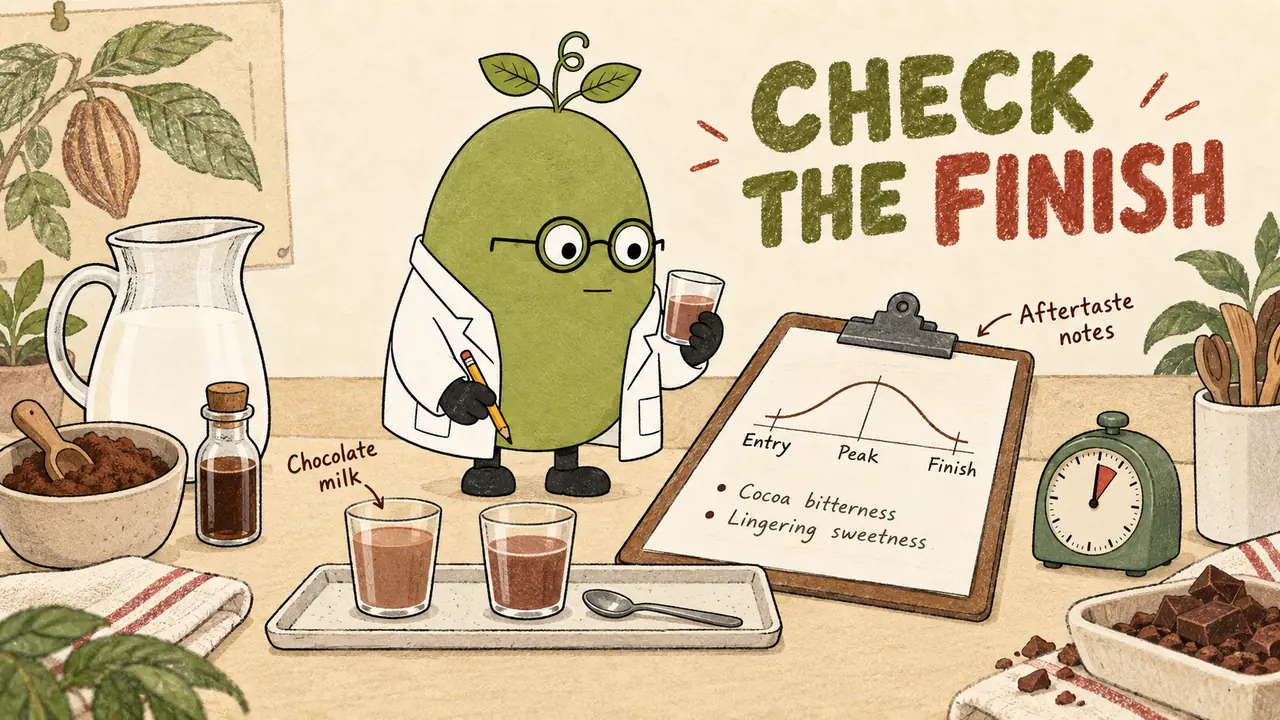
Our starting point is simple: do not keep adding sweetness to solve a finish problem. A chocolate milk can match its sugar-sweetened control at the peak and still leave bitterness, a metallic note or sweetness that lasts too long. We separate those sensations first, then decide whether to change the dose, the sweetener grade, the blend or the cocoa and flavor system.
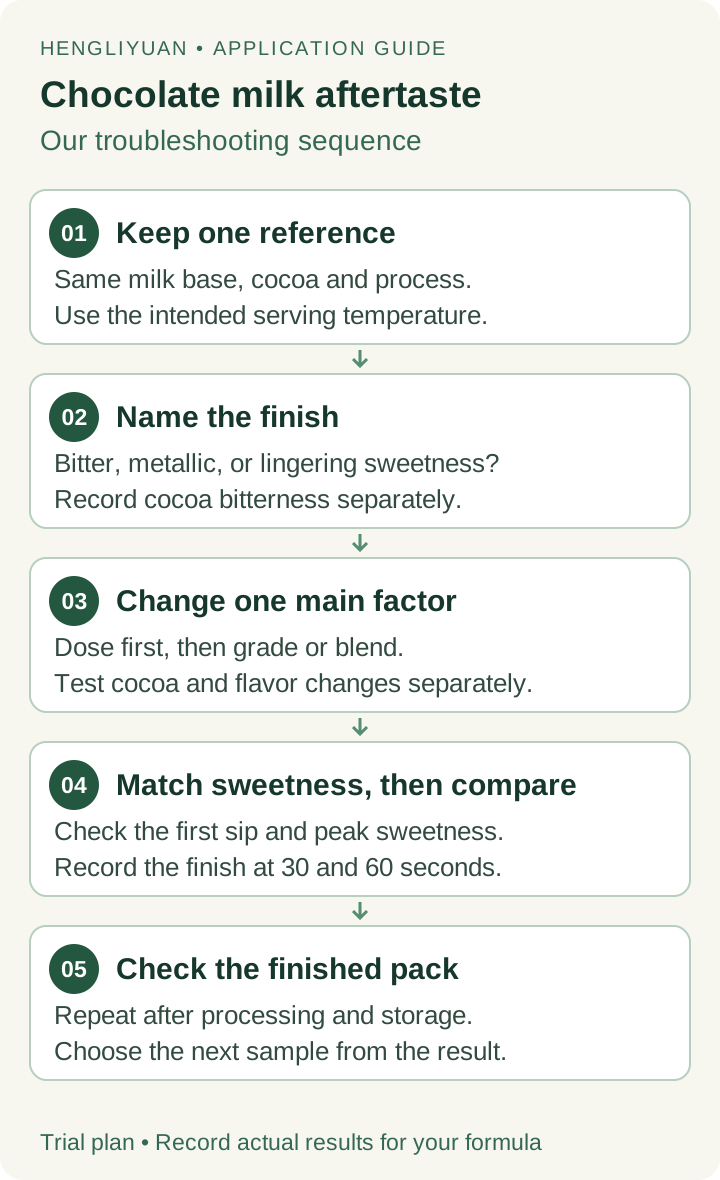
This is our approach for dairy brands and beverage developers working with stevia, monk fruit and blended sweetener systems. The flowchart shows the sequence; the method table helps choose the next change. We also show what a published chocolate-milk study found when the milk base itself changed.
Our aftertaste troubleshooting sequence
Keep the base steady while finding the cause. Once the candidate is close to the control’s sweetness, compare the finish before making another adjustment.
Where the aftertaste comes from
Each high-intensity sweetener brings its own finish: - Stevia (Reb A): the most common source of complaints — bitterness and licorice-like notes that appear 10–30 seconds after the sip, plus a metallic edge at higher doses. - Monk fruit extract (mogrosides): generally cleaner than Reb A, but high doses can leave a lingering sweetness and mild bitterness of their own. - Sucralose: relatively clean at low doses; can turn harsh in combination with cocoa bitterness. - Acesulfame-K: fast onset, distinctly metallic-bitter finish; rarely used alone in dairy for this reason. The key point: aftertaste is dose-dependent. Most masking strategies are really dose-reduction strategies in disguise — the less high-intensity sweetener you need, the less there is to mask.
Why chocolate milk changes the problem
Chocolate milk is both more forgiving and more punishing than other beverages: - Cocoa helps and hurts. Cocoa's own bitterness and roasted notes can cover mild sweetener off-notes — but cocoa bitterness also stacks with sweetener bitterness. If the panel reports "bitter," you need to know which bitterness they mean. - Milk fat and protein round the edges. Fat carries flavor and softens harsh finishes, which is why the same sweetener system can taste worse in a skim or plant-based version. - Cold serving mutes sweetness. Chocolate milk is served cold, and cold dulls sweetness perception — pushing developers toward higher sweetener doses, which is exactly where aftertaste appears. So the first diagnostic step in any masking trial: separate cocoa bitterness from sweetener aftertaste. Score them as two different attributes, not one "bitterness" column.
Six practical masking strategies
These are the six routes we use to organize the comparison. Start with the row that matches the problem in the cup. Running every change together makes it difficult to know which one helped.
- Allulose–stevia blend taste and cost comparison
- Monk fruit extract specifications
- View allulose specifications
- View erythritol specifications
| Method | When we prioritize it | What to change and check |
|---|---|---|
| 1. Reduce the high-intensity dose | Enough sweetness, but an intrusive finish | Test allulose or erythritol as part of the sweetness system. Bring samples back to the same sweetness target; check body, cooling and the finish. |
| 2. Change the grade or blend | A dose reduction loses too much sweetness | Prioritize a Reb M comparison when a Reb A finish is the problem. Test monk fruit with stevia for a more balanced sweetness profile, recording the exact grades rather than treating all stevia as one ingredient. |
| 3. Adjust the cocoa | Bitterness follows the cocoa profile | Compare cocoa type or level separately from the sweetener change. Keep a cocoa reference so reduced chocolate character is not mistaken for better masking. |
| 4. Adjust the supporting flavor | The sweetness works but the finish feels disconnected | Compare vanilla, dairy flavor or a small salt adjustment in the same base. Check chocolate identity and repeat-sip preference as well as the off-note. |
| 5. Rebalance the sweetness timeline | Good peak sweetness, but a slow onset or long tail | Compare entry, peak and the finish at 30 and 60 seconds. Select the grade or blend that brings those observations closer to the control. |
| 6. Fix the serving conditions | The room-temperature result does not hold when chilled | Compare at the intended drinking temperature before increasing the dose. Record the temperature with each result. |
Our preference is to solve the sweetness system before using stronger flavor to cover it. For a Reb A finish, compare a cleaner grade or a monk-fruit combination early. Judge the exact blend in the milk and cocoa base: a balanced finish is the objective, not simply a higher sweetness reading.
A practical masking trial protocol
Use the current formula or sucrose-sweetened drink as the control. Hold milk base, cocoa, fat, stabilizer and processing steady during the first comparison. Write down the grade and batch of the whole commercial sweetener, not only the name of its active constituent. For an initial dose screen, use the existing trial dose d and compare 0.85d, d and 1.15d. This ±15% ladder is a practical screen, not a universal recommended dose. If sweetness differs, first identify the usable dose range, then prepare a closer sweetness match before ranking aftertaste. Record the result after processing and again in the finished package at the project’s storage checkpoints. Day 0, 7, 14 and 21 can organize a refrigerated screen where suitable; set the actual schedule with the product team.
| Record for each coded sample | What to write down |
|---|---|
| Identity and conditions | Grade, batch, actual dose and units; milk base, cocoa, process and serving temperature |
| First sip and peak | Sweetness relative to the control; cocoa character; thickness |
| Finish at 30 seconds | Lingering sweetness, bitterness, metallic or licorice-like note |
| Finish at 60 seconds | Which sensation remains and whether another sip is appealing |
| After processing and storage | Repeat the same observations; add sediment, separation and package condition |
| Next sample decision | What improved, what was lost, and the one change to test next |
Use the same panel instructions and intensity scale throughout. An empty record is a test sheet, not a result: enter the actual observations for the control and each candidate before choosing a blend.
What the chocolate-milk research adds to our decision
Nakamura and colleagues compared sweetener systems in school-lunch chocolate milk in a 2026 Journal of Dairy Science study. The reference contained 3.69% sucrose (weight/volume), equivalent to 36.9 g per litre. They matched sweetness before comparing sensory profiles and acceptance. This was external research, not a Hengliyuan factory trial.
| Study stage | Reported finding | How we use it |
|---|---|---|
| 1. Milk without lactose hydrolysis | Stevia- and monk-fruit-sweetened samples had lower liking than the sucrose control. Allulose syrup, mixed-sugar syrup and sucralose samples did not differ from the control in liking. | Compare the exact base and finish; do not choose only by the sweetener name. |
| 2. Lactose-hydrolyzed milk | The required sweetener concentration fell by approximately one-third. Acceptance did not differ among the tested sweetener treatments. | Include the milk’s existing sweetness and lactose treatment in the brief before setting the added dose. |
| 3. Blends in lactose-hydrolyzed milk | Overall liking did not differ from the sucrose control among the adult and child consumers tested. | Assess the blend together with the milk base. The successful route combined both decisions. |
Our reading is that milk preparation and sweetener choice belong in the same trial plan. The one-third reduction applies to that study’s conditions; it is not a one-third dose cut for every chocolate milk. The abstract does not provide numerical liking scores, so this table reports the comparison without inventing a score chart.
Discuss a sample for your chocolate milk or cocoa drink
Tell us what you are making and which finish you want to improve. For chocolate milk, start with the milk base, cocoa system, current sweetener and the off-note you notice. We can discuss blend options and the next sample step from there. Add your target market, estimated quantity, packaging and required documents when available. If you are developing a cocoa powder drink, use the separate cocoa beverage sample inquiry below.
Technical references
Reviewed October 2026. Sensory methodology in this guide follows time-aware evaluation practices used in recent dairy literature, including the 2026 Journal of Dairy Science chocolate milk study (https://pubmed.ncbi.nlm.nih.gov/41651348/) and the 2024 Beverages study on partial and complete sugar replacement (https://www.mdpi.com/2306-5710/10/3/54). These sources support sample planning and sensory variables, not a universal formula, performance promise or market-access conclusion.
Review note
Reviewed October 16, 2026. Factory recommendations, external study results and trial-record fields are identified separately.
Common questions
Why does my stevia chocolate milk taste bitter even though it's sweet enough?
Sweetness and bitterness are separate attributes. Reb A carries bitter and licorice-like notes that appear after the sip, and cocoa bitterness stacks on top. Score them separately, then reduce the Reb A dose with a bulk sweetener like allulose or switch toward Reb M or a monk fruit blend. Tell us the taste issue you want to resolve; we will review the next sample direction.
Discuss this requestIs monk fruit better than stevia for chocolate milk aftertaste?
Often yes for the finish — mogrosides are generally cleaner than Reb A — but high monk fruit doses bring their own lingering sweetness. A monk fruit + stevia blend frequently beats either alone. Tell us the taste issue you want to resolve; we will review the next sample direction.
Discuss this requestCan cocoa itself mask sweetener aftertaste?
Cocoa can cover mild off-notes, but its own bitterness also affects the result. Compare cocoa type or level as a separate change, keeping the sweetener steady. Tell us whether the problem is immediate cocoa bitterness or a lingering finish; that distinction helps us choose the next sample.
Discuss this requestWhy does the aftertaste get worse when the drink is served cold?
Cold dulls sweetness perception, so developers raise the dose — and aftertaste is dose-dependent. Always run masking panels at the real serving temperature. Tell us the taste issue you want to resolve; we will review the next sample direction.
Discuss this requestDo I need a bulk sweetener, or can high-intensity sweeteners work alone?
They can, but the masking burden is much higher. A bulk sweetener (allulose or erythritol) carrying most of the sweetness load is the most reliable way to keep the high-intensity dose — and its aftertaste — low. Tell us the taste issue you want to resolve; we will review the next sample direction.
Discuss this requestHow long should a masking trial run?
Compare the drink after processing and in its finished package. For a refrigerated screening trial, day 0, 7, 14 and 21 are useful candidate checkpoints; choose the actual schedule for the product and cold chain. Repeat the same sweetness, finish and physical checks. Share the storage conditions and the point where the sample changes so we can focus the next trial.
Discuss this requestWhat should buyers send before requesting masking samples?
Your target market, milk base and cocoa system, current sweetener and dose, the specific off-note (bitter? metallic? lingering?), packaging, estimated quantity and required certificates. The off-note description matters most — it determines the blend direction. Send us the details listed here; we will review the sample and quotation plan with you.
Discuss this request