
Reformulation
Erythritol Substitute for Food Formulation: A Trial Guide
Choose an erythritol substitute by the function your recipe needs. Compare sweetness, bulk, texture and handling, with biscuit study data and practical trial checks.
There is no single erythritol substitute for every food. In a tabletop sweetener it may provide bulk and handling; in a drink it may affect sweetness and mouthfeel; in a baked product it may affect solids and texture. Replacing the ingredient name without replacing its job can leave the finished product short of its target.
Our starting point is the product you need to preserve: the same serving, an acceptable texture, the required flavor and a workable production process. Separate those targets before choosing ingredients or asking for an equal-weight replacement.

Identify the job of erythritol in the current product
Record the current dose, sweetness target, solids, texture, processing and serving conditions. The FDA's erythritol notice inventory includes intended technical effects beyond sweetening, such as formulation aid and texturizing, for a particular notified material. Your formula may use only some of those functions. A monk fruit or stevia extract may restore sweetness at a low use level but will not automatically restore the bulk of removed erythritol. An allulose material can add mass, yet its powder or syrup form, application and market review still need separate testing.
Match each replacement to a specific function
If the problem is only sweetness, screen a high-intensity sweetener against the same finished-product target. If the formula also needs solids, flow or body, specify that requirement separately and test a suitable bulk ingredient or blend. If cooling sensation is part of the current product experience, decide whether it must be retained or reduced. Do not use a sweetness equivalence claim as a texture specification. Obtain the exact ingredient list and selected material form before comparing samples, labels or cost in use.
- Erythritol-free monk fruit reformulation
- Allulose powder versus syrup sourcing
- Compare allulose and erythritol in food formulation
| Function to replace | Direction to discuss | What to verify |
|---|---|---|
| Sweetness | Monk fruit, steviol glycosides or another permitted sweetener | Actual dose, onset, finish and flavor in the finished food |
| Bulk or body | A suitable bulk ingredient or complete blend | Solids, serving mass and mouthfeel; powder or syrup contribution |
| Texture and process behavior | A formulation suited to the application | Baked texture, frozen texture, mixing or filling as applicable |
| Cooling sensation | A system that retains or reduces the current sensation | Taste at the same serving temperature and target sweetness |
| Consumer use | A blend and pack suited to the intended directions | Scoop or packet quantity, portion consistency and preparation |
Use the table to define the job, not to assume a particular ingredient will pass. Confirm the full composition, material form and destination-market fit of each candidate before approving a replacement.
Run a control trial before changing the label
Keep the current erythritol recipe as the control and record every candidate’s actual ingredient amounts. Decide whether the first comparison holds mass fixed or adjusts dose to the same sweetness: those are different questions. Once taste is acceptable, check the functions the original erythritol provided. Use the same base and preparation where possible. If a candidate needs a different water addition or process, record that change explicitly and compare the complete revised process. Do not attribute a texture difference to one ingredient when several conditions changed. Review the complete finished formula for ingredient statements and nutrition claims. A supplier document for one material does not approve a revised consumer label.
What should the supplier receive?
Send the current ingredient list, erythritol level, product type, target market, reason for the change and the properties that cannot move. Include processing, serving size, package format and expected quantity. Ask for candidate ingredient lists, specifications and matched samples; then compare the revised product with the control. Hengliyuan can discuss monk fruit, stevia, allulose or custom blend directions where they fit. The selected formula, document set, availability and quotation are project-specific.
Choose checks that fit the application
A drink trial and a dry-powder trial need different acceptance checks. Record the current product’s benchmark, the candidate version and the result at the same defined observation time. Use these application checks alongside sweetness and aftertaste.
| Application | Check during preparation | Check in the finished product |
|---|---|---|
| Cold drink | Dose, liquid amount, temperature, mixing and dissolution | Particles, crystallization, mouthfeel and planned storage |
| Tabletop powder or packets | Blend uniformity, flow and filling | Portion mass, pouring and consumer preparation |
| Bakery | Dough or batter handling and the actual baking process | Spread or volume, browning, cooled texture and stored texture |
| Ice cream | Complete base, mixing and freezing process | Hardness, scoopability, iciness and melt at the intended serving conditions |
| Chocolate | Complete solids and fat system and relevant process steps | Texture, cooling sensation, finish and storage behavior |
A candidate that passes sweetness but fails body needs a body adjustment; a candidate with particles needs a preparation or material review. Keep the accepted sample code and formulation version linked to its observations before moving to packaging and order specifications.
Decide what a successful replacement means
Write the required improvement before tasting. If removing erythritol must preserve the existing serving directions, confirm portion mass and dosing as well as sweetness. If the goal is less cooling or a better texture, compare that specific target with the control. After the application trial passes, confirm process repeatability, packaging, storage, documents and the agreed ingredient composition. Review cost at the accepted dose and include any extra ingredients or process steps needed to restore the lost function. Keep unresolved criteria visible instead of calling the sample approved on taste alone.
Replacing erythritol in ice cream
An ice-cream replacement must address sweetness, dissolved solids and the frozen product's texture. Allulose can be a candidate where its intended use is permitted; replacing erythritol only with monk fruit or stevia leaves the removed bulk to be rebuilt separately. Keep the current base, fat, protein, stabilizers and process as the control. Record actual doses and compare hardness after hardening, scoopability at serving temperature, iciness, melt and storage changes. An alternative that tastes equally sweet may still freeze differently, so do not use a universal equal-weight swap.
Erythritol versus xylitol in baking
A 2026 whole-wheat biscuit study replaced sucrose at equal mass with several alternatives. The selected hardness results below show why a weight-for-weight change still needs a texture trial. These are published research results, not Hengliyuan product tests. Keep an equal-mass screen separate from a trial adjusted to the same sensory sweetness. In your dough or batter, record handling, spread or volume, browning, cooled texture and stored texture. The study does not establish a universal winner for cakes or breads, or confirm a Hengliyuan xylitol supply specification.
- 2026 original study: complete sucrose replacement in whole-wheat biscuits
- Review erythritol ingredient and blend options
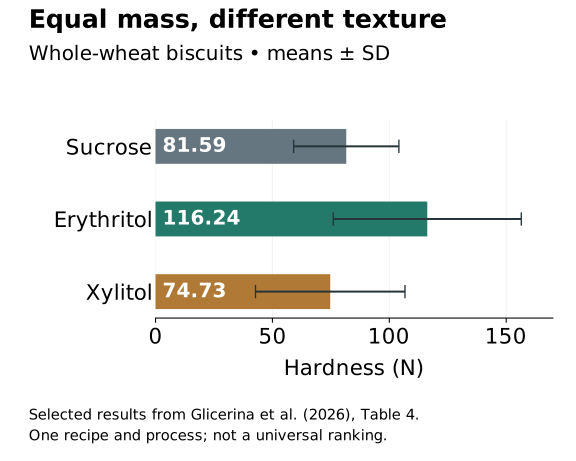
For readers comparing the values directly: sucrose 81.59 ± 22.51 N; erythritol 116.24 ± 40.21 N; xylitol 74.73 ± 31.97 N (mean ± standard deviation). Check the full paper for the recipe, method and other sweeteners.
Review note
Reviewed October 16, 2026. The biscuit chart uses Table 4 of the cited 2026 study. Its equal-mass sucrose replacement results do not define an erythritol replacement ratio for another food.
Common questions
Can I replace erythritol at the same weight?
Use equal mass only as a defined screening condition, not an assumption of equivalence. Compare sweetness and the functions that matter in the actual recipe, and record any dose, water or process change.
Discuss reformulation samplesCan monk fruit or stevia replace the removed bulk?
A high-intensity extract can supply sweetness at a low dose, but it does not automatically replace the removed mass, solids or texture. Specify the missing bulk or body separately when selecting the complete system.
Discuss reformulation samplesIs allulose automatically the best substitute?
No. Consider its material form, intended market and role in the recipe. A powder and a syrup bring different water and solids contributions, and the actual process and finished texture still need testing.
Discuss reformulation samplesWhich observations belong in the first trial?
Record the control, complete formula, candidate version, actual doses, preparation and observation times. Add application-specific checks: cold-drink particles, powder filling, baked texture or frozen texture rather than using the same checklist for every product.
Discuss reformulation samplesDoes the biscuit chart prove xylitol is the better choice?
No. It shows selected hardness results from one whole-wheat biscuit recipe with equal-mass sucrose replacement. A lower hardness value is not automatically a better product, and the study does not set a replacement dose or supply specification.
Discuss reformulation samplesWhen is the replacement ready to order?
Connect the accepted sensory and process trial to the final composition, specification, packaging, storage and destination-market review. Confirm cost at the accepted dose and preserve the sample and formula version used for approval.
Discuss reformulation samples