
Read this guide in
FRUIT PREPARATION GUIDE
Natural Sweetener Blends for Jams, Fruit Preparations and Fillings
Sweetener blends for reduced-sugar jams and fruit preparations: monk fruit, stevia and allulose systems for pectin set, Brix and texture.
Jams, fruit preparations and fillings are sensitive applications because sugar affects sweetness, fruit flavor, Brix, pectin set, water control, gloss and shelf texture. Reducing sugar changes more than the label number.
This guide is for jam brands, dairy fruit preparation buyers, bakery filling developers, sauce factories and private-label teams evaluating monk fruit, stevia, allulose or broader natural sweetener blends.
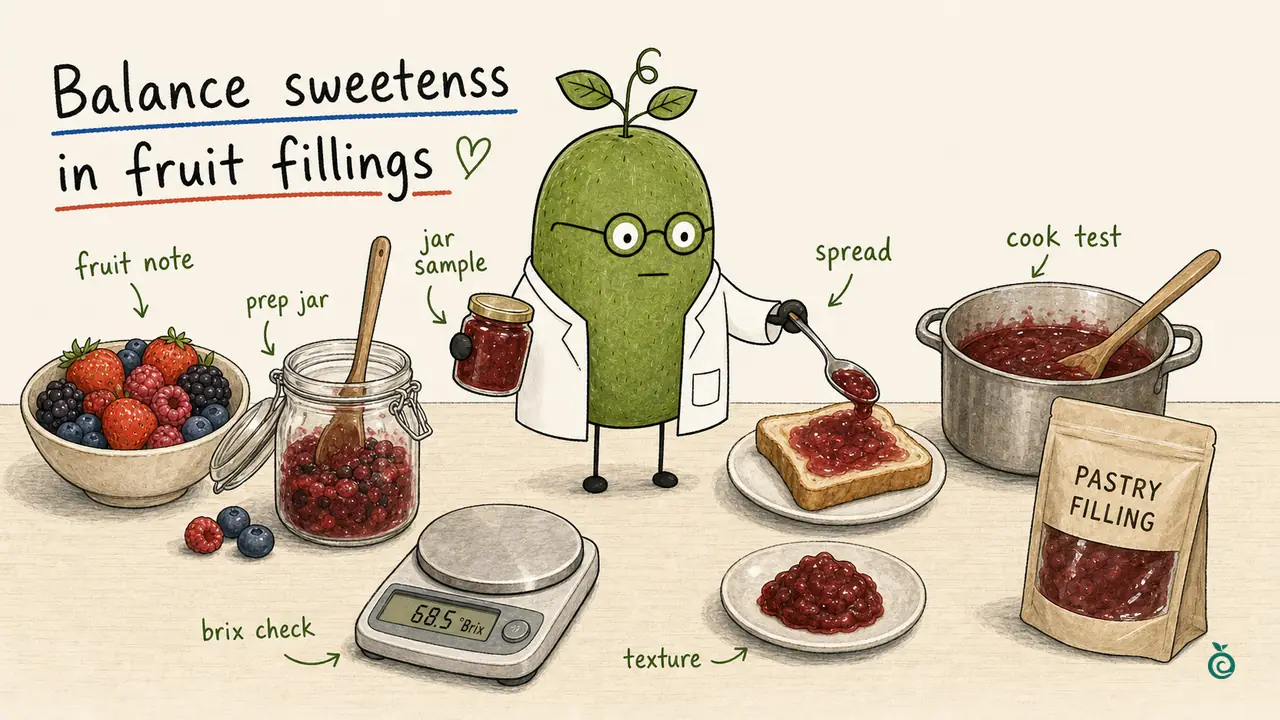
Read the fruit illustration as a trial plan
Check fruit flavor, cooking response, spread and texture in the actual jam or filling. The drawn scale cannot measure Brix, and its 68.5 Brix display is fictional, not a measured result or a target. The jars, cooking pot and finished pouch illustrate applications, not a tested recipe, validated heat process, production capability or shelf life.
Define the final use first
A spoonable jam, yogurt fruit base, bakery filling, fruit sauce, topping and industrial fruit preparation have different heat, shear, pH, storage and texture requirements. The sweetener direction should start from the final use case.
Sugar does more than sweeten fruit
Monk fruit and stevia can raise sweetness without much use level, but they do not replace sugar's solids, body or pectin behavior. A reduced-sugar fruit system may need fiber, syrup, pectin adjustment or another body direction; allulose is a candidate only where the actual market and use permit it.
Pectin, pH and solids must be checked together
Fruit type, acidity, pH, soluble solids, pectin type and heating profile all affect set and mouthfeel. Buyers should discuss whether the product must be spoonable, pumpable, bake-stable, freeze-thaw stable or suitable for dairy mixing.
Identify the pectin grade before interpreting the set
A pectin name alone is not a gel specification. The manufacturer's fruit application guide distinguishes high-methoxyl (HM), low-methoxyl amidated (LMA) and low-methoxyl conventional (LMC) types, with different sugar, acidity, calcium and heating behavior. Low-sugar development is not simply the original jam with less sugar and the same pectin addition. Record the exact grade and its technical instructions, including the intended solids range, acid or calcium conditions, addition sequence and setting behavior. Have the pectin supplier confirm the grade for the actual fruit, process and end use. A general HM/LM classification does not determine the dose or guarantee baking, pumping or storage performance.
Taste the fruit before the sweetener
Berry, citrus, tropical fruit, apple, peach and concentrated fruit bases can expose different bitterness, tartness or lingering sweetness. Test the sweetener blend inside the real fruit system, not only in water.
Packaging and process affect quotation
Retail jars, squeeze bottles, pouches, aseptic bags, buckets and bulk drums create different process and document assumptions. Share pack size, heat process, storage condition and estimated quantity before final quotation.
Separate fruit preparation and pectin-set records
Record the fruit base, actual soluble solids, acidity and pectin system with the heating and filling route. Compare the sweetener in a current-formula control before judging set, spreadability and water release. Brix is a process observation and is not a universal measure of sweetness or proof of a sugar claim. Repeat the selected candidate in the intended pack and storage condition.
- Reduced-Sugar Jam Formulation: Why Sweetness Is Not Enough
- Instrument-maker explanation of Brix and measurement methods
| Check | Record with the observation | Avoid confusing it with |
|---|---|---|
| Fruit and formula | Fruit type/lot, base composition, material identity, actual additions and formula version | A sweetness match in water |
| Pectin route | Exact grade, supplier instructions, acid/calcium conditions and addition sequence | A universal pectin dose or gel endpoint |
| Brix, pH and water activity | Separate instrument methods, temperatures, sample preparation and results; identify the Brix reference basis | The same sugar content, perceived sweetness or safety conclusion |
| Set and flow | Time after preparation, test temperature and the defined spread, flow or viscosity method | Identical texture at filling and at use |
| Actual end use | Relevant bake, dairy-mixing, pumping or freeze-thaw conditions and observations | Performance established by a jar-only sample |
| Water release and storage | Defined observation method, pack, seal, temperature history and agreed checkpoints | Commercial shelf life proved by an attractive fresh set |
A refractometer reading is based on refractive index and the instrument's reference relationship. In a mixed fruit system, it does not directly identify every dissolved ingredient or establish a sugar declaration. Set the relevant comparison criteria for the actual jam, preparation or filling; do not copy one Brix, pH or viscosity endpoint across every format.
Start with the fruit product and the problem
Tell Hengliyuan the jam, fruit preparation or filling format, final sales market and the taste, set, flow or water-release issue. Add known fruit base, ingredient restrictions, process and package details; if they are undecided, describe the intended use and reference. A final formula or order quantity is not required to begin. After the sample direction is useful, connect the selected material and formula version to its specification, receiving pack, trial or repeat quantity, documents and delivery terms. This page concerns sweetener ingredients and blends; identify a finished jam or filling manufacturing request separately so supply fit can be confirmed. Product safety, shelf life and finished-pack naming or claims need their own review for the complete product and market.
Common questions
Can monk fruit or stevia replace the sugar function in jam?
They can supply sweetness, while solids, body, pectin behavior and water control still need attention in the complete formula. Compare the actual material in the intended fruit base and process rather than assuming a water-only sweetness match replaces those functions.
Discuss the fruit preparation sample directionCan I keep the same pectin when reducing sugar?
Confirm the exact grade with the pectin supplier against the revised formula and process. HM, LMA and LMC types have different gelation behavior, and the family name does not determine a universal dose, acid or calcium addition.
Discuss the fruit preparation sample directionDoes a matching Brix result mean the same sugar content or sweetness?
No. Keep the refractometer method and reference basis with the result. Different dissolved ingredients can affect a mixed-system reading; it does not by itself establish the same sugar composition, sweetness, water activity or finished-pack claim.
Discuss the fruit preparation sample directionDoes a firm jar sample prove a bake-stable or dairy-ready filling?
Test the relevant application separately. Record the baking or dairy-mixing conditions, sample and method, then compare the required flow, set, fruit distribution and water-release observations. A jar-only result does not establish performance in the final application.
Discuss the fruit preparation sample directionCan an allulose-based or erythritol-free direction be discussed?
State the final market, fruit product and ingredient restriction. Allulose needs the actual ingredient and use route reviewed for that market; an erythritol exclusion still leaves sweetness and physical functions to resolve. Neither direction alone establishes a sugar-free claim or a successful recipe.
Discuss the fruit preparation sample directionWhat can I send before my formula and quantity are final?
Begin with the fruit format, final sales market and the problem or intended use. Add known fruit base, pectin, process and package details. The sample direction and subsequent specification, quantity and quotation details can then be clarified.
Discuss the fruit preparation sample direction