
Read this guide in
SNACK BAR SUGAR REDUCTION
Protein Bar Sweetener Guide: Binders, Texture & Moisture Testing for Low-Sugar Snack Bars
Test sweetener binder systems for protein and low-sugar snack bars: monk fruit, stevia, allulose, fiber blends — texture, moisture and shelf-life checks.
Choose a protein bar sweetener by comparing the binder and complete protein-bar formulation, then checking sweetness, bite and storage moisture against the current control.
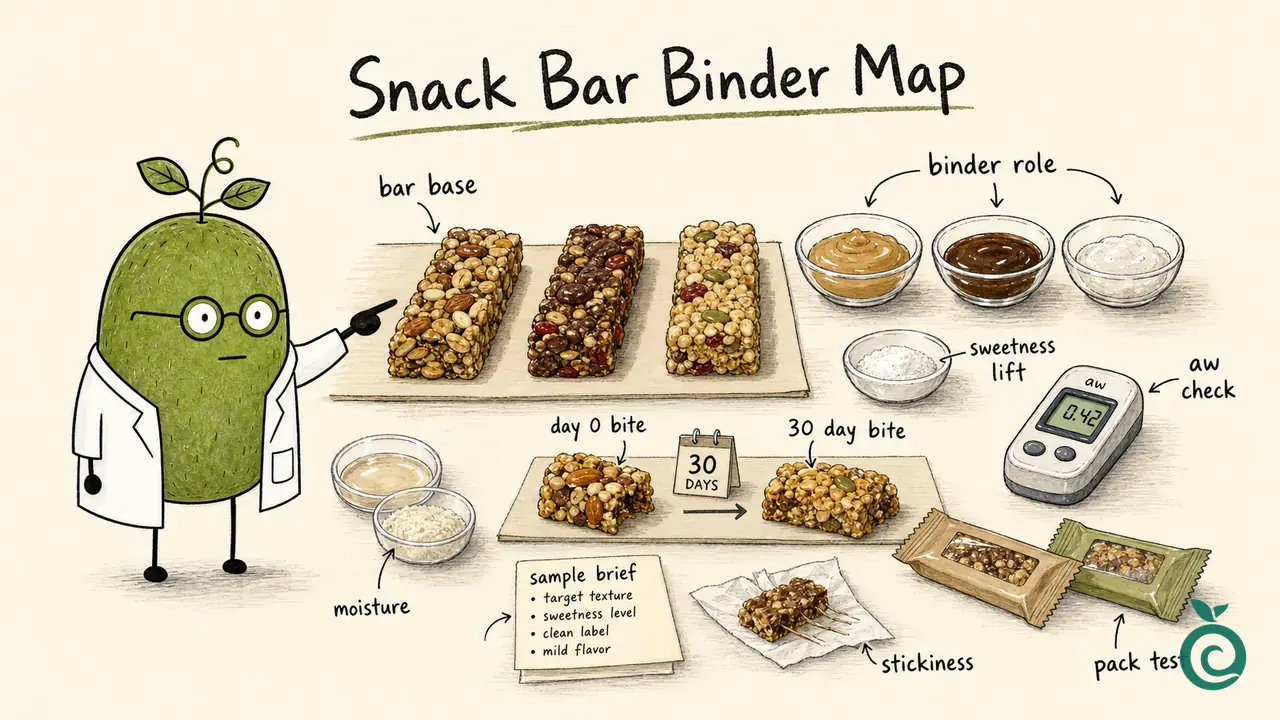
When a reduced-sugar snack bar becomes hard or sticky, first separate forming and cutting behavior from moisture movement during wrapped storage. Sugar syrup may sweeten the bar, but it can also bind dry ingredients, hold moisture, influence water activity, soften bite and carry flavor.
This guide helps protein bar, granola bar, cereal bar and private-label snack buyers prepare better sample briefs before asking a supplier to replace sugar with monk fruit, stevia, allulose, fiber systems or other natural sweetener blends.
Do not treat snack bars like drinks
A beverage sweetener only needs to dissolve and taste right in a liquid. A snack bar sweetener direction must survive mixing, forming, cooling, cutting, wrapping and storage. High-intensity sweeteners can help sweetness, but they do not automatically replace syrup solids or binding.
Start with the bar matrix
Before choosing monk fruit, stevia or allulose support, define the protein source, cereal or nut base, fat system, syrup or binder, fiber target, target water activity, process temperature, bar weight and packaging. A whey protein bar, oat cereal bar and nut cluster can need different sample routes.
Separate sweetness from binding
Monk fruit and stevia can close a sweetness gap at low use levels. Allulose, fibers, syrups, polyols, hydrocolloids or carriers may be considered for body or binding where the target market and label plan allow them. Do not approve a formula from sweetness equivalence alone.
Track hardening over storage
Run a control and at least one partial-reduction sample. Separate records for mixing/forming/cutting from records after wrapping: water activity, moisture, stickiness, crumbling, bite, chew, surface bloom and hardness at the agreed initial point and storage checkpoints. A bar that cuts cleanly can still become too hard or too sticky in the wrapper.
Check the package and storage path
For each checkpoint, record the bar matrix, package format, seal condition, storage temperature or humidity when known, and whether the defect is on the surface, at the wrapper interface or throughout the bar. A surface tack or wrapper transfer is not the same observation as a firm center caused by moisture redistribution. Keep packaging and storage conditions matched before changing the sweetener route.
Taste in the finished bar
Evaluate first sweetness, peak sweetness, lingering sweetness, bitterness, licorice-like note, cooling effect, cereal flavor, protein note and aroma after the finished bar has rested. Protein, fiber, cocoa, nuts and fruit pieces can expose off-notes that do not show in water.
Prepare a supplier brief
For useful samples, send target market, product type, protein or cereal base, current binder or syrup, target sugar reduction, packaging specification, estimated quantity, required certificates/documents and whether samples are needed. Add the forming method, package and storage condition, plus whether the first decision is clean forming, surface tack, hardening, moisture movement or finished-bar taste.
Technical references
Reviewed July 2026. A 2026 protein bar study on hydrocolloids and polyol sweeteners reported changes in water activity, moisture retention, hardness and sensory acceptance over storage. A 2026 clean-label cereal bar study using date-derived sweeteners and a 2026 FOS granola bar study both showed that sugar reduction changes moisture, water activity, firmness and preference in their own models. These sources support test planning; they do not prove a universal Hengliyuan formula or dosage.
Review note
Reviewed October 2, 2026.
Common questions
Can monk fruit or stevia sweeten protein bars?
Yes, they can help sweetness, but the bar still needs a binder, solids, moisture control and storage testing.
How can buyers separate binder problems from moisture migration?
Record mixing, forming, cooling and cutting first, then compare the same bar after wrapping at fixed storage checkpoints. Note surface tack, wrapper transfer, moisture or water activity, bite and hardness separately; sweetener choice alone cannot identify the cause.
Can allulose or FOS replace syrup in snack bars?
They can be tested where the target market and label plan allow them, but they should be judged in the real bar matrix rather than copied from one study or one syrup sample.
What should buyers send before snack bar samples?
Send target market, product type, protein or cereal base, current binder, forming method, packaging specification, estimated quantity, required certificates/documents and whether samples are needed. Add storage conditions and the main texture or moisture question.
