
Read this guide in
FOAM BAKERY SUGAR REDUCTION
Low-Sugar Meringue and Foam Cake Sweetener Replacement Guide
Test allulose, monk fruit and stevia blends in meringue, angel food and sponge cake: foam structure, volume, color, break and storage checks for buyers.
A buyer may ask whether allulose, monk fruit or stevia can replace sugar in meringue or angel food cake. The short answer is: not by sweetness alone.
In foam-style bakery products, sugar helps hold foam, dry the structure, control color, influence break and soften the eating texture. Natural sweeteners can help a sugar-reduction brief, but the first sample should be built as a controlled test, not a one-step swap.
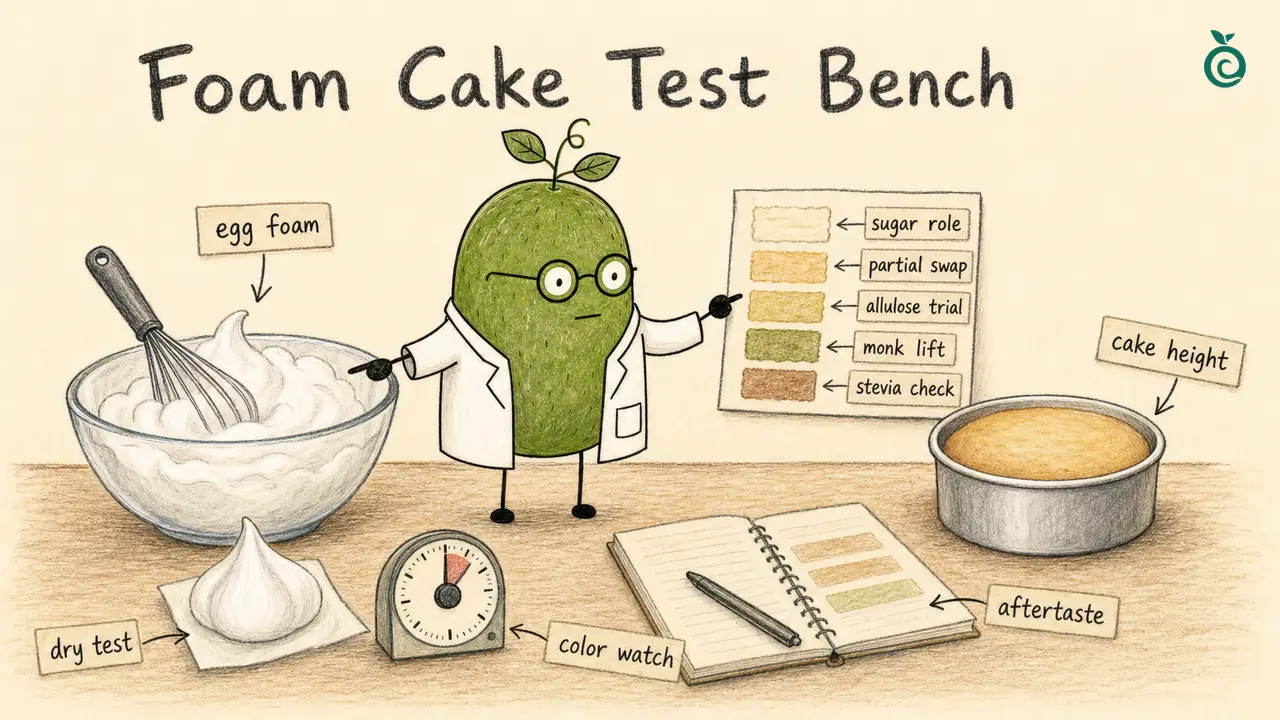
Start with the foam, not the sweetener
Meringue, angel food cake and sponge cake depend on air. If the foam collapses, the best-tasting sweetener will still fail. Before picking a sweetener blend, record egg white source, whipping time, mixing speed, foam volume, batter density and how fast the foam drains or weakens.
Separate meringue from cake
A dried meringue, a soft sponge cake and an angel food cake do not ask sugar to do the same work. Dried meringue needs crispness and drying control. Angel food cake needs height and spring. Sponge cake often needs color, aroma and crumb softness. The sample plan should name the exact product before a supplier quotes a blend.
Use allulose as a measured variable
Allulose or d-psicose can be useful in bakery trials because its role is not limited to sweetness. In a published meringue model, 30% sucrose replacement with d-psicose changed breaking behavior, crispness and browning. That makes it a test candidate, not a universal ratio.
Use monk fruit or stevia for sweetness lift
Monk fruit and stevia can close a sweetness gap at low levels. They do not provide the same bulk, drying behavior or foam support as sugar. In foam bakery trials, they are usually better treated as sweetness lift inside a system that still manages solids, moisture and structure.
Measure structure before taste approval
Approve a low-sugar foam bakery sample only after checking height, volume, color, surface cracking, break, chew, water activity, package humidity and day-0 versus stored texture. A good bench bite can still soften, brown too fast or lose volume after the process changes.
Prepare the buyer brief
Send the target market, product type, current sugar level, target sugar reduction, egg white or protein source, process temperature and time, packaging specification, estimated quantity, required certificates/documents and whether samples are needed. Add shelf-life target and water activity target if they are already known.
Technical references
Reviewed July 2026. A Journal of Food Science meringue study tested d-psicose as a 30% sucrose replacer and reported changes in breaking stress, breaking strain, crispness and browning. A published angel food cake study showed that egg white processing and mixing conditions can change cake volume and texture. These sources support bench-test variables, not a finished commercial formula or health claim.
Review note
Reviewed October 2, 2026.
Common questions
Can allulose replace sugar in meringue?
It can be tested as a partial replacement where the target market and label plan allow it, but it should be measured for foam, drying, color, break and storage texture.
Can monk fruit or stevia replace all the sugar in angel food cake?
They can help sweetness, but they do not replace sugar's bulk and foam-structure roles. Use them inside a broader sample matrix.
Why does a low-sugar foam cake collapse?
The issue can come from foam stability, protein source, whipping conditions, sugar solids, moisture, baking profile and storage. Sweetness is only one variable.
What should buyers send before foam bakery samples?
Start with your target market and product idea. Share any known packaging specification, estimated quantity, required certificates/documents and whether samples are needed; we can clarify the remaining details together. Add the current sugar level and process details if available.
