
Read this guide in
COCOA POWDER BEVERAGE VALIDATION SCORECARD
Cocoa Powder Beverage Scorecard: Sedimentation & Powdery Mouthfeel
Scorecard for cocoa powder beverage trials: sweetness, wetting, dispersion, sedimentation, powdery mouthfeel and storage checkpoints.
Use this scorecard for sedimentation: record undisturbed sediment, ease of resuspension and the agreed cup-bottom acceptance condition. The companion wetting and dispersion guide explains how to prepare and troubleshoot the drink.
A cocoa powder comparison becomes useful when the team agrees what will be observed before tasting. This scorecard keeps sweetness, wetting, dispersion, clumps, suspension, sedimentation, mouthfeel and package change in separate rows.
Reuse the headings for pure cocoa powder, instant cocoa beverage powder and nutrition powders, but set the actual method and decision criteria for the product, real base, process, package and launch market.

Download the blank Excel trial record
Compare a control and a trial side by side. Record preparation, undisturbed sediment, re-dispersion and taste in the editable workbook. The bottom-layer fraction calculates from your measured heights. Download directly; no email or registration is required. Completing or sharing the record is optional.
Define the control and product lane
Record the cocoa format, liquid base, current or sucrose control, powder treatment, fat or agglomeration information, protein or milk solids and serving method. Do not compare a dry-blended cocoa powder with a fully instantized nutrition powder as if one score or one mixing step applied to both.
Record the reconstitution sequence
Write liquid amount, temperature, powder addition order, pre-slurry or direct-addition step, stirring tool, stirring time and drinking temperature. If the project uses a process tank, add shear or homogenization information when available. Keep unknown fields marked unknown rather than filling them with assumptions.
Separate wetting, dispersion and suspension
Use individual rows for surface wetting, floating powder, clumps, dispersion after stirring, visible particles, top-to-bottom uniformity and sediment after standing. If a sample is re-mixed, record how easily it returns to the intended appearance. These observations are not a universal dissolution or stability threshold.
Record sweetness and mouthfeel beside the physical rows
Use a matched tasting order for entry sweetness, peak, finish, bitterness, licorice-like notes, cocoa intensity, thickness, powderiness and grittiness. A sweetness match is useful only when the physical and sensory rows show whether the drink still fits the intended use.
Read the sample immediately and after standing
Photograph the undisturbed drink before stirring or tasting. Record elapsed standing time, container and fill height, then assess re-mixing in a separate step. For powder stored before use, record caking, flow and package changes. Days 0, 7, 14 and 28 are example checkpoints, not a validated schedule or shelf-life claim; choose conditions for the actual product.
Use a separate result for each stage
Keep the control and trial side by side, with sample IDs and the same preparation and standing conditions. Agree what is acceptable for the intended drink before scoring.
| Stage | Record for control and trial | Keep comparable |
|---|---|---|
| Preparation | Powder mass, liquid amount, temperature, addition order and mixing time. | Base, vessel, tool and mixing procedure. |
| Before re-mixing | Floating powder, clumps, clear layer and bottom sediment; photograph untouched. | Standing time, fill height, vessel geometry and lighting. |
| Layer measurement | Name the layer measured; record its height and the total liquid-column height. | Same units and definition; do not mix sediment and clear-layer indices. |
| Re-dispersion | Defined stirring or inversion procedure and visible material remaining. | Same procedure and timing; assess after the untouched observation. |
| Taste and cup bottom | Sweetness, cocoa character, powderiness, grit and remaining cup-bottom deposit. | Serving temperature, sip sequence and agreed finish point. |
| Next trial | Which requirement failed and the one variable to investigate next. | An unchanged control and separate physical and sensory decisions. |
Easy re-dispersion can be acceptable for one instant drink and unacceptable for another product. Record the requirement rather than treating all settling as an automatic failure.
Define the sediment fraction before comparing numbers
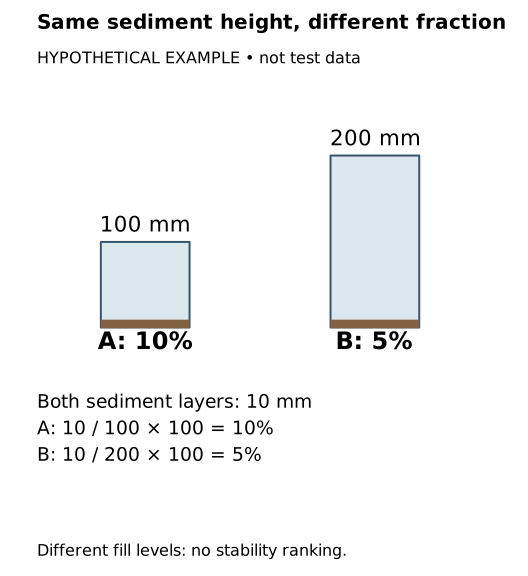
If your method uses bottom-layer height divided by total liquid-column height, write that definition explicitly. In the hypothetical example, the bottom layer is 10 mm in both vessels: 10/100 gives 10%, while 10/200 gives 5%. The denominator changes the result. These different fill levels are not a controlled comparison of product stability. Layer height also does not measure sediment mass, packing or ease of re-dispersion. Use matched vessels and fill heights, keep the undisturbed photograph, and record the re-mixing result separately. Other methods may define a sedimentation index using a clear layer or another measurement; their numbers are not interchangeable.
Turn the failed row into the next sample
If sweetness fails, change the sweetener direction while holding the powder and process steady. If wetting or clumping fails, review powder treatment and addition order. If sediment or powdery mouthfeel fails, review particle state, liquid base, viscosity or structure support. Do not change every row at once.
Technical references and boundaries
The cinnamon-cocoa suspension study compared natural and alkalized cocoa with different stabilizers and observed stability after 24 hours. That is a study-specific observation window, not a shelf-life test or a recommended commercial formula. The earlier lecithination/agglomeration work and the milk-based cocoa study inform separate records for powder treatment, mixing and physical behavior. None supplies a universal pass score for this scorecard.
Bring the failed observation to the sample discussion
Tell us whether the problem appears during mixing, standing, drinking or at the cup bottom. Add the cocoa format, liquid base and preparation details you have. A complete laboratory scorecard is useful, but it is not required for first contact.
Record these fields before comparing cocoa powder samples
- Product lane and liquid base
- Current or sucrose control
- Powder treatment or agglomeration
- Liquid amount, temperature and addition order
- Wetting, clumps and dispersion
- Immediate and rested sediment
- Powdery or gritty mouthfeel
- Sweetness, aftertaste and package checkpoints
Common questions
What should a cocoa powder scorecard measure?
Measure product lane, reconstitution method, sweetness and finish, wetting, clumps, dispersion, top-to-bottom uniformity, immediate and rested sediment, powdery or gritty mouthfeel and relevant package or storage observations.
Discuss this requestCan one scorecard fit cocoa powder and nutrition powder?
The field structure can be reused, but the liquid base, powder treatment, process and sensory language should be set for the actual product.
Discuss this requestIs a day-zero taste test enough to approve a cocoa powder drink?
No. Repeat the agreed physical, sensory, reconstitution and storage checks before making a commercial decision.
Discuss this requestCan a scorecard prove that a product will not settle?
No. It makes the test conditions visible and helps choose the next sample. It does not replace validation in the buyer's actual formula, process and package.
Discuss this requestWhat should buyers send before requesting a scorecard-based sample?
Start with the cocoa drink format, main defect and intended preparation method. Add the liquid base, market, packaging, expected quantity and documents you know. We can clarify the remaining sample requirements together.
Discuss this request