
Read this guide in
CONFECTIONERY SWEETENER TESTING
Can Allulose Make Hard Candy? Sugar-Free Candy Formulation Guide
Can allulose make hard candy? Formulation guide for sugar-free hard candy, gummies and chocolate: cook window, water activity, texture and blend options.
Confectionery sugar reduction is not only a sweetness question. Sugar controls solids, glass structure, water activity, stickiness, chew, snap, color, bloom risk, flavor release and how the product changes during storage.
This guide helps candy, snack and private-label buyers prepare a better sample brief before testing allulose, stevia, monk fruit or erythritol-free natural sweetener blends.
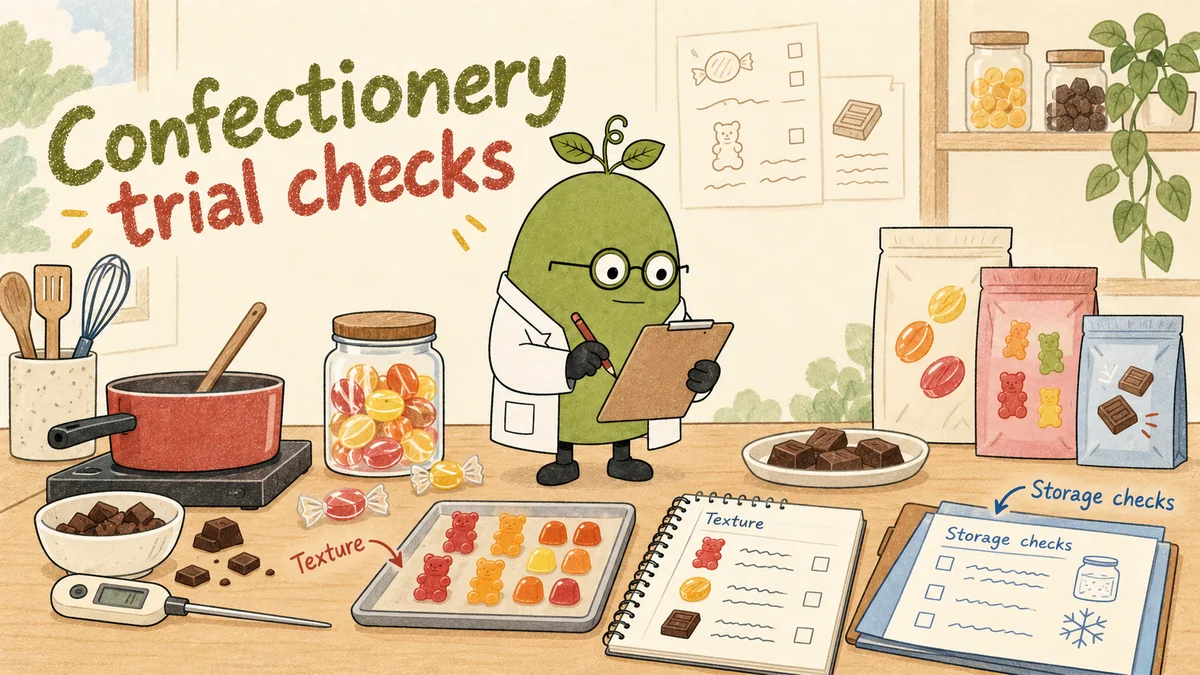
Define the candy structure first
Hard candy, deposited candy, gummies, jelly candy, chocolate, coating and fillings need different sample routes. A hard candy project should start with cook window, solids, moisture, glass snap and packaging barrier. A gummy project needs gel system, acid timing, drying, coating and chew target.
Allulose is functional but not a universal sugar copy
Allulose can be useful for sweetness curve, browning and body in suitable markets, but it will not replace every physical job of sucrose by itself. In some candy systems, the formula may still need fiber, polyol, hydrocolloid, starch, fat-phase adjustment or partial sugar depending on the product goal.
Watch water activity, moisture and texture
Ask the lab to track water activity, moisture, hardness, stickiness, drying loss, bloom, melt or chew change after storage. These measurements are more useful than approving a sample only by first-day sweetness.
Keep high-intensity sweeteners in a supporting role
Stevia and monk fruit can help close the sweetness gap at low use levels, but overuse can make bitterness, licorice-like notes or lingering sweetness louder. They should be tested inside the candy matrix, not only in water or syrup.
Match the formula to market and label rules
Allulose, steviol glycosides, monk fruit ingredients and polyols are handled differently by market. Confirm target country or region, ingredient naming, nutrition-panel approach, sweetener permissions, tolerance warnings if polyols are used, certificates and import documents before commercial launch.
Prepare samples before quotation
For a useful supplier reply, send target market, confectionery type, sweetness target, sugar-reduction target, process notes, packaging specification, estimated quantity, required certificates/documents and whether samples are needed.
Technical references
Reviewed July 2026. A 2025 IOP Conference Series study on lotus root jelly candy found that allulose and pectin levels changed moisture, color, texture and sensory results. A 2026 IOP Conference Series study on sugar-free chocolate reported that allulose and fructooligosaccharide levels affected water activity, bloom, melting behavior and sensory quality. FDA's 2025 allulose labeling guidance is relevant for US nutrition labeling, but it is not a global approval statement.
Hard candy key parameters at a glance
Set the cooking endpoint from the selected complete candy system. An oven or kettle temperature is not a transferable allulose specification. Record the temperature curve, hold time, measured endpoint solids and water activity after cooling, then compare stickiness and package behavior at the intended storage condition. A number from a sucrose hard-candy recipe does not validate an allulose recipe. Ask the application team to define the acceptable window from actual trials before using it for production.
| Parameter | Record in the trial | Acceptance decision |
|---|---|---|
| Cooking temperature and hold | Measured product temperature, time and heating rate | Validate for this candy base |
| Endpoint solids | Method, reading and sampling temperature | Agree with formulation team |
| Water activity | Measured value and temperature after equilibration | Set with safety and shelf-life validation |
| Cooling and packing | Cooling history, ambient humidity and barrier film | Compare sticking, deformation and storage |
Conventional hard-candy reference ranges do not validate allulose
Doğdu’s public METU thesis describes conventional sucrose/glucose hard-candy cooking at roughly 145–160°C and low moisture around 2–3%, and investigates a separate isomalt/polyol system. These values are background, not an allulose operating recommendation. Allulose has different thermal and moisture-sorption behavior, as examined in the ACS rare-sugar study. Do not convert that conventional moisture figure into a guaranteed allulose water-activity target or copy the thesis’s polyol cooking schedule into an allulose formula. Establish actual endpoint solids, water activity, temperature and packing acceptance for the complete trial system.
Review note
Reviewed October 2, 2026.
Common questions
Can allulose be used in hard candy?
It can be tested for suitable markets, but hard candy needs checks for cooking behavior, moisture, water activity, glass structure, stickiness and packaging.
Is allulose enough to replace sugar in confectionery?
Not usually. The formula may need a bulk system, fiber, hydrocolloid, polyol, partial sugar or process adjustment depending on the candy format.
Can monk fruit or stevia be used in candy blends?
Yes, they can support sweetness, but they should be used carefully and tested for bitterness, lingering sweetness and flavor fit in the finished candy.
What should buyers send before samples?
Start with your target market and product idea. Share any known packaging specification, estimated quantity, required certificates/documents and whether samples are needed; we can clarify the remaining details together.
