Read this guide in
Hengliyuan applications and selection
Allulose in Beverages vs. Baking: Sweetness, Taste, and Maillard Browning
Beverage vs baking trials for allulose: compare sweetness, aftertaste and flavor balance in drinks; browning, aroma, volume and texture in baking.
In beverages, compare allulose samples for sweetness, aftertaste and flavor balance. In baking and cooking, also evaluate browning, aroma, volume and texture. The same criteria cannot decide both applications; test each sample in the actual formulation.
Hengliyuan recommends using the actual tea, coffee or fruit-flavored base for beverage trials. For baking, keep the original sugar formulation as a control and record sweetness, color, structure and texture after cooling separately. Allulose can participate in the Maillard reaction, but the result still depends on the formulation and process.
What does allulose’s Maillard reaction contribute to baking and cooking?
The Maillard reaction is a series of reactions between reducing sugars and amino compounds that can produce brown colors and many aroma compounds. Allulose is a reducing sugar and, under suitable processing conditions, can react with amino groups in food amino acids and proteins. Erythritol is a sugar alcohol and cannot participate as a reducing sugar in the way allulose does. This is a practical functional difference between the two blend bases. Cargill’s application literature also compares them explicitly: allulose can participate in the Maillard reaction and help baked goods develop a golden-brown color. Reference: Cargill’s allulose and erythritol application literature. For baking and cooking that use the Maillard reaction to develop color and flavor, Hengliyuan therefore tends to favor an allulose base, with monk fruit extract or steviol glycosides to adjust sweetness and its profile. Specific proportions are established through trials in the target food. Distinguish the Maillard reaction from caramelization: the former involves reducing sugars and amino compounds, while the latter is another type of reaction caused by heating sugars. Both may influence color and aroma; browning alone cannot identify the reaction. Foods using erythritol may still undergo the Maillard reaction because of other ingredients. The distinction is whether the sweetener base itself provides this function.
First distinguish equal-weight sugar replacement from equal sweetness
Allulose is approximately 70% as sweet as sucrose, can provide some bulk and texture, and can participate in the Maillard reaction during baking and cooking. This sweetness figure helps explain the ingredient but is not a universal dosage for every food. Property reference: Tate & Lyle. For example, replacing 100 g of sugar with 100 g of pure allulose keeps weight equal but generally does not match the original sweetness. A rough calculation based solely on 70% relative sweetness gives approximately 143 g of allulose to match the sweetness of 100 g of sugar. This only illustrates sweetness conversion, not a recommended recipe: the extra 43 g also changes the proportion of solids in the formula. Before sampling, decide whether dosage can change or whether the finished blend should be used at the same weight as sugar. To limit allulose dosage while filling the sweetness gap, discuss combining it with monk fruit extract or steviol glycosides. Final dosage still needs confirmation in the actual product.
| Illustrative comparison | Ingredient mass | Sweetness equivalent using 0.70 only | What changes |
|---|---|---|---|
| Sucrose reference | 100 g sucrose | 100 g sucrose equivalent | Reference |
| Equal ingredient mass | 100 g pure allulose | 100 × 0.70 = 70 g sucrose equivalent | Mass matches; calculated sweetness does not |
| Calculated equal sweetness | 100 / 0.70 ≈ 142.9 g pure allulose | About 100 g sucrose equivalent | About 42.9 g more ingredient mass |
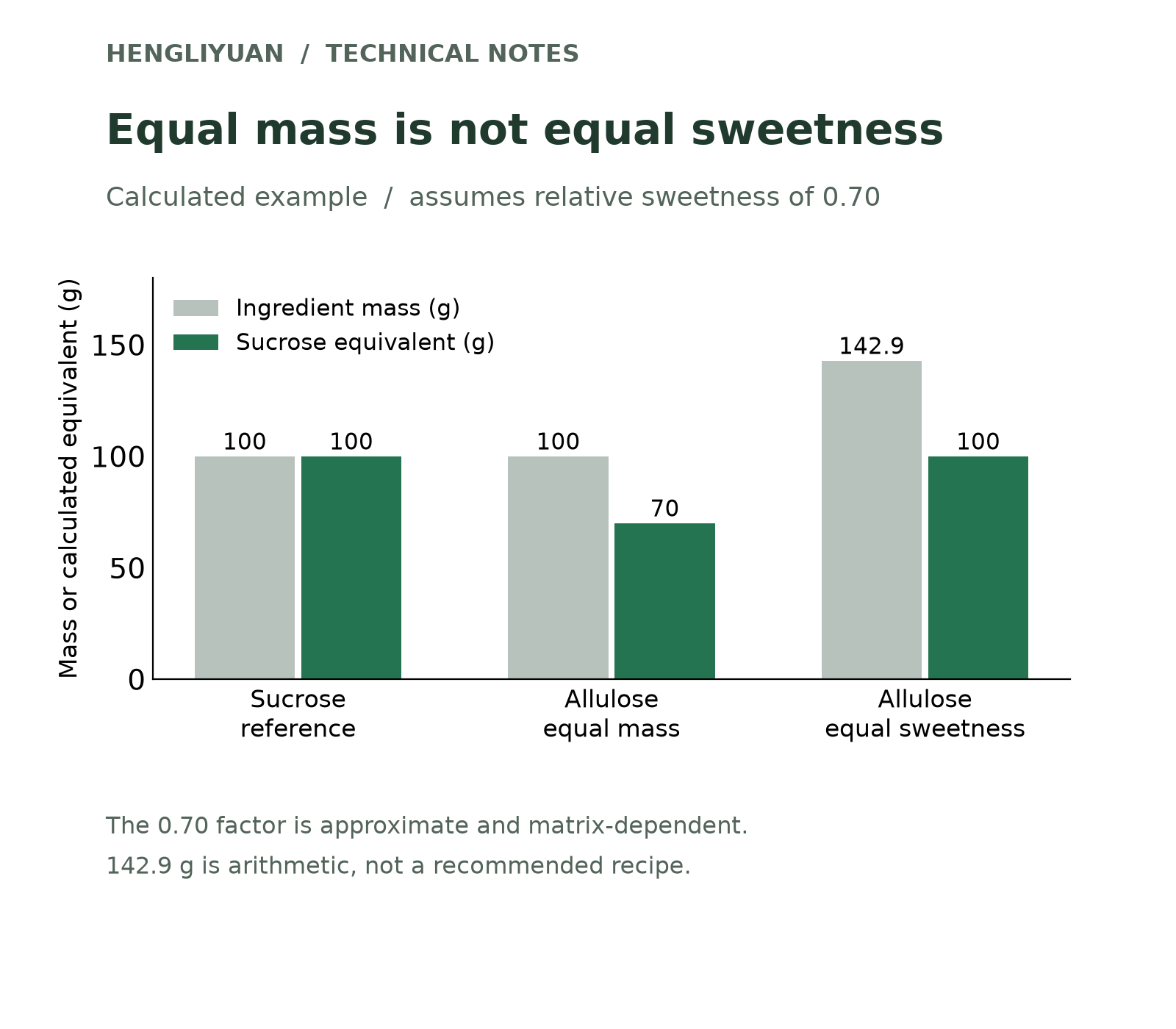
This is arithmetic using the cited approximate relative sweetness, not sensory data or a recipe. The table concerns pure allulose; it is not a syrup or blend conversion. If total batch mass must stay fixed, the extra ingredient mass must be accommodated elsewhere in the formula. That adjustment can change the product, so record it rather than assuming an equal-sweetness sample is otherwise identical.
Beverage trials: compare in the drink you actually intend to sell
Use the intended tea base for tea drinks and the actual coffee and milk for coffee. Tasting in plain water can give an initial understanding of an ingredient, but final selection should depend on its performance in the complete beverage. Keep the original sugar-containing formula as a control. Adjust candidates to similar target sweetness, then compare initial sweetness, lingering sweetness after swallowing, bitterness and the balance of tea, coffee or fruit aromas. If one drink is sweet and the other weak, asking which tastes better can confuse sweetness differences with ingredient differences. If initial sweetness is weak but lingering sweetness is long, compare grades and combinations of supplementary sweeteners in the next round rather than continually increasing the same ingredient. If bitterness occurs, compare the original beverage with the blend sample to determine whether it comes from the tea or coffee itself or a newly added ingredient before choosing an adjustment. Taste cold drinks at their actual drinking temperature. For heat-treated products, compare performance before and after treatment. Ready-to-drink products also need observation of flavor and appearance after storage: a freshly mixed cup only shows taste at that moment.
Baking and cooking trials: record sweetness, browning, aroma and structure separately
Keep sweetness, browning, aroma and physical structure as separate observations. The cross-application table in the next section distinguishes the decision in a drink from the decision in a baked food. For the detailed bakery method, use the dedicated browning and moisture guide.
How can the same sample batch yield useful comparisons?
For one round of comparisons across applications, use the same ingredient batch where possible and record product name, batch number, actual dosage and blend version. Differences can then first be investigated through the application and process. After selecting a direction, confirm subsequent batch consistency as the project requires.
| Record | Beverages | Baking |
|---|---|---|
| Control | Original sugar-containing drink or a clearly defined target sample | Target sugar-containing cookies, cakes or other products |
| Trial conditions | Complete formula, dosage, drinking temperature and processing conditions | Complete formula, dosage, shaping and baking conditions |
| Initial observations | Initial sweetness, lingering sweetness, bitterness, aroma and appearance | Handling, browning, volume or spread, and texture after cooling |
| Later observations | Flavor and appearance under planned storage conditions | Texture changes under planned packaging and storage conditions |
| Next step | Adjust specific flavor or appearance differences | Adjust specific color, structure or texture differences |
If a beverage trial meets the target but the baking trial is too soft, retain both conclusions separately. Continue validating the beverage option, and adjust the baking option around the specific issue of softness after cooling. These two results alone cannot determine ingredient quality.
What information helps when requesting samples from Hengliyuan?
Specify the target food, current sugar quantity, desired sweetness and whether monk fruit or steviol glycosides are acceptable. If you already have samples, describe improvements precisely, such as “weak initial sweetness,” “sweetness lingers too long after drinking” or “cookies are not crisp enough after cooling.” Hengliyuan can help choose ingredients and adjust the blend direction accordingly. Customers may provide their own formula or start discussions from the application and taste target. After selecting a sample, compare cost in use using the actual dosage.
Review note
Reviewed October 16, 2026. The sweetness figures are an illustrative calculation, not a formulation recommendation. Confirm current product documents and destination-market requirements.
Common questions
Can one allulose sample decide both beverage and baking performance?
No. Use the same identified sample batch for separate trials in the actual drink and bakery formulas. A drink tasting cannot establish browning, volume or texture after baking.
Discuss an application trialWhat should beverage teams compare first?
Keep the tea, coffee or fruit base and other ingredients constant. Compare sweetness, aftertaste and flavor balance at the intended serving temperature, and record the actual sample dosage.
Discuss an application trialWhat should baking teams record besides sweetness?
Keep the original sugar formula as a control. Record browning, aroma, volume, structure and texture after cooling under the same preparation and bake conditions.
Discuss an application trialDoes equal-weight replacement with pure allulose match sugar sweetness?
Not automatically. Equal weight and equal sweetness are different trial targets. Confirm the chosen target before changing dosage, because a dosage change also changes the amount of solids in the formula.
Discuss an application trialDoes darker color prove a better allulose baking result?
No. Evaluate color alongside aroma, sweetness, structure and cooled texture. Browning alone cannot identify which reaction occurred or establish whether the product meets the intended target.
Discuss an application trialDoes the 143 g calculation mean I should increase allulose in my recipe?
No. It illustrates only the arithmetic of an approximate relative sweetness. More allulose changes ingredient mass and the formulation balance. Decide whether mass or sweetness is the trial target, record all adjustments, and evaluate the actual food before choosing a dose.
Discuss an application trial