Sucralose explained
Sucralose vs. Aspartame: Sweetness, Uses and Key Differences
Compare sucralose and aspartame by sweetness, heating, phenylalanine and finished-product labels, with practical guidance for food and beverage choices.
Sucralose and aspartame are different high-intensity sweeteners. Their practical differences include sweetness strength, response to heating and an important phenylalanine consideration for aspartame. Neither name alone tells you the complete composition or nutrition of a tabletop blend or finished drink.
If you are comparing labels, identify which sweeteners the product actually contains. If you are changing a formula, compare the complete preparations in the intended food rather than substituting the same weight and expecting the same result.
The main differences at a glance
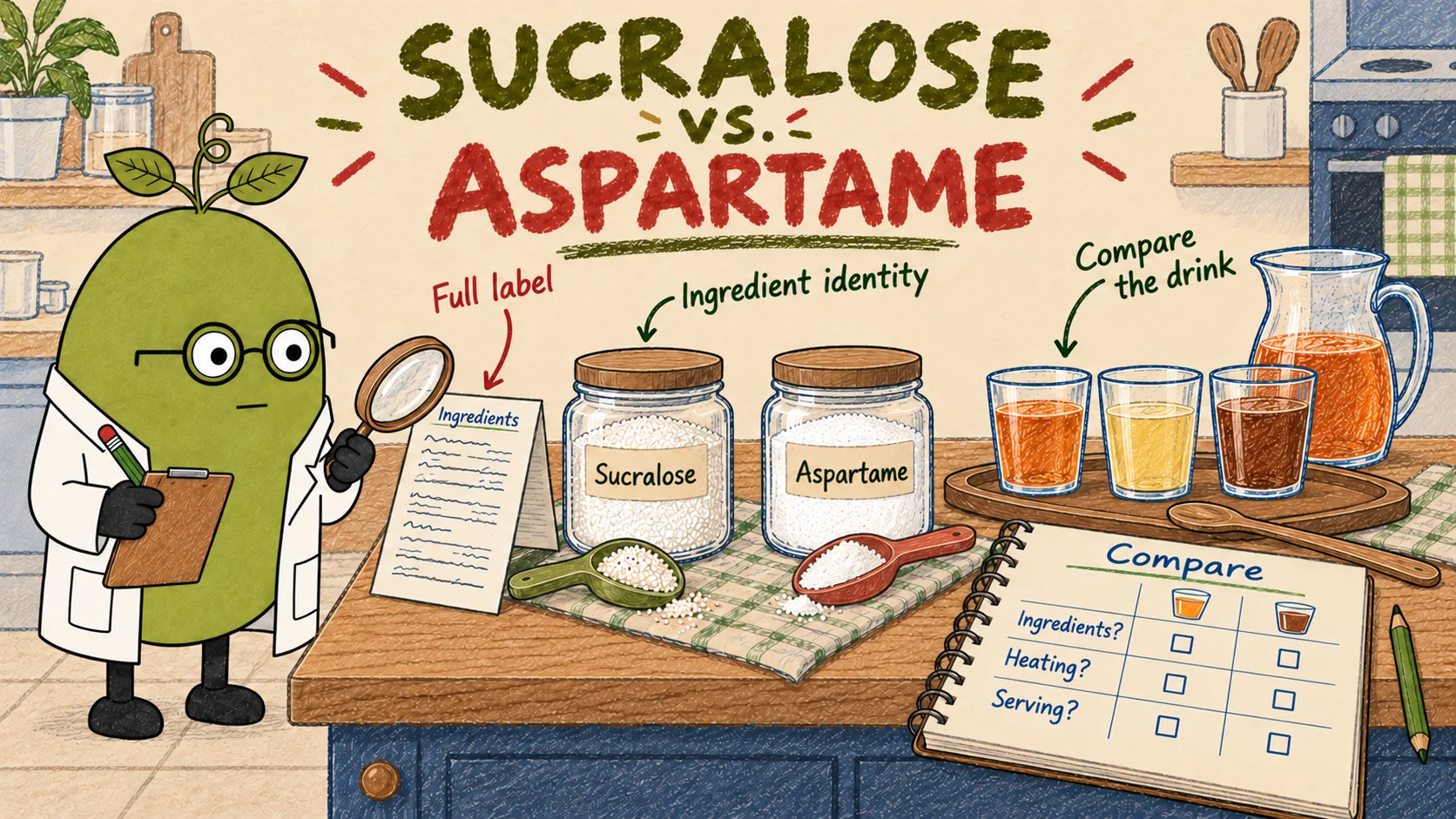
FDA gives reference sweetness values of about 600 times sugar for sucralose and 200 times for aspartame. These describe sweetness intensity, not a final recipe. Aspartame contains phenylalanine and can lose sweetness with heating. People with phenylketonuria (PKU) need to avoid or restrict aspartame. Those differences help identify the next question, but do not produce a universal winner. A food label, a heated recipe and a beverage reformulation each require a different decision.
Does a sweetness comparison give a replacement dose?
No. First establish whether each sample is a concentrated ingredient, a diluted powder, a liquid preparation or a finished blend. The amount added includes everything in that preparation, not only the named high-intensity sweetener. For a beverage comparison, keep the base and serving conditions fixed. Establish an acceptable sweetness level for each preparation, then compare flavour balance and the finish. Record both the product identity and the amount added. A simple ratio between reference sweetness values does not establish how two finished products will taste.
Heating: compare the right questions
Sweetness retention and safety are separate questions. Aspartame’s loss of sweetness on heating is one reason its use differs from that of sucralose. It does not follow that sucralose is suitable for any oven temperature, cooking time or product. For sucralose, read the 2026 EFSA assessment and the German BfR advice before interpreting broad “heat stable” descriptions. Keep the intended food, actual thermal process and destination-market permission together. Do not use the result of a cold drink trial as evidence for a baked product.
Calories, carbohydrates and the full ingredient list
Compare the complete food at a consistent serving size. A sweetener name does not account for the other ingredients in a packet or recipe. A milk drink, biscuit or powder can contain energy and carbohydrate from its base even when some sugar is replaced. For an export product, verify the complete formula’s nutrition data and the destination-market label requirements. Do not transfer another product’s calorie claim to your own formula or infer “sugar-free” from the presence of either sweetener. A brand name is also a poor substitute for checking the particular product’s declaration.
Is one automatically healthier?
The comparison is not a health ranking. FDA’s safety framework concerns approved conditions of use, rather than an unlimited intake or a promise that replacing sugar treats a medical condition. The PKU consideration for aspartame is a specific distinction, not evidence of a general health benefit for every alternative. For personal dietary decisions, take account of the whole diet and any individual medical requirements. For product development, separate the regulatory review from a sensory comparison. Liking a sample does not establish a health claim.
How to choose the next step
For a packaged food, read the full ingredient list and nutrition information first. For a formulation change, write a clear objective: a specified ingredient restriction, a process requirement, a taste issue or a cost comparison at the accepted dose. Hengliyuan’s sucralose ingredient and application pages provide a route to discuss the material and a defined sample question. This comparison does not imply that we supply aspartame or that either material has passed your particular product test.
Common questions
Are sucralose and aspartame the same ingredient?
No. They are different high-intensity sweeteners. Check the exact preparation and full ingredient list before comparing doses or finished products.
Can I replace aspartame with the same weight of sucralose?
Do not assume equal weights give equal sweetness. Confirm concentration, composition, taste, process and permitted use in the actual formula.
Why does aspartame matter for people with PKU?
Aspartame contains phenylalanine. FDA advises people with PKU to avoid or restrict it and requires a phenylalanine statement for relevant US products.
Does sucralose make every product calorie-free?
No. Nutrition depends on all ingredients, the serving basis and the applicable labeling rules.