
ORGANIC MONK FRUIT PRODUCT SELECTION
How to Choose Organic Monk Fruit Sweeteners: Extract, Powder or Blend
How to choose organic monk fruit sweeteners: compare extract, whole fruit powder and blends by identity, ingredients and certificates.
Choose an organic monk fruit product by checking two things separately: what the product actually is, and whether the organic documents apply to that exact product and supply chain. An extract, whole fruit powder and a sweetener blend are different products even when all three use monk fruit in the name.
This guide is for ingredient buyers, product developers and quality teams. It explains how to distinguish the three forms, what organic crop and handling controls generally change, and which documents to match before requesting a sample or quotation.
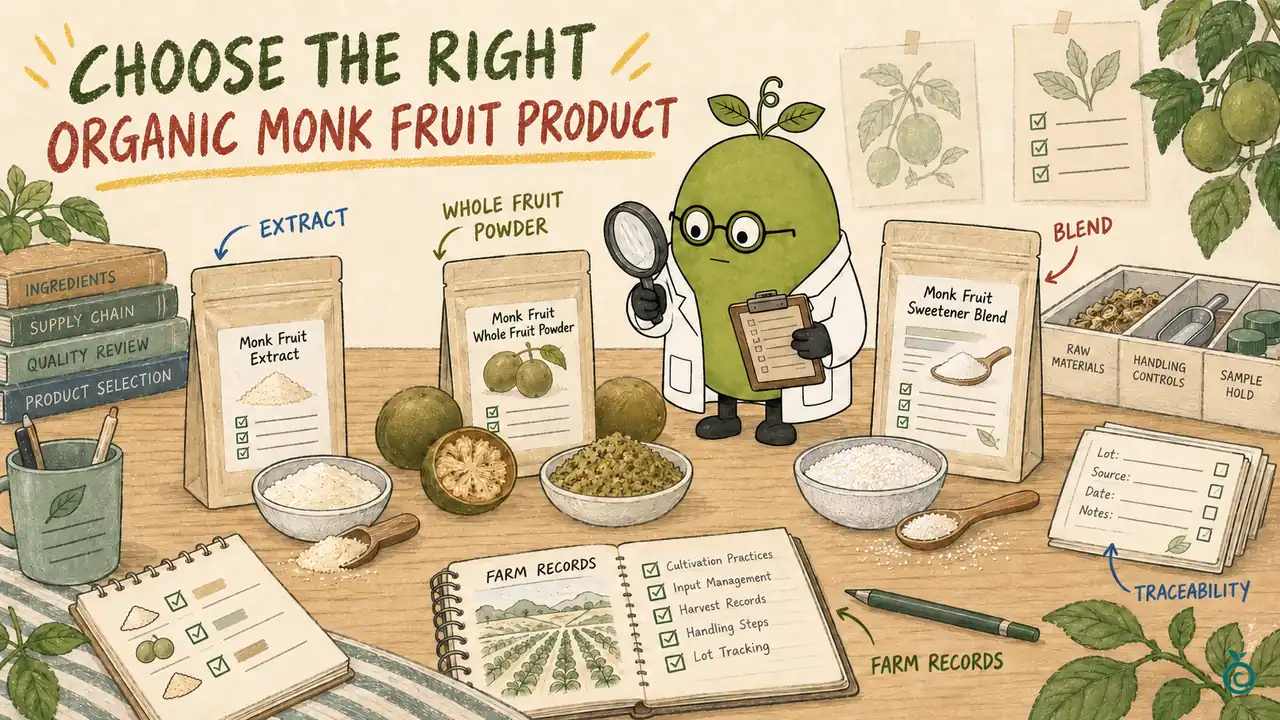
First identify the product: extract, whole fruit powder or blend
Do not start with the word organic alone. Start with the physical product and its complete composition. The product identity determines which specification, ingredient statement, organic listing, batch document and application test you need.
| Product type | What it is | What to check |
|---|---|---|
| Monk fruit extract | A concentrated monk fruit ingredient specified by an analyte or assay basis and grade | Exact extract identity, analyte, assay method, grade, product listing and batch COA |
| Whole fruit powder | Powder made from the whole monk fruit rather than a concentrated extract | Raw-material identity, milling form, color and flavor fit, specification and product-specific organic documents |
| Sweetener blend | A formula combining monk fruit with one or more other ingredients | Complete ingredient statement, each relevant organic ingredient, finished-blend certification or listing, dosage and application fit |
How organic cultivation and handling differ from conventional supply
Under the USDA organic crop standards, organic production uses a verified management system that covers matters such as land history, soil fertility, seed and planting-stock choices, pest and weed controls, and restrictions on prohibited substances. USDA states that land must have had no prohibited substances applied for at least three years before harvest of an organic crop; genetic engineering, ionizing radiation and sewage sludge are prohibited. After harvest, organic handling also requires controls. Handlers must prevent commingling with non-organic products, protect organic products from contact with prohibited substances and maintain records that support traceability. A conventional monk fruit ingredient is not represented as moving through that certified organic system. This describes the general management difference; it does not prove that one product is sweeter, purer or better tasting than another.
Match the certificate scope to the exact product
Check the certificate holder, certified operation, scope, status and current product list. Hengliyuan's published BHY file names Guangxi Yongfu BHY Biotech Co., Ltd. and shows a USDA Organic handling scope; the companion product list names monk fruit extract. Those documents support a review of monk fruit extract within the named factory scope. They do not by themselves establish organic crop certification for a particular farm, or certify whole fruit powder, a sweetener blend or every retail pack.
Read the ingredient statement before accepting an organic sweetener claim
A package described as monk fruit sweetener may contain monk fruit extract plus erythritol, allulose, steviol glycosides, fiber or another carrier. The organic status of an extract ingredient does not automatically become the organic status of the finished blend. For a multi-ingredient product, review the complete formula, the organic status of the relevant ingredients, the applicable finished-product documents and the target-market label category.
Choose the form that matches the development job
Choose extract when your formulation team needs a concentrated ingredient and can set the dosage and sweetness system. Consider whole fruit powder when whole-fruit identity, color, flavor and powder characteristics are relevant to the product concept. Choose a blend when the project needs bulk, easier measuring or a prepared sweetening system. These are formulation choices, not quality rankings; each candidate still needs to be tested in the actual food or beverage.
Use a six-point buyer check before requesting a sample
Use this checklist to keep product identity, organic scope, batch evidence and application testing in the same purchasing brief.
- Name the exact product form: extract, whole fruit powder or blend.
- Request the full ingredient statement and the selected product specification.
- Check the certificate holder, operation scope, current status and matching product list.
- Request a current batch COA for the offered lot; do not treat it as an organic certificate.
- Confirm the target market, intended application, pack format and label questions.
- Test the selected sample in the real formula before approving the commercial specification.
Review note
Reviewed October 2, 2026.
Common questions
Is organic monk fruit extract the same as organic whole fruit powder?
No. Extract is a concentrated ingredient defined by its extract identity and assay basis, while whole fruit powder is made from the whole fruit. Each product needs its own specification and matching organic documents.
Does organic monk fruit extract taste better than conventional extract?
Organic status does not by itself prove higher sweetness, purity or better flavor. Compare the actual specification, composition, batch COA and performance in the intended application.
Can an organic monk fruit extract certificate cover a sweetener blend?
Not automatically. A blend has its own complete composition and finished-product scope. Check the ingredients and the documents that apply to the exact blend and label.
Does the published BHY handling certificate prove organic cultivation at a named farm?
No. The published BHY certificate shows a handling scope. Crop-level status and upstream traceability should be checked through the applicable certified operations and records for the selected supply chain.
What should I send when requesting an organic monk fruit sample?
Send the product form, target market, application, requested grade or composition, quantity, pack format, required documents and the decision the sample must help you make.
