SOY BEVERAGE SAMPLE INQUIRY
Low-Sugar Soy Beverage Sweetener and Stability Sample Inquiry
Request a focused soy beverage sweetener sample or quotation discussion by sharing the target market, product, package, quantity, documents and sample need first.
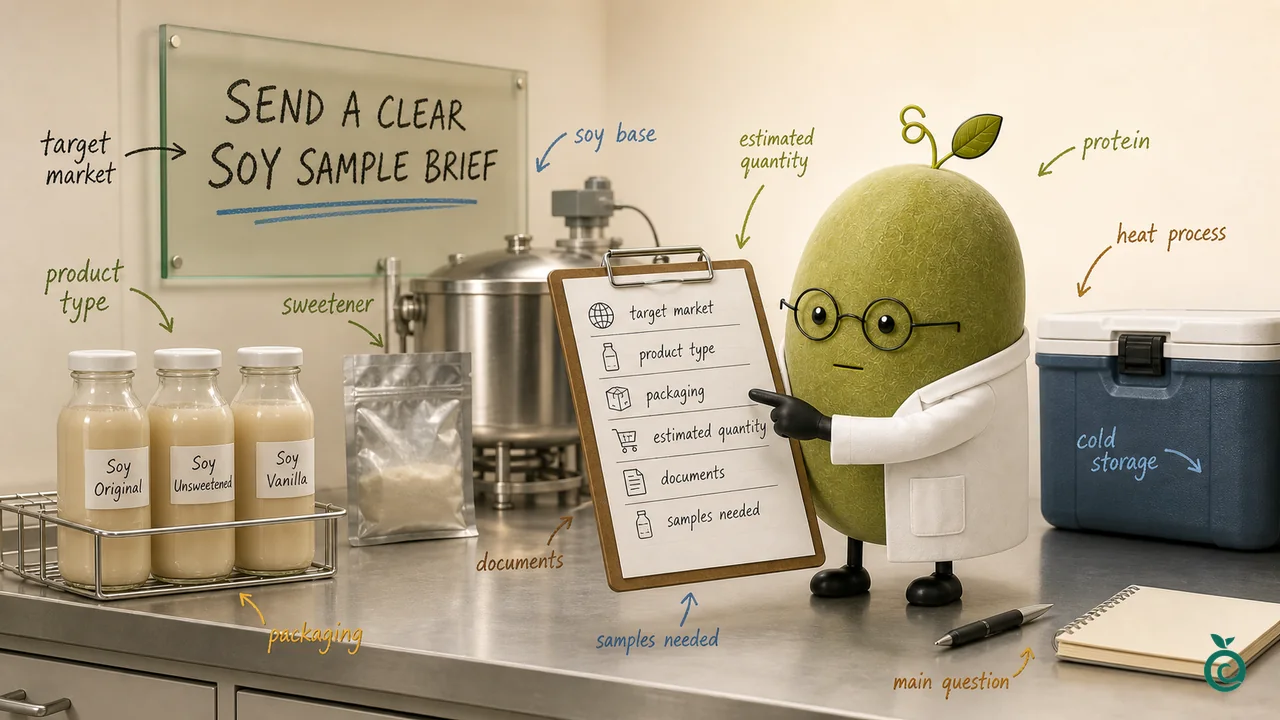
To prepare a useful low-sugar soy beverage sweetener sample or quotation, send six details first: target market, product type, packaging specification, estimated quantity, required certificates/documents and whether samples are needed. Then add the soy base, protein or solids direction, process and one question for the sample to answer.
Hengliyuan can discuss monk fruit, stevia, allulose-supported, erythritol-free or broader natural sweetener directions where the target market and finished formula allow them. The sample should separate sweetness from protein stability, sediment, cold storage and other physical observations; it is not a universal formula, safety decision, shelf-life result or finished-label approval.
Name the soy beverage and target market
Tell us whether the project is a chilled soy beverage, soy milk alternative, flavored soy drink, foodservice format, beverage powder or another product. Add the target market, product position, serving condition and current or sugar-containing control. U.S. projects should identify naming and label questions early; local review is still required.
State the sweetener direction
Explain whether the sample is for partial sugar reduction, sweetness lift, monk fruit or stevia comparison, an allulose-supported direction where permitted, an erythritol-free route or a broader blend. Also state what the current sugar contributes: sweetness, soluble solids, body, flavor timing or another role. High-intensity sweetness alone does not replace every physical role.
Share the protein and process conditions
Add the soy source, protein or solids direction, filtration or separation, mixing order, homogenization, pH or ions when known, heat-treatment sequence, cooling, filling and package. Tell us whether the concern is sediment, layering, creaming, cloud change, viscosity, mouthfeel, aftertaste or a different observation.
Send the six required buyer fields
Please provide target market, product type, packaging specification, estimated quantity, required certificates/documents and whether samples are needed in the first message. Then add the soy base, control, process, storage condition and one clear sample question.
Keep the first sample narrow
A useful first track can compare the current control with one sweetener-supported direction while holding the real base, process and package steady. If a physical or process variable also changes, label it as a separate direction. This makes the next decision easier to read and avoids turning one sample into a universal stability claim.
Bring label and document questions with the sample
For U.S. projects, FDA's plant-based milk alternatives page is a starting point for naming and labeling discussion and links draft guidance. ISO 8700:2025 provides a general framework for plant-based food and ingredient labeling and claims. Share the documents needed for the target market, but treat those sources as review inputs rather than product approval.
Send these details for a soy beverage sweetener sample inquiry
- Target market
- Product type
- Packaging specification
- Estimated quantity
- Required certificates/documents
- Whether samples are needed
Common questions
Can Hengliyuan provide a monk fruit or stevia sample for a soy beverage?
A monk fruit, stevia, erythritol-free or broader blend direction can be discussed after the soy base, target market, product format and sample question are clear. The finished beverage still needs real-base testing.
Can a sweetener sample guarantee no sediment after cold storage?
No. Protein, particles, oil droplets, pH or ions, mixing, homogenization, heat history, package and storage can all affect the result. A sample tests the defined product and conditions.
Can one sample cover soy, oat and pea beverages?
No. Those bases can have different protein, particle, oil and process behavior. Keep the sample track tied to the actual product.
Can FDA or ISO 8700 approve my soy beverage label or formula?
No. FDA's page is a U.S. labeling and guidance starting point, and ISO 8700:2025 is a general labeling and claims framework. Final label and market review remain product- and country-specific.
What information is needed before quotation?
Start with your target market and product idea. Share any known packaging specification, estimated quantity, required certificates/documents and whether samples are needed; we can clarify the remaining details together. Add the soy base, protein or solids, process, storage plan and one main question.